
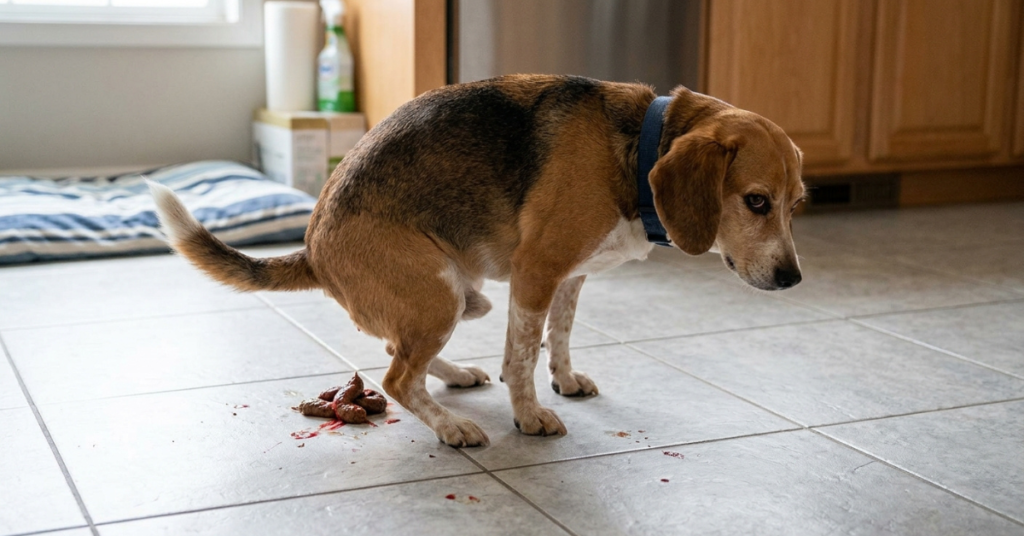
Finding blood in your dog’s poop can be frightening, especially when your dog seems perfectly fine otherwise. You might wonder, why is my dog pooping blood? Is it something they ate, a digestive problem, or a sign of a more serious illness?
Blood in a dog’s stool can have several causes, ranging from mild irritation in the digestive tract to infections, parasites, or potentially life-threatening conditions. The appearance of the blood, your dog’s other symptoms, and how quickly the problem develops can all provide important clues.
Although some causes are relatively minor, bloody stool should never be ignored. This guide explains what different types of bloody poop can mean, which symptoms require urgent veterinary attention, and what you should do to help your dog.
Why Is My Dog Pooping Blood?
Blood in dog stool, medically described as hematochezia when it is fresh and melena when it is digested, can originate from different parts of the digestive system.
Fresh blood usually appears bright red, while digested blood can make stool look black and tarry. These differences can help a veterinarian narrow down the possible cause, but appearance alone cannot confirm a diagnosis.
Common causes include:
- Dietary indiscretion: Eating spoiled food, garbage, unfamiliar treats, or table scraps can irritate the digestive system.
- Sudden dietary changes: Switching dog food too quickly may trigger diarrhea and intestinal irritation.
- Intestinal parasites: Hookworms, whipworms, and other parasites can damage the intestinal lining.
- Colitis: Inflammation of the colon can cause frequent bowel movements, straining, mucus, and fresh blood.
- Bacterial or viral infections: Certain infections can cause severe intestinal inflammation and bloody diarrhea.
- Acute hemorrhagic diarrhea syndrome (AHDS): This condition can cause sudden, sometimes substantial, bloody diarrhea and rapid fluid loss.
- Foreign objects: Swallowed bones, toys, or other objects may injure or obstruct the digestive tract.
- Toxins or medications: Some poisons and medications can cause gastrointestinal bleeding or interfere with blood clotting.
- Other medical conditions: Inflammatory bowel disease, clotting disorders, ulcers, and certain tumors may also cause blood in stool.
Because these conditions can look similar at first, a veterinary examination is the safest way to determine what is happening.
What Does Blood in Dog Poop Look Like?
The color, consistency, and amount of blood can offer useful clues about your dog’s condition.
Bright red blood in dog poop
Bright red streaks or spots often indicate bleeding in the lower digestive tract, particularly the colon, rectum, or anus. Possible causes include colitis, straining, irritation, and parasites.
A small streak of blood after a difficult bowel movement may have a less serious explanation than repeated bloody diarrhea. However, even a small amount deserves attention if it recurs or appears alongside other symptoms.
Black, tarry stool
Black, sticky, tar-like stool can indicate digested blood from bleeding higher in the digestive tract, such as the stomach or small intestine. This is known as melena.
Possible causes include ulcers, certain medications, foreign objects, and other internal conditions. Some substances, including iron supplements and certain foods, can also darken stool, but it is important not to assume black stool is harmless.
Black, tarry stool warrants urgent veterinary assessment.
Blood clots in dog poop
Visible clots or larger amounts of blood can indicate significant intestinal bleeding. Causes may include severe inflammation, acute hemorrhagic diarrhea syndrome, injury, or clotting problems.
If your dog passes blood clots, produces repeated bloody stools, or appears weak, pale, or uncomfortable, seek emergency veterinary care.
Bright red, watery stool
Bright red liquid or watery diarrhea mixed with blood may occur with severe colitis, intestinal infections, or acute hemorrhagic diarrhea syndrome.
Watery diarrhea can cause dehydration quickly, particularly in puppies, small dogs, and older animals. If the stool is heavily bloody or the diarrhea is frequent, do not wait to see whether it resolves on its own.
Why Is My Dog Pooping Blood but Acting Normal?
It is possible for a dog to have bloody stool while still eating, playing, drinking, and behaving normally. This can happen with mild colitis, dietary irritation, or other early digestive problems.
However, normal behavior does not rule out a serious condition. Some dogs continue acting normally during the early stages of illness, and their condition may deteriorate as fluid loss or inflammation progresses.
If you notice a small streak of fresh blood and your dog is otherwise well:
- Contact your veterinarian for advice, ideally the same day.
- Monitor the frequency and appearance of bowel movements.
- Make sure fresh drinking water is available.
- Avoid introducing new foods, treats, or supplements.
- Photograph the stool and save a fresh sample if your veterinarian requests one.
Seek urgent care if the bleeding continues, increases, or is accompanied by vomiting, weakness, abdominal pain, pale gums, or reduced appetite.
Why Is My Dog Pooping Blood and Diarrhea?
Bloody diarrhea usually means the intestinal lining is irritated, inflamed, infected, or otherwise damaged. It may be caused by something relatively simple, such as dietary indiscretion, but it can also indicate a serious illness.
Common possibilities include:
- Colitis: Often causes frequent, urgent bowel movements with small amounts of fresh blood and mucus.
- Parasites: Hookworms and whipworms can cause intestinal bleeding and diarrhea.
- Dietary upset: Eating spoiled food, garbage, or a new food may trigger digestive irritation.
- Parvovirus: A contagious viral disease that can cause severe bloody diarrhea, vomiting, and dehydration, especially in puppies and inadequately vaccinated dogs.
- AHDS: Can cause sudden, profuse bloody diarrhea and rapid dehydration.
- Other intestinal infections or inflammatory conditions: These can cause varying degrees of diarrhea and bleeding.
If your dog has repeated bloody diarrhea, contact a veterinarian promptly. Heavy bleeding, severe weakness, vomiting, or an inability to keep water down requires emergency attention.
Why Is My Dog Pooping Blood and Vomiting?
Blood in the stool combined with vomiting is more concerning than either symptom alone. Both symptoms can occur with severe gastroenteritis, parvovirus, acute hemorrhagic diarrhea syndrome, intestinal obstruction, toxin exposure, or other serious conditions.
Vomiting also makes it harder for your dog to replace fluids lost through diarrhea. Dehydration and electrolyte imbalances can develop quickly.
Contact an emergency veterinarian immediately if your dog has bloody stool and repeated vomiting, especially if they are lethargic, have abdominal pain, cannot keep water down, or have pale gums.
Do not give human anti-diarrhea medication, painkillers, or leftover prescription medication without veterinary instructions. If poisoning or ingestion of a foreign object is possible, tell the veterinarian what your dog may have swallowed and when.
Why Is My Dog Pooping Blood and Mucus?
Mucus is a slippery substance that helps protect the intestinal lining. A small amount can occasionally appear in stool, but excessive mucus combined with blood often points toward inflammation of the colon.
This combination is commonly associated with colitis. Affected dogs may squat repeatedly, strain to pass stool, produce small amounts of feces, or seem desperate to go outside.
Possible triggers include:
- Sudden changes in diet
- Stress or disruption to routine
- Intestinal parasites
- Food intolerance
- Bacterial or other intestinal infections
- Chronic inflammatory digestive conditions
If mucus and blood appear repeatedly, arrange a veterinary examination. Your veterinarian may recommend a fecal test to check for parasites or other investigations based on your dog’s symptoms.
Why Is My Dog Pooping Blood and Not Eating?
Loss of appetite alongside bloody stool can suggest that your dog feels nauseated, has abdominal discomfort, or is experiencing a more significant illness.
Possible causes include infections, intestinal inflammation, pancreatitis, foreign-body obstruction, and other digestive disorders. Puppies and small dogs can be particularly vulnerable when they stop eating and develop diarrhea.
If your dog refuses food and passes blood, contact your veterinarian promptly. Seek emergency care if they also vomit repeatedly, seem weak, have a painful or swollen abdomen, or show signs of dehydration.
Do not force-feed your dog. A veterinarian can advise whether food should be withheld briefly or whether a specific feeding plan is appropriate for your dog’s condition.
Why Is My Dog Pooping Blood and Shaking?
Shaking or trembling alongside bloody stool may be associated with pain, fever, anxiety, weakness, low blood sugar, or other systemic problems. It can also occur after exposure to certain toxins.
This combination should be treated seriously, particularly if your dog is panting excessively, cannot stand normally, seems disoriented, or has pale gums.
Seek urgent veterinary care if your dog is shaking and passing blood. Do not assume the shaking is simply stress, and avoid giving human medication to try to relieve discomfort.
Why Is My Dog Still Pooping Blood After Diarrhea?
Sometimes, a dog continues to pass small amounts of blood after an episode of diarrhea because the colon remains inflamed or irritated. Frequent bowel movements and straining can further aggravate the intestinal lining.
However, persistent or returning blood can also indicate parasites, infection, an underlying digestive disorder, or another condition that has not resolved.
If diarrhea has stopped but blood remains, contact your veterinarian for guidance. If bleeding increases, the stool becomes black and tarry, or your dog develops additional symptoms, seek urgent care.
What Should I Do If My Dog Is Pooping Blood?
Knowing what to do in the first few hours can help you avoid unnecessary risks while arranging appropriate treatment.
1. Check for emergency warning signs
Go to an emergency veterinarian if your dog has any of the following:
- Large amounts of blood or repeated bloody diarrhea
- Black, tarry stool
- Repeated vomiting alongside bloody stool
- Collapse, severe weakness, or unusual confusion
- Pale or white gums
- Significant abdominal pain or a swollen abdomen
- Suspected poisoning or swallowed foreign objects
- Bloody diarrhea in a puppy, especially if vaccinations are incomplete
Do not delay emergency care while trying home remedies.
2. Contact your veterinarian
Even if your dog appears comfortable, let your veterinarian know about the bleeding. Explain when it started, how often it has happened, and whether your dog has diarrhea, vomiting, appetite changes, or other symptoms.
3. Collect useful information
If it is safe to do so, take a clear photograph of the stool. You may also collect a fresh sample in a clean, sealed container, following your veterinarian’s instructions.
Record any recent changes in food, treats, medications, or routine, as well as possible access to rubbish, bones, toys, or chemicals.
4. Keep your dog comfortable
Provide access to fresh water if your dog is alert and able to drink normally. Do not force water into the mouth, particularly if vomiting is occurring.
Keep your dog calm and follow the veterinarian’s advice about food and isolation. If parvovirus is a possibility, avoid contact with other dogs and inform the clinic before arriving so they can take appropriate precautions.
5. Avoid unapproved home treatments
Do not give human painkillers, antibiotics, anti-diarrhea drugs, or herbal remedies unless a veterinarian specifically directs you to do so. Some medications can worsen bleeding or cause additional harm.
How Do Veterinarians Diagnose Bloody Stool in Dogs?
The diagnostic process depends on the amount of bleeding, the dog’s age, medical history, and other symptoms.
A veterinarian may perform the following checks:
Physical examination: The vet will assess hydration, gum color, temperature, abdominal discomfort, and overall condition.
Fecal testing: Stool tests may identify intestinal parasites or provide evidence of certain infections.
Blood tests: These can help assess dehydration, anemia, inflammation, electrolyte imbalances, and organ function.
Imaging: X-rays or ultrasound may be recommended if a foreign object, obstruction, or other abdominal problem is suspected.
Additional testing: Depending on the findings, the veterinarian may recommend tests for parvovirus, clotting disorders, or other specific conditions.
Not every dog needs every test. The veterinarian will choose investigations based on the clinical picture and the urgency of the situation.
How Is Blood in Dog Stool Treated?
Treatment depends on the underlying cause rather than the blood itself.
- Dietary irritation or mild colitis: A veterinarian may recommend a suitable diet and monitoring, depending on the severity of the symptoms.
- Intestinal parasites: Treatment usually involves an appropriate deworming medication based on the suspected or confirmed parasite.
- Infections: Treatment varies according to the organism and the dog’s condition. Antibiotics are not appropriate for every case of bloody diarrhea.
- Dehydration: Oral fluids may be appropriate in selected mild cases, while more severe dehydration may require intravenous fluids and hospitalization.
- Acute hemorrhagic diarrhea syndrome: Treatment commonly focuses on rapid assessment, fluid replacement, and supportive care.
- Foreign-body obstruction or other surgical problems: Some cases require surgery or other specialist treatment.
- Ulcers, clotting disorders, or chronic intestinal disease: Treatment depends on the specific diagnosis and may require medication, dietary management, or further monitoring.
Avoid using leftover antibiotics or treating your dog based solely on an online symptom list. The right treatment depends on the cause and how unwell your dog is.
Can You Prevent Bloody Stool in Dogs?
Not every cause is preventable, but several practical habits can lower your dog’s risk.
- Introduce new food gradually rather than changing diets overnight.
- Keep rubbish, spoiled food, bones, chemicals, and small swallowable objects out of reach.
- Maintain an appropriate parasite-prevention and deworming plan with your veterinarian.
- Keep vaccinations up to date, especially for puppies and dogs at risk of parvovirus.
- Avoid giving your dog unfamiliar human foods or unapproved supplements.
- Arrange regular veterinary checkups and investigate recurring digestive symptoms.
If your dog frequently develops diarrhea or blood in the stool, do not keep treating each episode as an isolated upset stomach. Repeated symptoms deserve a proper investigation.
Frequently Asked Questions
1. Is blood in dog poop always an emergency?
Not every small streak of fresh blood indicates a life-threatening condition, but it should not be ignored. Contact your veterinarian for advice, ideally the same day. Heavy bleeding, black tarry stool, repeated vomiting, weakness, pale gums, or collapse requires emergency care.
2. Can stress cause a dog to poop blood?
Stress can contribute to colitis in some dogs, which may cause mucus, frequent bowel movements, and small amounts of fresh blood. However, you should not assume stress is the cause until more serious possibilities have been considered.
3. Why is my dog pooping blood but acting fine?
Dogs can remain active and alert during mild intestinal irritation or the early stages of a more serious illness. Normal behavior is reassuring, but it does not rule out disease. Contact your veterinarian, especially if the bleeding returns or increases.
4. Can a change in dog food cause bloody stool?
Yes. A sudden food change may trigger diarrhea and intestinal irritation, sometimes leading to a small amount of fresh blood. Persistent bleeding, repeated diarrhea, or additional symptoms warrant veterinary assessment rather than simply switching foods again.
5. Can worms cause blood in a dog’s stool?
Yes. Certain intestinal parasites, including hookworms and whipworms, can damage the intestinal lining and cause bleeding or diarrhea. A fecal examination and veterinarian-recommended treatment can help identify and address the problem.
6. Why is my dog’s poop bright red and watery?
Bright red, watery stool may occur with severe intestinal inflammation, infections, or acute hemorrhagic diarrhea syndrome. Because fluid loss can become dangerous quickly, repeated or heavily bloody diarrhea needs urgent veterinary assessment.
7. What if my dog has blood in its stool but no diarrhea?
Blood can appear in otherwise formed stool because of irritation near the rectum, straining, colitis, or other digestive problems. Recurrent bleeding or a larger amount of blood should be evaluated by a veterinarian.
8. Should I feed my dog if it is pooping blood?
Do not force your dog to eat or make a major dietary change without veterinary guidance. Ask your veterinarian whether to continue normal feeding or use a specific diet. If your dog is vomiting, weak, or passing substantial amounts of blood, prioritize urgent veterinary care.
9. How long does bloody stool take to go away?
Recovery depends on the underlying cause and its severity. Some mild cases improve quickly with appropriate care, while infections, parasites, and more serious conditions may take longer to resolve. If bleeding persists, recurs, or worsens, contact your veterinarian rather than waiting for a particular time limit.
10. Can I treat bloody dog poop at home?
Home care alone is not a safe substitute for veterinary assessment because several serious conditions can cause similar symptoms. Keep fresh water available if your dog can drink normally, document the symptoms, and seek professional advice. Do not give medication without veterinary approval.
Conclusion
If you’re asking, “why is my dog pooping blood?” the most important thing to remember is that the cause can range from mild intestinal irritation to a serious medical emergency. The color and amount of blood, the presence of diarrhea or vomiting, and your dog’s overall behavior all help determine how urgently your dog needs care.
A dog that seems normal may still need a veterinary examination, while heavy bleeding, black tarry stool, repeated vomiting, shaking, or severe weakness calls for urgent attention.
Your next step: Contact your veterinarian, describe the symptoms, and arrange an examination based on their advice. Prompt assessment can help identify the cause, prevent complications, and get your dog the appropriate treatment sooner.