
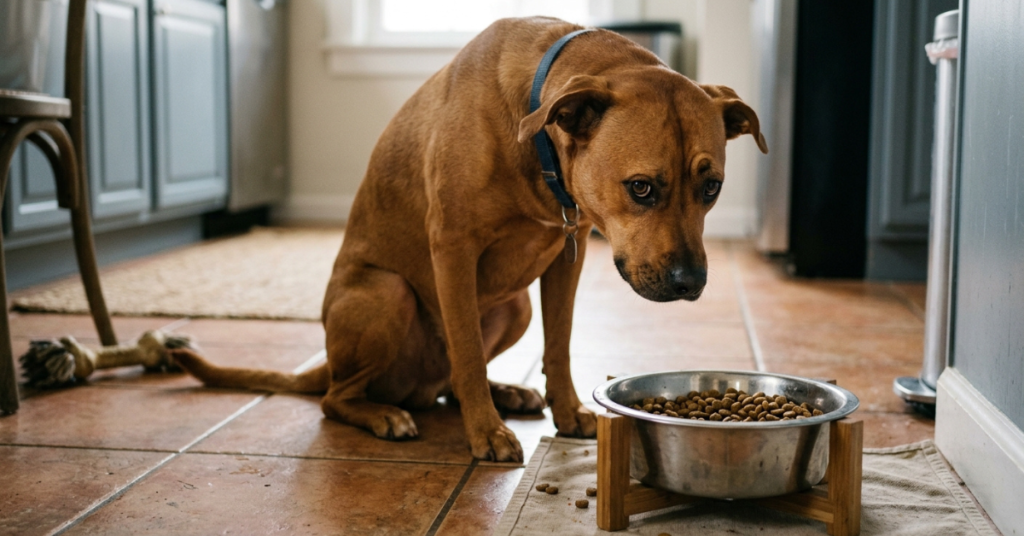
When your dog suddenly turns away from a favorite meal, it is natural to worry. Maybe they sniff their food and walk away, eat only a few bites, or refuse meals altogether. If you’re wondering why is my dog not eating, the answer could be something as simple as a change in routine or something that needs prompt veterinary attention.
A dog’s appetite can change for several reasons, including stress, dental pain, digestive problems, illness, medication side effects, or changes in food. Some dogs may skip a meal and continue acting like themselves, while others develop additional symptoms that signal a more serious problem.
The important thing is to look at the whole picture: how long your dog has gone without eating, whether they are drinking water, how their behavior has changed, and whether they have any other symptoms. Understanding these clues can help you decide what to do next.
Why Is My Dog Not Eating? 10 Common Reasons
A reduced appetite, also called inappetence, is a symptom rather than a diagnosis. Here are some of the most common explanations.
1. Stress or Anxiety
Dogs can be sensitive to changes in their environment. Moving to a new home, traveling, meeting unfamiliar people, staying at a boarding facility, or being left alone more often can affect their appetite.
Some dogs also become nervous around noisy feeding areas or other pets that compete for food. If your dog recently experienced a change and otherwise seems healthy, stress may be contributing to the problem.
What you can do: Offer meals in a quiet, familiar location and maintain a consistent feeding schedule. Give your dog time to settle without forcing them to eat.
2. Changes in Dog Food
Have you recently switched your dog’s food brand, flavor, or formula? A sudden change can make a meal less appealing, and some dogs need time to adjust to a new diet.
Food that has gone stale, developed an unusual smell, or been stored improperly may also put a dog off eating. Even a new bag of the same product can smell or taste slightly different.
What you can do: Check the food’s expiration date, storage conditions, and appearance. When changing diets, transition gradually over about seven days or longer if needed, unless your veterinarian advises otherwise.
3. Too Many Treats or Table Scraps
Treats are useful for training, but too many can leave your dog full before mealtime. Rich human foods can also upset the digestive system, and frequent hand-feeding may encourage some dogs to hold out for something more appealing.
What you can do: Keep treats limited and offer balanced, complete dog food as the main diet. Avoid repeatedly replacing a refused meal with snacks.
4. Dental Pain or Mouth Problems
Your dog may want to eat but find chewing uncomfortable. Broken teeth, gum inflammation, oral injuries, mouth ulcers, and other dental problems can make eating painful.
Watch for signs such as:
- Dropping food while chewing
- Chewing on one side of the mouth
- Bad breath that is worse than usual
- Pawing at the mouth
- Drooling more than normal
- Avoiding hard kibble but showing interest in soft food
If you notice these symptoms, arrange a veterinary examination rather than assuming your dog has become picky.
5. Digestive Upset
Nausea, constipation, diarrhea, and stomach discomfort can all reduce appetite. Dogs may experience digestive problems after eating something unusual, changing foods too quickly, or getting into the trash.
More serious possibilities include pancreatitis, intestinal obstruction, or other gastrointestinal diseases. A dog that repeatedly vomits, develops abdominal pain, or becomes unusually weak needs prompt veterinary assessment.
6. Illness or Infection
Many illnesses can cause a dog to lose interest in food. These include infections, kidney or liver disease, hormonal disorders, and other conditions that affect how the body functions.
A reduced appetite may be one of the first signs that something is wrong. Other symptoms might appear later, so a dog that stops eating without an obvious explanation should be monitored carefully.
7. Medication Side Effects
Some medications can cause nausea, stomach irritation, or changes in appetite. If your dog recently started a new prescription or had a change in dosage, the timing may be relevant.
Contact your veterinarian if appetite loss begins after starting medication. Do not stop a prescribed treatment or change the dosage without professional guidance.
8. Hot Weather
Dogs may eat less during very hot weather, especially if they are less active than usual. However, heat can also lead to dehydration and heatstroke, which are medical emergencies.
Keep fresh water available and provide a cool, shaded place to rest. Heavy panting, excessive drooling, weakness, confusion, or collapse requires emergency veterinary care.
9. Aging and Changes in Activity
Older dogs may become less active and have different nutritional needs. However, appetite loss in a senior dog should not automatically be blamed on age.
Dental disease, chronic pain, reduced sense of smell, kidney problems, and other age-related conditions can make meals less appealing. A veterinary checkup can help identify treatable causes.
10. A More Serious Medical Problem
Sometimes refusing food signals an urgent condition rather than a temporary appetite change. Possible causes include an intestinal blockage, toxin exposure, severe infection, or significant organ disease.
If your dog may have swallowed a toy, bone, medication, chemical, or other dangerous substance, seek veterinary help immediately. Do not wait for appetite to return or try to make your dog vomit unless a veterinarian specifically instructs you to do so.
Why Is My Dog Not Eating His Food but Still Acting Normal?
If your dog refuses a meal but continues playing, drinking water, and behaving normally, the situation may be less urgent than appetite loss accompanied by weakness or vomiting. Still, normal behavior does not rule out an underlying medical problem.
Possible explanations include:
- Your dog is full from treats or an earlier meal.
- The food is stale or less appealing than usual.
- A recent routine change has affected feeding habits.
- Your dog is experiencing mild nausea or early dental discomfort.
- Your dog has developed a preference for certain foods.
What Should You Do?
First, check whether your dog will eat their usual food at the next scheduled meal. Make sure fresh water is available, remove excessive treats, and observe their energy level, bowel movements, and urination.
Do not repeatedly offer rich foods or force-feed your dog. If your dog misses more than one meal, the appetite change persists, or other symptoms develop, contact your veterinarian for advice. Seek help sooner for puppies, very small dogs, senior dogs, and dogs with existing medical conditions.
Why Is My Dog Not Eating Her Food After a Food Change?
If your dog refuses a new food but still seems interested in eating, the change itself may be responsible. Different textures, aromas, kibble sizes, and ingredients can influence whether a dog accepts a meal.
To make a transition easier:
- Mix a small amount of the new food with the current food.
- Gradually increase the new food over approximately seven days, adjusting the pace to your dog’s tolerance.
- Keep meal times consistent.
- Monitor stool quality, vomiting, itching, and other possible signs of intolerance.
- Consult your veterinarian if your dog refuses both the old and new food.
If the food change was prescribed for a medical condition, ask your veterinarian before returning to the previous diet.
Why Is My Dog Not Eating and Throwing Up?
A dog that refuses food and vomits may have anything from mild stomach irritation to a serious medical condition. The combination is more concerning than refusing food alone, particularly when vomiting happens repeatedly.
Possible causes include:
- Eating spoiled food or garbage
- Sudden dietary changes
- Intestinal parasites or infection
- Pancreatitis
- Swallowing a foreign object
- Exposure to a toxic substance
- Kidney, liver, or other systemic disease
Contact a veterinarian promptly if your dog is vomiting and refusing food. Seek emergency care if vomiting is repeated, your dog cannot keep water down, there is blood in the vomit, the abdomen is swollen or painful, or your dog becomes weak or collapses.
Repeated attempts to vomit without bringing anything up, especially with a swollen abdomen, can indicate bloat, a life-threatening emergency. Do not wait to see whether your dog improves.
Why Is My Dog Not Eating or Drinking?
Refusing both food and water is particularly concerning because dehydration can develop, especially when a dog is also vomiting or experiencing diarrhea.
Potential causes include:
- Significant nausea or abdominal pain
- Fever or serious illness
- Dental or mouth pain
- Dehydration
- Kidney problems
- An intestinal blockage or toxin exposure
If your dog refuses water as well as food, contact a veterinarian promptly rather than waiting several days. Seek emergency care if your dog is very weak, has pale or dry gums, struggles to stand, repeatedly vomits, or shows signs of severe dehydration.
Do not force water into your dog’s mouth, as this can cause choking or aspiration.
Why Is My Dog Not Eating but Drinking Water?
Drinking normally while refusing food can be somewhat reassuring, but it does not mean your dog is healthy. Nausea, dental pain, stress, food aversion, and several medical conditions can affect appetite without immediately changing drinking behavior.
Pay attention to whether your dog is drinking their usual amount or noticeably more than normal. Increased thirst combined with reduced appetite can occur with conditions such as diabetes, kidney disease, and other illnesses.
If your dog is drinking but continues to refuse meals, arrange a veterinary assessment if the problem persists or occurs with weight loss, vomiting, diarrhea, or changes in urination.
When Should You Worry About a Dog Not Eating?
The urgency depends on your dog’s age, health, symptoms, and how long they have gone without food.
| Situation | What to do |
|---|---|
| One missed meal, normal behavior, drinking normally | Monitor closely and offer the next scheduled meal |
| Appetite loss continues or approaches 24 hours | Contact your veterinarian for guidance |
| Puppy, toy-breed dog, diabetic dog, or medically fragile dog refuses food | Seek veterinary advice sooner; do not wait 24 hours |
| Refusing food with vomiting, diarrhea, pain, or marked lethargy | Contact a veterinarian promptly |
| Refusing food and water, suspected poisoning, breathing difficulty, collapse, or swollen abdomen with retching | Seek emergency veterinary care |
These are general guidelines, not a guarantee that waiting is safe. Some conditions worsen quickly, and puppies or dogs with underlying illnesses may need care much sooner.
How to Encourage Your Dog to Eat Safely
If your dog is otherwise well and has no warning signs, a few simple changes may help.
1. Establish a Calm Feeding Routine
Serve meals at consistent times in a quiet area. Keep other pets away if they create competition or anxiety, and give your dog enough space to eat comfortably.
2. Check the Food
Inspect the expiration date, smell, texture, and storage conditions. Wash food bowls regularly and make sure the bowl is comfortable for your dog’s size and feeding habits.
3. Try Slightly Warming Wet Food
Warming a small portion of suitable wet dog food can increase its aroma and make it more appealing. It should be lukewarm, never hot, and stirred thoroughly to prevent hot spots.
4. Reduce Treats Between Meals
Limit snacks and avoid giving lots of table scraps. If your dog fills up on extras, they may have less interest in their regular balanced diet.
5. Keep Fresh Water Available
Always provide clean drinking water. Monitor how much your dog drinks, especially if they have vomiting, diarrhea, or other signs of illness.
6. Keep a Record of Symptoms
Note when your dog last ate, how much they drank, whether they vomited, and any changes in their stool, urination, or energy. This information can help your veterinarian assess the problem.
Important: Do not give human medications, appetite stimulants, or supplements without veterinary advice. Avoid force-feeding and do not use fatty foods or unfamiliar ingredients as a quick fix.
Why Puppies May Suddenly Stop Eating
Puppies need regular nutrition to support growth, and small puppies can deteriorate faster than healthy adult dogs when they are not eating. A missed meal may be particularly concerning in very young or toy-breed puppies because they are more vulnerable to low blood sugar.
Possible causes include stress from a new home, intestinal parasites, infection, dietary changes, swallowed objects, and digestive upset.
If a puppy refuses food, contact a veterinarian promptly, especially if they also have vomiting, diarrhea, trembling, unusual sleepiness, weakness, or difficulty standing. Do not wait until the next day if the puppy appears unwell.
How a Veterinarian Diagnoses Appetite Loss
A veterinarian will consider your dog’s age, medical history, diet, medications, and accompanying symptoms. They may examine the mouth and teeth, feel the abdomen, check hydration, and assess body temperature and overall condition.
Depending on the findings, diagnostic tests may include:
- Blood tests to evaluate organ function and look for signs of infection or other abnormalities
- Urinalysis to investigate hydration, kidney function, and metabolic problems
- Fecal testing for intestinal parasites
- X-rays or ultrasound when obstruction or abdominal disease is suspected
- Additional tests guided by the physical examination
Treatment depends on the underlying cause. A dog with dental pain may need dental treatment, while a dog with dehydration may require fluid therapy. Treating the cause is more effective than simply trying to stimulate appetite.
Frequently Asked Questions
How long can a dog go without eating?
There is no single safe time limit for every dog. Although some healthy adult dogs may occasionally skip a meal, going without food for around 24 hours warrants veterinary guidance. Puppies, toy breeds, diabetic dogs, and dogs with existing illnesses may need attention much sooner.
Should I be worried if my dog skips one meal?
Not necessarily. If your adult dog is behaving normally, drinking water, and has no other symptoms, you can monitor them closely and offer their next regular meal. If appetite loss continues or you notice other changes, contact your veterinarian.
Why is my dog hungry but refusing his food?
Your dog may dislike the food’s taste or texture, feel uncomfortable chewing, or experience nausea. A dog that eagerly accepts treats but rejects regular meals may also have learned to wait for something more appealing. However, persistent refusal of normal food still deserves attention.
Can stress cause a dog to stop eating?
Yes. Travel, moving house, changes in the household, loud surroundings, and separation anxiety can affect a dog’s appetite. If the appetite loss persists, is severe, or occurs with other symptoms, do not assume stress is the only cause.
Should I change my dog’s food if they won’t eat?
Not immediately. First check whether the food is fresh and whether anything has changed in your dog’s routine. Repeatedly switching foods can make it harder to identify the cause and may upset digestion. Consult your veterinarian if refusal continues.
Is it normal for an older dog to eat less?
Older dogs may have different energy requirements, but a noticeable or sudden reduction in appetite should not be dismissed as normal aging. Dental disease, pain, and chronic illnesses can affect eating, so a veterinary checkup is worthwhile.
What can I feed my dog when they refuse food?
If your dog is otherwise healthy and has no warning signs, you can try their usual complete dog food, perhaps slightly warmed if appropriate. Avoid rich, fatty, seasoned, or unfamiliar foods. If your dog has vomiting, abdominal pain, or suspected poisoning or obstruction, seek veterinary guidance before offering food.
Why is my dog not eating but still pooping?
Passing stool does not rule out illness. Your dog may still pass stool from food eaten earlier, and constipation, digestive disorders, or a partial intestinal obstruction can affect appetite. Seek veterinary advice if refusal continues or your dog develops pain, vomiting, or changes in bowel movements.
Can worms cause a dog to stop eating?
Yes. Intestinal parasites can contribute to appetite changes, weight loss, diarrhea, vomiting, and a poor coat, although some infected dogs show few obvious signs. Your veterinarian can recommend appropriate fecal testing and deworming treatment.
Should I force my dog to eat?
No. Force-feeding can cause stress and may lead to choking or aspiration, particularly if your dog is nauseated, weak, or has difficulty swallowing. If your dog will not eat voluntarily, contact your veterinarian to determine the safest next step.
Conclusion
If you’re asking, why is my dog not eating, start by considering recent changes in food, routine, stress levels, and access to treats. A single missed meal in an otherwise healthy adult dog may not indicate a serious problem, but persistent appetite loss can be an early sign of illness.
Pay close attention to drinking habits, vomiting, bowel movements, energy levels, and signs of pain. Contact your veterinarian if the problem persists, and seek urgent care for severe symptoms, refusal of both food and water, or suspected toxin exposure.
Your dog’s appetite is an important clue to their overall health. When in doubt, getting professional advice early is safer than waiting for the problem to resolve on its own.