
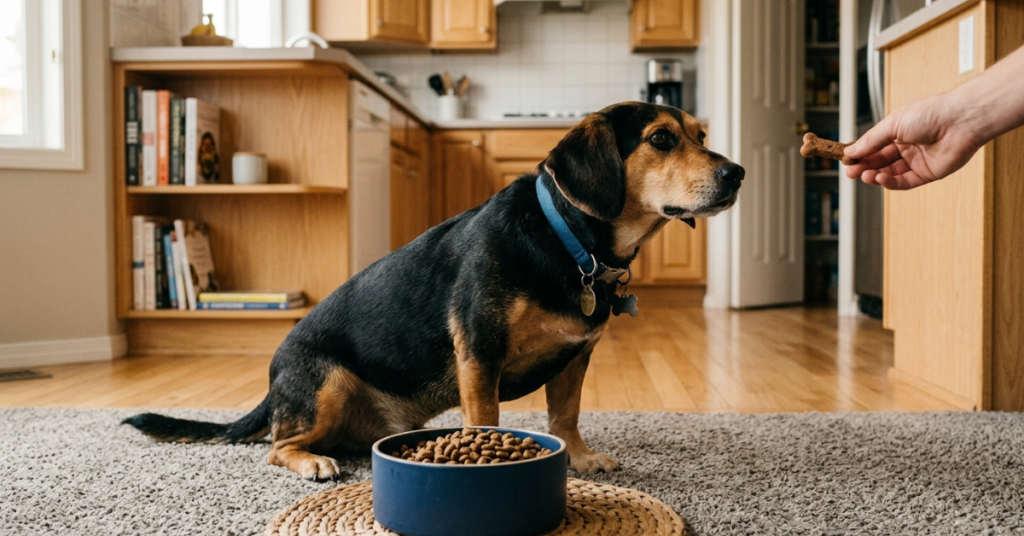
You put your dog’s favorite food in his bowl, expecting him to finish it in minutes. Instead, he sniffs it, walks away, and then happily accepts a treat the moment you offer one. Sound familiar? If you’re wondering, why is my dog not eating his food but will eat treats, you’re certainly not alone.
This behavior can be caused by something as simple as pickiness or too many snacks between meals. However, it can also indicate dental pain, nausea, stress, or another health problem that makes regular food less appealing.
The key is to understand whether your dog is being selective about what he eats or struggling with an underlying issue. Let’s look at the most common reasons, what you can do at home, and when it’s time to contact your veterinarian.
Why Is My Dog Refusing His Food but Eating Treats?
Dogs don’t always lose their appetite completely when they refuse their regular meals. Treats often have stronger smells, richer flavors, and more appealing textures than everyday dog food. A dog that turns down kibble but eagerly eats a favorite snack may still have an appetite, but that doesn’t automatically mean he’s healthy.
Here are the most common explanations.
1. Your Dog Has Become a Picky Eater
Some dogs develop strong food preferences, especially when they’re regularly offered different meals. If your dog refuses his kibble and you immediately replace it with chicken, cheese, or another favorite, he may learn that waiting leads to something tastier.
Dogs can quickly recognize patterns. If refusing dinner consistently earns them a better option, they may become increasingly selective.
What you can do:
- Choose a complete and balanced dog food appropriate for your dog’s age and life stage.
- Offer meals at consistent times.
- Avoid constantly switching foods to find something he likes better.
- Reward good eating habits without making every meal a negotiation.
Still, don’t assume your dog is simply stubborn if this behavior starts suddenly. A new refusal to eat deserves more attention than a long-standing preference for certain foods.
2. He’s Getting Too Many Treats
Treats are small, but their calories add up. Frequent snacks, training rewards, table scraps, and dental chews can reduce your dog’s appetite for regular meals.
This is particularly common in small dogs, puppies receiving frequent rewards, and dogs whose families enjoy sharing food throughout the day.
Veterinary nutrition guidance generally recommends keeping treats and other extras to around 10% or less of a dog’s daily calories, with the remaining calories coming from a complete and balanced diet.
Try these changes:
- Track every snack your dog receives during the day.
- Reduce unnecessary treats between meals.
- Use part of his daily kibble allowance as training rewards if appropriate.
- Offer regular meals before giving nonessential treats.
If your dog begins eating normally after you reduce excessive snacking, treats may have been contributing to the problem.
3. Dental Pain Is Making Eating Uncomfortable
A dog may want to eat but find chewing painful. Dental disease, broken teeth, inflamed gums, mouth injuries, and other oral problems can make hard kibble uncomfortable while soft treats remain easier to swallow.
Look for signs such as:
- Bad breath that is noticeably worse than usual
- Dropping food while chewing
- Chewing on one side of the mouth
- Pawing at the face or mouth
- Drooling more than usual
- Red, swollen, or bleeding gums
Some dogs continue accepting treats even when their mouths hurt, so their willingness to eat snacks does not rule out dental disease.
If you notice these signs, arrange a veterinary examination. Don’t force your dog’s mouth open if he’s painful or resisting, and avoid giving human pain medication unless a veterinarian specifically directs you to do so.
4. Your Dog Feels Nauseated or Unwell
Nausea doesn’t always cause complete food refusal. A dog may show interest in food, approach the bowl, sniff it, and then turn away. He might still accept a highly appealing treat, especially in the early stages of an illness.
Possible accompanying symptoms include:
- Lip licking or repeated swallowing
- Drooling
- Vomiting or retching
- Diarrhea
- Reduced energy
- Changes in drinking habits
- Abdominal discomfort
Digestive upset, infections, medication side effects, pancreatitis, and other medical conditions can affect appetite.
If your dog is suddenly refusing his normal food, especially if the change is accompanied by other symptoms, contact your veterinarian rather than trying to tempt him with increasingly rich foods.
5. Stress, Anxiety, or Changes at Home
Dogs can be sensitive to changes in their surroundings. Moving house, traveling, introducing a new pet, loud construction, visitors, or changes in routine may affect their eating habits.
Some dogs feel uncomfortable eating when there is too much activity around their bowls. Others may eat treats from your hand because they feel reassured by your presence.
To make mealtimes easier:
- Feed your dog in a quiet, familiar location.
- Keep meal times reasonably consistent.
- Give him space to eat without interruptions.
- Make gradual changes to his routine whenever possible.
Stress may explain a temporary change in appetite, but persistent food refusal should not automatically be blamed on anxiety.
6. He Doesn’t Like His Food Anymore
Dogs may refuse food because its smell, taste, or texture has changed. A new recipe, different kibble size, stale food, or a recently opened bag from a different batch may affect how appealing the meal is.
Food can also become unpalatable if it has been stored improperly or exposed to moisture and heat.
Check the following:
- Is the food within its expiration date?
- Does it smell unusual or look different?
- Has the recipe or brand recently changed?
- Has the bag been kept sealed in a cool, dry place?
- Is the bowl clean and free of old food residue?
If the food appears spoiled or contaminated, discard it. If you need to change brands, a gradual transition over several days is generally preferable for a healthy dog, unless your veterinarian recommends otherwise.
7. Your Dog Is Experiencing an Age-Related Change
Puppies, adult dogs, and senior dogs can have different reasons for refusing meals.
Puppies: Teething, changes in routine, stress, or illness can affect eating. Because puppies have smaller energy reserves and can deteriorate quickly, missed meals deserve particular attention, especially in very young or toy-breed puppies.
Adult dogs: Excessive treats, food preferences, stress, and dental problems are common possibilities.
Senior dogs: Dental disease, reduced sense of smell, digestive issues, chronic illness, and medication effects may contribute to appetite changes.
Age alone isn’t a sufficient explanation for a dog refusing food. If the behavior is new or persistent, a veterinarian can help identify the cause.
8. An Underlying Medical Condition Is Affecting His Appetite
A dog that eats treats but refuses regular meals may still have a medical problem. Certain conditions reduce appetite without eliminating it entirely.
Potential causes include:
- Gastrointestinal disease
- Kidney or liver disease
- Pancreatitis
- Infections or fever
- Pain from arthritis or another injury
- Hormonal or metabolic disorders
- Side effects from medication
These conditions cannot be reliably distinguished by appetite alone. A veterinarian may recommend a physical examination, dental assessment, blood tests, urine testing, or imaging depending on your dog’s symptoms and medical history.
Important: If your dog is repeatedly refusing meals, losing weight, acting unusually tired, or showing other signs of illness, don’t rely on treats to keep him eating. Arrange a veterinary assessment.
How to Get Your Dog to Eat His Regular Food Again
If your dog is otherwise acting normally and there are no warning signs, a few sensible changes may help. The goal is to make his regular meals appealing without overlooking a possible medical problem.
Step 1: Check His Overall Health First
Before changing his diet, consider whether he is drinking normally, behaving as usual, passing normal stools, and maintaining his weight.
Check for mouth pain, vomiting, diarrhea, unusual drooling, or difficulty swallowing. If you notice concerning symptoms, contact a veterinarian before experimenting with food.
Step 2: Establish a Consistent Feeding Routine
Offer food at predictable times in a quiet place. For a healthy adult dog, you can generally allow around 15–20 minutes for a meal before removing the bowl, provided he has no medical or dietary reason to eat more frequently.
Don’t use this approach to withhold food from a sick dog, a very young puppy, a dog with diabetes, or another dog who needs a veterinarian-directed feeding schedule.
Step 3: Cut Back on Unnecessary Treats
If your dog is filling up on snacks, reduce them gradually and account for their calories. Avoid offering a succession of alternatives every time he refuses his meal.
However, don’t use hunger as a training tactic when your dog may be unwell. Persistent food refusal needs investigation, not a battle of wills.
Step 4: Make His Food More Appealing
You can try simple changes if your dog is healthy and your veterinarian hasn’t prescribed a special diet.
- Add a little warm water to dry kibble to soften it and release its aroma.
- Warm wet food slightly, ensuring it is not hot.
- Try feeding in a quieter location.
- Make sure the food is fresh and served in a clean bowl.
If you add broth or another topper, choose one that is safe for dogs and free from ingredients such as onion and garlic. Avoid heavily seasoned foods, fatty table scraps, and sudden changes to a prescribed diet.
Step 5: Monitor What He Actually Eats
Keep a brief record of meals, treats, water intake, bowel movements, and any unusual behavior. This helps you determine whether he’s eating enough overall or merely accepting a few snacks.
It also gives your veterinarian useful information if the problem continues.
Step 6: Avoid Force-Feeding
Don’t force food into your dog’s mouth or syringe-feed him unless a veterinarian has specifically instructed you and shown you how to do it safely. Improper feeding can cause choking or aspiration, and forcing food may worsen aversion.
If he cannot or will not eat enough, your veterinarian can recommend an appropriate feeding plan.
How Long Can a Dog Go Without Eating?
There isn’t one safe waiting period for every dog. Age, body size, medical history, hydration, and the reason for refusing food all matter.
A healthy adult dog that skips one meal but otherwise behaves normally may not be experiencing an emergency. However, contact your veterinarian if your dog has refused food for about 24 hours, or sooner if the change is unusual or you are concerned.
Seek advice much sooner for puppies, toy breeds, senior dogs with health problems, diabetic dogs, and dogs taking medication that needs to be given with food. Follow any specific feeding instructions your veterinarian has provided.
Warning Signs That Need Prompt Veterinary Attention
Get urgent veterinary advice if food refusal occurs with:
- Repeated vomiting or inability to keep water down
- A swollen or painful abdomen
- Severe lethargy, weakness, or collapse
- Difficulty breathing or swallowing
- Pale gums or other signs of serious illness
- Blood in vomit or stool
- Suspected ingestion of a toxin or foreign object
A dog that may have swallowed a toy, bone, medication, chemical, or other dangerous substance should be assessed promptly even if he is still willing to eat treats.
Could Treats Be Hiding a Bigger Problem?
Yes. Treats can make it seem as though your dog is eating normally when he is actually consuming far fewer calories than he needs.
For example, a dog might accept a few small biscuits throughout the day but leave most of his complete meals untouched. That doesn’t guarantee adequate nutrition, and treats may not provide the right balance of protein, fats, vitamins, and minerals.
Pay attention to the bigger picture: how much he eats, whether his weight is changing, how much he drinks, and whether his energy and behavior are normal.
If you have recently changed food, started medication, or noticed weight loss, share that information with your veterinarian. It may help narrow down the possible causes.
Frequently Asked Questions
Why will my dog eat treats but not his dog food?
Treats are often more aromatic, flavorful, or rewarding than regular food. Your dog may also be full from snacks, dislike the food’s texture, feel stressed, or have dental pain or an illness. A sudden change in eating habits deserves closer attention.
Should I stop giving my dog treats if he won’t eat his food?
If your dog is healthy, reducing unnecessary treats can help restore his appetite for balanced meals. Keep treats to roughly 10% or less of daily calories as a general guideline. If he is unwell, very young, diabetic, or on a prescribed feeding plan, ask your veterinarian before changing his feeding routine.
Is my dog being picky or is he sick?
A dog that has always been selective but remains energetic, maintains his weight, and eats a balanced diet may simply have food preferences. Sudden food refusal, weight loss, vomiting, diarrhea, pain, or lethargy suggests a possible medical issue and warrants veterinary advice.
Why is my dog not eating dry food but eating wet food or treats?
Dry kibble can be harder to chew and may be less appealing because of its texture or smell. Dental problems can also make hard food uncomfortable. Soft food may be easier to eat, but switching textures does not rule out a health problem.
Why has my dog suddenly stopped eating his regular food?
A sudden change can result from spoiled food, a new diet, stress, nausea, dental pain, medication effects, or another illness. Check the food and look for other symptoms. If the refusal persists, contact your veterinarian rather than assuming your dog is simply fussy.
Can teething cause a puppy to refuse food but eat treats?
Yes. Teething can make chewing uncomfortable, particularly with hard kibble. However, puppies can also become ill or develop low blood sugar, especially very young or small puppies. Offer appropriate food and contact your veterinarian promptly if your puppy misses meals, seems weak, vomits, or behaves unusually.
Should I hand-feed my dog if he refuses his bowl?
Hand-feeding a small amount may help some healthy dogs feel more comfortable eating, but it shouldn’t become the only way they will eat. If your dog suddenly needs encouragement to eat or repeatedly refuses his bowl, investigate the reason rather than relying on hand-feeding.
Will my dog eventually eat if I leave his food out?
Some healthy, selective adult dogs resume eating when their feeding routine becomes consistent. But leaving food out or waiting for hunger to force a response is not appropriate for every dog. Puppies, medically vulnerable dogs, and dogs with persistent appetite loss need individualized advice.
When should I take my dog to the vet for not eating?
Seek urgent care if your dog has severe symptoms, repeated vomiting, a painful or swollen abdomen, difficulty swallowing, collapse, or suspected toxin ingestion. For food refusal without emergency signs, contact your veterinarian if it lasts around 24 hours, sooner for puppies and medically vulnerable dogs, or whenever the change concerns you.
Conclusion
If you’re asking, “Why is my dog not eating his food but will eat treats?” the answer may be as simple as too many snacks or a preference for tastier food. However, dental pain, nausea, stress, and underlying medical conditions can cause similar behavior.
Start by checking for warning signs, reviewing his treats and feeding routine, and making sure his food is fresh. If the behavior is sudden, persists, or comes with other symptoms, consult your veterinarian rather than assuming your dog is being difficult.
Your dog’s eating habits are an important part of his overall health. For more practical advice, explore related articles on dog nutrition, safe treats, dental care, and common changes in canine behavior.