
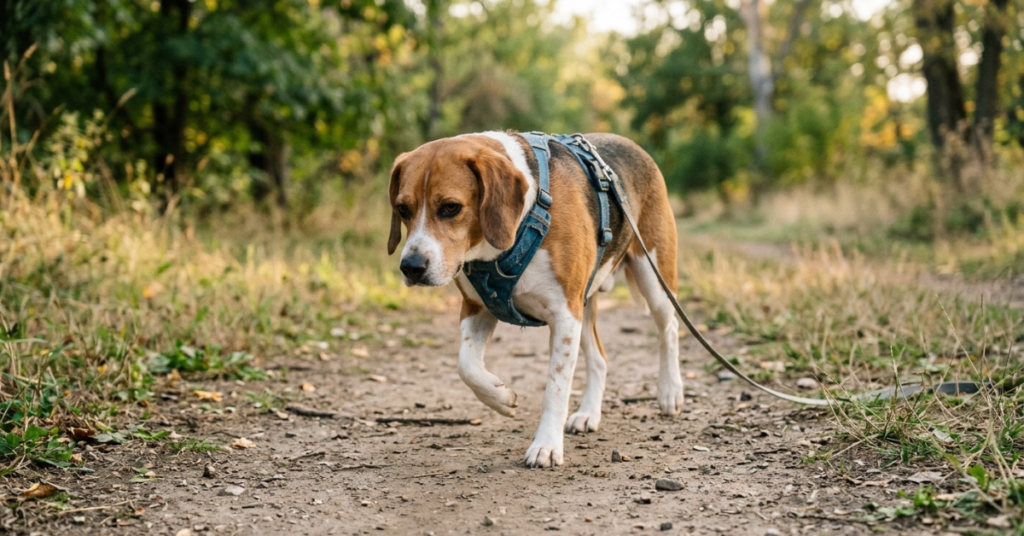
Watching your dog run, play, and explore is one of the best parts of having a pet. So, when your usually energetic companion suddenly starts favoring one leg, avoiding stairs, or hesitating to stand up, it is natural to worry. If you’re wondering, why is my dog limping, the answer can range from a small thorn stuck in a paw to a more serious joint, bone, or ligament injury.
Limping, also called lameness, is a sign that your dog may be experiencing pain, weakness, restricted movement, or another physical problem. It is not a diagnosis on its own. The location of the limp, how suddenly it appeared, your dog’s age, and any other symptoms can help you understand what might be happening.
Some cases improve with appropriate rest, while others need prompt veterinary attention. Knowing the difference can help you make a safer decision for your dog.
Why Is My Dog Limping? Common Causes
Dogs can limp for several reasons, and the cause is not always obvious. Even a dog that appears healthy and active can develop an injury or joint problem after an ordinary walk or play session.
Here are some of the most common possibilities.
1. Paw Injuries and Foreign Objects
Sometimes, the problem starts at the bottom of the foot rather than in the leg itself. A thorn, small stone, splinter, piece of glass, or other foreign object can make walking uncomfortable.
Check your dog’s paws for:
- Cuts, punctures, or abrasions.
- Redness or swelling between the toes.
- Broken or damaged nails.
- Something lodged in the paw pad.
- Excessive licking or chewing of one foot.
A small, superficial object may be easy to spot, but do not dig into the paw to remove something deeply embedded. Puncture wounds can also become infected, so veterinary advice may be necessary.
2. Muscle Strains and Sprains
Dogs sometimes overdo it while running, jumping, playing fetch, or wrestling with other dogs. A muscle strain involves damage to muscle fibers, while a sprain affects a ligament that supports a joint.
A mild injury may cause a slight limp that becomes more noticeable after exercise or when your dog first stands up. More significant injuries can cause swelling, reluctance to move, or difficulty putting weight on the affected leg.
Do not assume that every exercise-related limp is minor. Ligament injuries and fractures can initially resemble a simple strain.
3. Arthritis and Joint Problems
Osteoarthritis is a common cause of stiffness and reduced mobility, particularly in older dogs. The condition involves changes within a joint that can lead to discomfort, inflammation, and difficulty moving.
You may notice that your dog:
- Is stiff after sleeping or resting.
- Takes longer to stand up.
- Avoids jumping onto furniture.
- Walks more slowly than usual.
- Becomes less interested in long walks.
Arthritis can also affect younger dogs, especially those with certain joint abnormalities or previous injuries. A veterinarian can assess mobility and recommend a treatment plan to help maintain comfort.
4. Ligament Injuries
The cranial cruciate ligament in a dog’s knee helps stabilize the joint. When it is damaged or torn, your dog may suddenly begin limping on a hind leg.
Some dogs stop bearing weight on the affected leg, while others continue walking with a persistent or intermittent limp. The injury may happen during exercise, but ligament degeneration can also develop gradually without a dramatic accident.
These injuries generally require veterinary assessment. Depending on the severity, your dog’s size, and other factors, treatment may involve activity restriction, rehabilitation, medication, or surgery.
5. Fractures and Dislocations
A broken bone or dislocated joint can cause significant limping, swelling, abnormal positioning, and difficulty standing or walking. These injuries may follow a fall, vehicle accident, forceful landing, or other trauma.
However, not every fracture results from a major accident. Some dogs develop fractures because their bones are weakened by an underlying condition.
If you suspect a fracture or dislocation, keep your dog as still as possible and seek urgent veterinary care. Do not try to straighten the leg or push a joint back into place.
6. Infections, Inflammation, and Abscesses
An infected wound, bite, abscess, or inflamed joint may cause limping. The affected area can feel warm, look swollen, or become painful when touched.
Other warning signs include lethargy, reduced appetite, fever, or discharge from a wound. A joint infection can be particularly serious and needs prompt veterinary attention.
7. Bone and Joint Development Problems
Certain conditions affect how a dog’s bones and joints develop. Examples include hip dysplasia, elbow dysplasia, and some disorders affecting growing bones.
These problems may cause intermittent limping, stiffness after exercise, difficulty rising, or an unusual gait. Large and giant breeds can be particularly susceptible to some developmental joint conditions, although any dog can be affected by orthopedic problems.
A veterinarian may recommend a physical examination and imaging, such as X-rays, to investigate the cause.
Why Is My Dog Limping on His Back Leg?
A hind-leg limp can be especially noticeable when your dog runs, climbs stairs, jumps, or rises from the floor. If you’re trying to work out why your dog is limping on a back leg, several causes are worth considering.
Common possibilities include:
- Cruciate ligament injury: Damage to a knee ligament can cause sudden or persistent hind-leg limping.
- Hip dysplasia or arthritis: Joint problems may lead to stiffness, reduced activity, and difficulty standing.
- Paw or nail injuries: A damaged rear paw or torn nail can make your dog reluctant to bear weight.
- Muscle strain: Running, jumping, or slipping can injure muscles in the thigh or lower leg.
- Patellar luxation: The kneecap moves out of its normal position, sometimes causing a brief skip or hop before your dog resumes walking.
- Fractures or other traumatic injuries: Falls and accidents can damage bones, joints, or surrounding tissues.
What if the Back Right Leg Is Limping?
The same causes can affect either hind leg. A limp on the right side does not automatically point to a particular injury, and it can be difficult to identify the exact structure involved just by watching your dog walk.
If your dog suddenly refuses to use the right hind leg, has marked swelling, or appears unable to stand comfortably, seek urgent veterinary care. A mild but persistent limp also deserves an examination rather than repeated attempts to exercise through it.
Why Is My Dog Limping on His Front Leg?
Front-leg limping can result from problems involving the paw, wrist, elbow, shoulder, or neck. Dogs carry a substantial proportion of their body weight on their front legs, so even a relatively small injury can affect walking.
Possible causes include:
- Damaged paw pads or nails: Cuts, broken nails, and trapped debris can cause immediate discomfort.
- Muscle or tendon injuries: Overstretching or strenuous activity can affect the shoulder and surrounding tissues.
- Elbow dysplasia: Developmental abnormalities in the elbow can lead to pain and progressive lameness.
- Shoulder injuries: Tendon, muscle, or joint problems may cause limping that worsens with activity.
- Arthritis: Inflammation and degenerative changes can affect the elbow, shoulder, or other joints.
- Bone injuries: Fractures can occur after trauma or, less commonly, because of underlying bone disease.
What If the Front Left Leg Is Limping?
A limp in the left front leg does not necessarily mean the shoulder is injured. The problem may be in the toes, nail bed, paw pad, wrist, elbow, or even the neck.
If your dog is licking the paw, inspect it gently for visible injuries. If the paw looks normal but the limp continues, a veterinary examination can help identify problems that are not visible from the outside.
Why Is My Dog Limping All of a Sudden?
Sudden limping can be alarming, especially when your dog was walking normally just minutes earlier. It may follow a jump, a slip on a smooth floor, a fast turn during play, or stepping on something sharp.
Possible explanations include:
- A sudden paw injury: A thorn, cut, or damaged nail can cause an immediate change in walking.
- A muscle or ligament injury: An awkward landing or sudden movement may damage soft tissue.
- A fracture or dislocation: Trauma can cause severe pain and difficulty bearing weight.
- A joint problem: A kneecap may temporarily move out of position, or a joint may become acutely inflamed.
- An unnoticed injury: Dogs may continue playing despite discomfort, making an injury apparent only after activity stops.
Sometimes, the apparent sudden onset is misleading. A joint or ligament problem may have been developing for weeks before becoming obvious.
Seek emergency veterinary care if the limp follows a significant accident, your dog cannot stand or walk, the leg looks deformed, there is heavy bleeding, or your dog shows severe pain. Sudden weakness or dragging of the legs can indicate a neurological emergency.
Why Is My Dog Limping Out of Nowhere but Not Crying?
One of the most confusing situations is when a dog begins limping without whining, yelping, or showing obvious distress.
Dogs do not always vocalize when they are uncomfortable. Some continue eating, wagging their tails, and interacting normally despite an injury.
A dog that is limping but not crying may have:
- A mild muscle strain.
- A small paw injury.
- Early arthritis or joint stiffness.
- A ligament injury.
- A problem that causes discomfort only when the leg is loaded in a particular way.
The absence of crying does not establish that the injury is minor. Look at how your dog moves, whether they put weight on the leg, and whether the limp improves or worsens.
If your dog continues to limp, has difficulty rising, or repeatedly avoids putting weight on a limb, arrange a veterinary examination. A dog that cannot bear weight should be assessed urgently even if it seems calm.
Why Is My Dog Limping but Doesn’t Seem to Be in Pain?
A dog may appear comfortable at rest but limp while walking. This can happen because the affected area is stressed only during certain movements.
For example, a dog with a joint problem might walk reasonably well on a flat surface but struggle with stairs. Another dog may limp for the first few steps after getting up and then move more freely.
Potential causes include:
- Early osteoarthritis.
- Mild or intermittent ligament problems.
- Kneecap instability.
- Subtle paw or nail injuries.
- Muscle weakness or neurological conditions.
Some neurological problems affect coordination or limb placement rather than causing obvious pain. Dragging the paws, scuffing the nails, crossing the legs, or sudden weakness warrants prompt veterinary assessment.
Do not use your dog’s apparent comfort as the only measure of how serious the problem might be.
Why Is My Dog Limping After Laying Down?
If your dog limps for a short time after sleeping or resting, then gradually walks more normally, joint stiffness is one possible explanation. Osteoarthritis can cause this pattern, particularly in middle-aged and older dogs.
However, stiffness after rest is not exclusive to arthritis. Soft-tissue injuries, hip problems, and other orthopedic conditions can produce similar symptoms.
Pay attention to the pattern:
- Does the limp occur after every nap?
- Does it improve after a few minutes of gentle movement?
- Is it getting more frequent or lasting longer?
- Does your dog struggle to stand, climb stairs, or jump?
Record these observations and share them with your veterinarian. A short video of your dog walking naturally can also be useful, especially if the limp comes and goes during the day.
Why Is My Dog Limping and Licking His Paw?
Repeated paw licking often suggests irritation, discomfort, or itching. When it occurs alongside limping, check for a local problem such as a cut, broken nail, thorn, insect sting, or inflammation between the toes.
Allergies can also cause persistent paw licking, although allergies alone do not explain every case of lameness. Infections, small wounds, and foreign objects may be hidden beneath fur or between the pads.
Here’s what to do:
- Gently examine the paw in good lighting.
- Check the pads, nails, and spaces between the toes.
- Look for swelling, redness, discharge, or a visible object.
- Prevent excessive licking if possible, using a properly fitted protective collar when appropriate.
- Contact your veterinarian if the paw is swollen, bleeding, painful, or persistently licked.
Avoid applying human creams, essential oils, or disinfectants without veterinary guidance. Some products can irritate the skin or be harmful if swallowed.
How to Check a Limping Dog at Home
If your dog is alert, comfortable enough to handle, and has no signs of a serious injury, you can perform a gentle visual check before contacting your veterinarian.
Step 1: Observe Your Dog Walking
Watch your dog take a few natural steps on a flat, non-slip surface. Notice which leg seems affected, whether your dog is putting weight on it, and whether the limp changes over time.
Do not force your dog to walk if they are struggling or appear distressed.
Step 2: Examine the Paw
Look for cuts, damaged nails, swelling, trapped debris, or redness between the toes. Check all four paws because dogs may shift their weight and make the source of the limp less obvious.
Step 3: Look for Swelling or Visible Injuries
Compare the affected limb with the opposite limb. Obvious swelling, unusual positioning, bleeding, or a visible wound can provide useful information for your veterinarian.
Do not squeeze a swollen area or manipulate joints to see whether they hurt.
Step 4: Review Recent Activities
Think about whether your dog recently:
- Jumped off a bed, sofa, or vehicle.
- Slipped on a smooth floor.
- Played vigorously with another dog.
- Walked over rough ground.
- Had a recent fall or other accident.
This information may help your veterinarian narrow down possible causes.
Step 5: Record What You Notice
Take a short video if your dog can walk safely without being forced. Note when the limp began, which leg appears affected, and whether it is improving or worsening.
A video is helpful, but it does not replace an examination.
What Should I Do if My Dog Is Limping?
The safest response depends on the severity of the limp and your dog’s overall condition.
For a Mild Limp
If your dog is still bearing weight, seems otherwise well, and has no obvious severe injury:
- Stop running, jumping, fetch, and rough play.
- Take your dog outside only for short, controlled toilet breaks.
- Use a leash to prevent sudden bursts of activity.
- Provide a comfortable place to rest.
- Monitor the limp closely and arrange veterinary advice if it persists or returns.
Do not use exercise to test whether your dog has recovered. A dog may appear better after warming up while the underlying injury remains.
When to See a Veterinarian
Contact a veterinarian promptly if your dog has a persistent or worsening limp, recurrent episodes, noticeable swelling, a damaged nail, an open wound, or difficulty getting up.
A mild limp that does not clearly improve within 24 hours should be assessed, and you should seek advice sooner if your dog is older, very young, has an existing medical condition, or develops other symptoms.
When Is Limping an Emergency?
Seek urgent veterinary care if your dog:
- Cannot stand or walk normally.
- Completely refuses to bear weight on a leg.
- Has a visibly deformed limb or suspected fracture.
- Has severe pain, heavy bleeding, or a deep wound.
- Develops sudden leg weakness, paralysis, or dragging paws.
- Has a limp after being hit by a vehicle or suffering major trauma.
- Appears seriously unwell, collapses, or has difficulty breathing.
Keep your dog as still and comfortable as possible while arranging transport. If you suspect a spinal injury, avoid bending or twisting the back and ask the veterinary team how to move your dog safely.
How Do Veterinarians Diagnose Limping?
Because different conditions can produce similar symptoms, a veterinarian may need to examine the entire limb rather than just the area where the limp seems to originate.
The assessment may include:
Medical history: When the limp began, whether it appeared suddenly, recent exercise, previous injuries, and any changes in appetite or behavior.
Gait assessment: Observing how your dog stands, walks, and distributes weight across the limbs.
Physical examination: Checking the paws, nails, joints, muscles, and range of motion for pain, swelling, instability, or restricted movement.
Diagnostic imaging: X-rays may be recommended to investigate fractures, arthritis, or certain joint abnormalities. Ultrasound, CT, MRI, or other tests may be appropriate for selected soft-tissue, neurological, or complex orthopedic problems.
Laboratory testing: Blood tests or samples from an affected area may be needed when infection, inflammation, or a broader illness is suspected.
Not every dog requires every test. The veterinarian will recommend investigations based on the examination findings and the suspected cause.
Treatment Options for a Limping Dog
Treatment depends on the underlying condition, not simply on how noticeable the limp appears.
| Possible cause | Common veterinary treatment approach |
|---|---|
| Minor paw irritation | Cleaning, wound care, and protection as appropriate |
| Muscle strain | Restricted activity and a veterinarian-directed recovery plan |
| Arthritis | Pain management, weight management, exercise adjustments, and rehabilitation |
| Cruciate ligament injury | Individualized treatment, potentially including surgery |
| Fracture or dislocation | Stabilization and, in some cases, surgical treatment |
| Infection or abscess | Appropriate wound care and targeted medication when indicated |
| Neurological problem | Further testing and treatment directed at the underlying cause |
Recovery times vary. A minor injury may improve relatively quickly, whereas ligament damage, fractures, and chronic joint disease can require weeks or longer of treatment and rehabilitation.
Follow your veterinarian’s instructions even if your dog starts walking normally again. Returning to full activity too early can aggravate an injury or delay healing.
What Not to Do When Your Dog Is Limping
Trying to help is understandable, but some common home remedies can make matters worse.
- Do not give human painkillers. Ibuprofen, naproxen, and acetaminophen can be dangerous to dogs when used incorrectly or without veterinary direction.
- Do not force the leg to move. Avoid stretching, twisting, or repeatedly bending the affected joint.
- Do not encourage exercise. Running and jumping may worsen a soft-tissue injury or unstable joint.
- Do not apply random topical products. Creams, oils, and disinfectants may be irritating or toxic if licked.
- Do not wait if your dog cannot bear weight. Severe limping requires prompt assessment, even when there is no crying.
- Do not assume improvement means complete healing. Some injuries become less noticeable at rest but return with activity.
If your dog appears uncomfortable, contact a veterinarian for safe pain-relief options and advice tailored to the situation.
Frequently Asked Questions
Why is my dog limping but still running around?
Some dogs continue playing despite an injury, especially when they are excited. Running does not rule out a paw injury, ligament problem, or joint condition. Restrict activity and monitor the limp rather than allowing your dog to exercise normally.
Can a dog limp from sleeping in an awkward position?
A temporary limp or stiffness after rest is possible, but persistent or recurring symptoms should not automatically be blamed on sleeping position. Arthritis, joint problems, and soft-tissue injuries can cause similar signs.
Should I walk my dog if he is limping?
Avoid normal walks, running, and play until you have assessed the situation and obtained veterinary advice when needed. For a mild limp, brief, controlled leash trips for toilet breaks may be appropriate. Do not walk a dog that cannot bear weight or appears severely injured.
How long should I wait before taking my limping dog to the vet?
Seek urgent care for severe pain, inability to bear weight, a deformed limb, major trauma, or sudden neurological symptoms. For a mild limp without emergency signs, restrict activity and contact your veterinarian if it persists, worsens, or returns. A limp that has not clearly improved within 24 hours should be assessed.
Why does my dog limp on and off?
Intermittent limping can occur with arthritis, kneecap instability, ligament problems, or small paw injuries. Some conditions are more noticeable after exercise or after resting. Even if the limp disappears, recurring episodes deserve veterinary assessment.
Can a dog have a serious injury without crying?
Yes. Dogs may hide or show pain subtly, and some injuries cause little obvious distress at rest. Changes in walking, posture, activity, and willingness to jump can be important warning signs.
Why is my puppy limping?
Puppies can limp because of paw injuries, sprains, fractures, infections, or developmental bone and joint conditions. Growing dogs should be assessed promptly if the limp persists, worsens, or affects normal activity. Seek urgent care for severe pain or inability to bear weight.
Can overweight dogs be more likely to limp?
Excess body weight places additional stress on joints and can worsen mobility problems, particularly in dogs with arthritis or orthopedic conditions. Maintaining a healthy weight may improve comfort, but a new limp still needs to be evaluated on its own merits.
Will my dog’s limp go away on its own?
Some minor injuries improve with rest, but others need medical treatment. There is no reliable way to distinguish every minor strain from a more serious injury by appearance alone. If the limp is severe, persistent, worsening, or recurring, consult a veterinarian.
Conclusion
If you’ve been asking yourself why your dog is limping, remember that the symptom can have many explanations, from a small paw injury to arthritis, ligament damage, or a fracture. The location of the limp, how suddenly it began, and whether your dog can bear weight can help determine how quickly veterinary care is needed.
Start by keeping your dog calm, checking for obvious paw injuries without manipulating the limb, and restricting strenuous activity. Do not give human pain medication, and seek urgent veterinary attention if your dog cannot walk normally or shows signs of a serious injury.
Most importantly, trust changes in your dog’s normal movement. Early assessment can help identify the cause, prevent further injury, and get your companion back to comfortable, confident movement. For more practical pet-care guidance, explore related articles on dog joint health, paw injuries, arthritis, and safe exercise.