
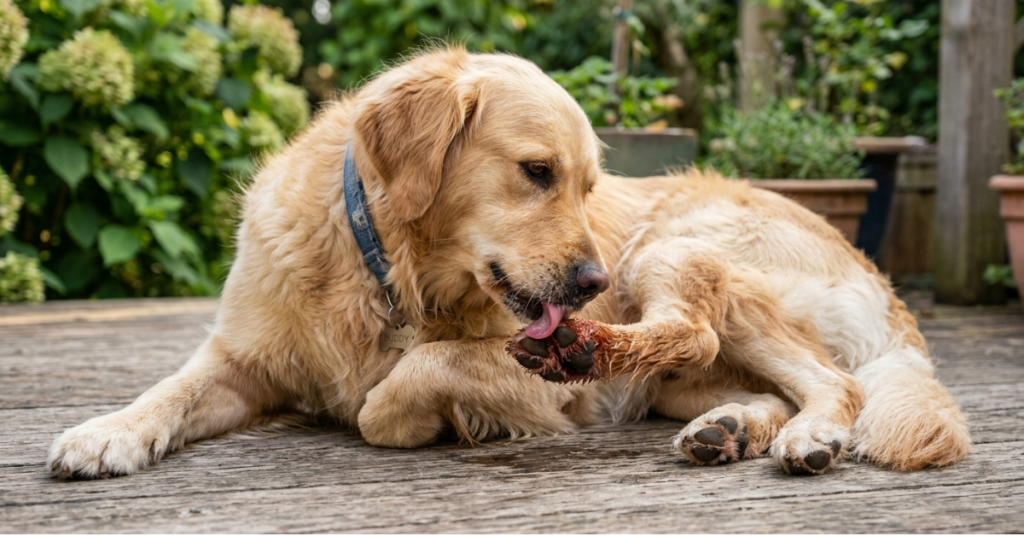
Have you noticed your dog licking his paws repeatedly, sometimes for minutes at a time? A little licking is normal. Dogs groom themselves, clean their feet after walks, and occasionally lick their paws to soothe minor irritation. However, when the behavior becomes frequent, intense, or difficult to interrupt, it may be a sign that something is bothering them.
If you’re wondering, why is my dog licking his paws, the answer could range from seasonal allergies and dry skin to a painful injury, infection, or stress-related behavior. The key is to look at how often your dog licks, whether one or all paws are affected, and whether you notice redness, swelling, an unusual smell, or changes in behavior.
Understanding the possible causes can help you decide what to do next and when your dog needs veterinary attention.
Why Is My Dog Licking His Paws So Much?
Frequent paw licking usually means your dog is responding to itching, discomfort, pain, or an emotional trigger. Sometimes the cause is obvious, such as a thorn stuck between the toes. In other cases, the irritation develops gradually and is harder to identify.
Here are the most common explanations.
1. Allergies
Allergies are one of the common reasons dogs develop itchy paws. Just like people, dogs can react to substances in their environment or ingredients in their food.
Common triggers include:
- Environmental allergens: Pollen, grass, dust mites, and mold.
- Food allergies: Reactions to certain food proteins, such as beef, chicken, dairy, or other ingredients.
- Contact irritation: Cleaning products, lawn treatments, detergents, or other substances that touch the paws.
Dogs with allergies may lick their feet, chew between their toes, scratch their ears, or rub their faces against furniture. The skin between the toes may become red and inflamed.
Seasonal symptoms may suggest environmental allergies, although food allergies and other skin conditions can cause similar signs. A veterinarian can help distinguish between them.
2. Yeast or Bacterial Skin Infections
Persistent licking can damage the skin’s protective barrier, making it easier for microorganisms to multiply. Yeast, particularly Malassezia, and certain bacteria can contribute to inflamed, itchy paws.
Signs that may suggest an infection include:
- Red or swollen skin between the toes.
- A musty or unpleasant odor.
- Greasy skin or brownish discoloration of the fur.
- Discharge, crusting, or small sores.
- Increasing discomfort when the paws are touched.
An infection can be the original problem, or it can develop after allergies or repeated licking have irritated the skin. Because the treatments differ, a veterinarian may examine skin samples under a microscope to identify the cause.
3. Dry, Irritated, or Cracked Paw Pads
Paw pads are designed to withstand everyday activity, but they can still become dry, rough, cracked, or irritated.
Walking on hot pavement, rough surfaces, ice, road salt, or chemically treated grass can contribute to discomfort. Some dogs also develop irritation after spending time on surfaces that are too hot or abrasive.
Check the pads for visible cracks, peeling skin, cuts, or tenderness. If your dog starts licking immediately after a walk, examine the feet carefully and consider whether the walking surface or something on the ground may be responsible.
Avoid applying human lotions or medicated creams without veterinary advice, as some ingredients can be harmful if swallowed.
4. Something Stuck Between the Toes
Sometimes the explanation is surprisingly simple. A grass seed, thorn, small stone, splinter, or other foreign object can become trapped between your dog’s toes or lodged near a nail.
This is particularly worth considering when your dog suddenly starts licking just one paw.
Look for:
- Sudden, focused licking of one foot.
- Limping or holding the paw off the ground.
- Swelling between the toes.
- A visible object, puncture, or small wound.
- Pain when the affected area is touched.
If an object is deeply embedded, do not dig into the skin or attempt to remove it with force. Seek veterinary care, especially if your dog is limping, bleeding, or showing significant pain.
5. Pain, Injuries, or Joint Problems
Dogs sometimes lick an area that hurts, even when there is little visible evidence of an injury. A torn nail, bruised pad, sprain, inflamed joint, or other painful condition may lead to repeated licking.
Older dogs may also lick their feet or nearby joints when dealing with arthritis or other musculoskeletal problems.
Pay attention if the licking comes with stiffness, reluctance to climb stairs, difficulty standing up, limping, or reduced interest in walks. These additional symptoms make a veterinary examination particularly important.
6. Anxiety, Stress, or Boredom
Not every case of paw licking begins with a skin problem. Some dogs lick repeatedly when they are anxious, under-stimulated, or struggling to settle down.
Possible triggers include:
- Changes in household routines.
- Separation from their owners.
- Loud noises or unfamiliar surroundings.
- Insufficient physical activity or mental stimulation.
- Stressful experiences or prolonged periods alone.
Repetitive licking may become a self-soothing habit. However, it is important not to assume that the behavior is purely psychological before ruling out allergies, pain, parasites, and infection.
If your dog mainly licks during stressful situations or when left alone, discuss the pattern with your veterinarian. Behavior modification and environmental changes may help once medical causes have been considered.
Why Is My Dog Licking His Paws and Scratching?
When paw licking occurs alongside frequent scratching, allergies become an important possibility. Dogs with environmental allergies often experience itching on their feet, ears, belly, armpits, and face.
However, scratching and licking can also occur with flea infestations, mites, bacterial infections, yeast overgrowth, and other skin disorders.
Try to notice where the itching starts and whether other parts of the body are affected. Ear redness, recurring ear infections, belly irritation, and widespread scratching are useful details to share with your veterinarian.
Do not give your dog human antihistamines or other medications without checking with a veterinarian first. The appropriate treatment depends on your dog’s weight, health, other medications, and the actual cause of the itching.
Why Is My Dog Licking His Paws Raw?
Repeated licking can create a damaging cycle: the skin becomes irritated, the irritation encourages more licking, and the additional moisture and friction make the skin even more inflamed.
Over time, this may lead to hair loss, raw patches, open sores, bleeding, and secondary infections. In persistent cases, dogs can develop painful inflammatory lesions sometimes called acral lick dermatitis, particularly when licking focuses on one accessible area.
If your dog has licked his paws raw, arrange a veterinary appointment promptly. Seek same-day care if there is an open wound, significant swelling, pus, a strong odor, or obvious pain.
Until your dog is assessed:
- Gently prevent further licking with a properly fitted protective cone if you can do so safely.
- Keep the affected paw clean and dry.
- Avoid alcohol, hydrogen peroxide, essential oils, and unapproved creams.
- Do not tightly wrap the paw unless a veterinarian has instructed you how to do it.
Bleeding that does not stop, severe pain, rapidly increasing swelling, or an inability to bear weight warrants urgent veterinary attention.
Why Is My Dog Licking His Paws All the Time?
Constant paw licking is not something to ignore, particularly if it is a new behavior or is getting worse. Persistent symptoms may indicate an allergy, a skin infection, an untreated injury, parasites, or another source of ongoing discomfort.
Consider these clues:
- Both front paws: Environmental allergies or generalized skin irritation may be involved.
- All four paws: Widespread itching, contact irritation, or allergies may be possible.
- Only one paw: An injury, foreign object, nail problem, or localized infection deserves attention.
- Paws plus ears or belly: Allergies may be contributing to multiple areas of inflammation.
- Licking with limping: Pain or an injury should be investigated.
These patterns are clues rather than reliable diagnoses. A dog can have an infection in one paw or an injury alongside an unrelated allergy, so the full clinical picture matters.
If the behavior repeatedly interrupts sleep, walks, meals, or normal play, schedule a veterinary examination rather than waiting for the skin to become damaged.
Why Is My Dog Licking His Paws at Night?
Nighttime paw licking can be frustrating because it may keep both you and your dog awake. There is no single explanation for why it happens after dark.
Several possibilities deserve consideration:
- Allergic itching: Skin irritation can continue when the dog settles down, and some dogs become more noticeable about it when the house is quiet.
- Post-walk irritation: Pollen, dirt, grass, or other substances picked up outdoors may remain on the paws.
- Pain or discomfort: A sore pad, nail injury, or joint problem may become more apparent when your dog stops moving.
- Anxiety or habitual behavior: Some dogs lick more when they are bored, unsettled, or trying to relax.
- Skin infection: Yeast or bacterial overgrowth can cause persistent itching regardless of the time of day.
If the licking consistently happens after evening walks, gently rinse the paws with clean, lukewarm water and dry between the toes. If it continues, or you notice redness or swelling, arrange a veterinary assessment.
Do not assume that nighttime licking is harmless simply because your dog appears comfortable during the day.
Why Are My Dog’s Paws Red Between the Toes?
Redness between the toes usually indicates inflammation. It can result from allergies, contact irritation, moisture trapped in the paws, an infection, a foreign object, or repeated licking and chewing.
In some dogs, the skin between the toes becomes swollen and develops painful bumps or draining sores. These may be associated with interdigital furunculosis, a group of inflammatory conditions that can have several underlying causes.
You can check the area gently in good lighting, but avoid squeezing bumps or trying to drain them. If the redness persists, the paw smells unpleasant, or your dog reacts painfully to touch, a veterinarian should examine it.
Red skin alone does not confirm a yeast infection. A physical examination and, when needed, skin testing help determine the appropriate treatment.
Why Is My Dog Licking His Paws All of a Sudden?
Sudden paw licking often suggests a recent change or an acute source of irritation.
Think about what happened shortly before the behavior started. Did your dog walk on hot pavement, run through long grass, visit a groomer, encounter a cleaning product, or step on something sharp?
Check for a cut, broken nail, swelling, a foreign object, or tenderness. If your dog suddenly refuses to put weight on a paw, has substantial swelling, or appears to be in severe pain, seek urgent veterinary care.
A sudden change can also occur when an existing allergy or skin condition flares up. If you cannot identify an obvious, minor cause or the licking continues, have your dog examined.
How to Stop Your Dog From Licking His Paws
The most effective solution depends on why your dog is licking. Simply stopping the behavior without treating the underlying cause may provide only temporary relief.
Here are practical steps you can take while arranging appropriate care.
1. Inspect the Paws Carefully
Choose a well-lit area and examine each foot, including the paw pads, nails, and spaces between the toes. Look for cuts, redness, swelling, debris, cracked skin, and unusual discharge.
Be gentle. If your dog growls, pulls away strongly, or appears painful, stop rather than forcing an examination.
2. Rinse Away Potential Irritants
After outdoor walks, rinse your dog’s paws with clean, lukewarm water and dry them thoroughly, especially between the toes.
This can help remove dirt and possible contact irritants. Avoid vigorous scrubbing, which can worsen inflamed skin.
3. Prevent Further Skin Damage
Repeated licking can delay healing and introduce additional bacteria. A properly fitted Elizabethan collar, commonly called a cone, can help prevent your dog from reaching the affected area.
Check that the collar allows your dog to breathe, swallow, drink, and rest comfortably. If your dog has an open wound, severe swelling, or significant pain, do not rely on a cone instead of veterinary treatment.
4. Review Possible Allergens
Keep track of when the licking happens, which paws are affected, and whether symptoms follow outdoor activities or changes in food, treats, shampoo, or household cleaning products.
Avoid making several dietary changes at once. If a food allergy is suspected, your veterinarian may recommend a controlled elimination diet followed by an appropriate challenge to identify the trigger.
5. Keep Your Dog Comfortable and Engaged
If stress or boredom may be contributing, maintain a predictable routine and provide suitable walks, sniffing opportunities, interactive toys, and gentle training.
These steps can support your dog’s well-being, but they will not resolve an untreated injury or infection. Persistent licking should still be medically investigated.
6. Follow Your Veterinarian’s Treatment Plan
Depending on the findings, treatment may involve parasite control, medication for allergies, treatment for bacterial or yeast infections, wound care, or pain management.
Some dogs need additional testing to identify an underlying allergy or recurring skin disorder. Following the full treatment plan is important, even if the licking improves before the skin has completely healed.
How Do Vets Diagnose the Cause of Paw Licking?
There is no single test that explains every case. Your veterinarian will usually combine your dog’s history, a physical examination, and targeted tests based on the symptoms.
These may include:
- Skin cytology: Examining samples for yeast, bacteria, and inflammatory cells.
- Skin scrapings or parasite checks: Looking for mites or other causes of itching.
- Bacterial culture: Identifying bacteria and helping guide treatment in selected infections.
- Allergy investigation: Assessing environmental or food-related triggers when appropriate.
- Imaging or additional examinations: Investigating suspected joint, bone, nail, or deeper tissue problems.
Before the appointment, note when the licking began, whether it affects one or multiple paws, and what treatments or products you have already tried. Photos of the skin before it changes can also be useful.
When Should You Take Your Dog to the Vet?
Not every brief episode of paw licking is an emergency. However, persistent licking, visible skin changes, and signs of pain deserve attention.
<caption>Use these signs to decide how quickly to seek help.</caption>
| Signs you notice | What to do |
|---|---|
| Occasional licking with normal-looking paws | Monitor the behavior and inspect the feet. |
| Repeated licking that continues or returns | Arrange a veterinary appointment. |
| Persistent redness, odor, hair loss, or swelling | Arrange a prompt examination. |
| Raw skin, an open wound, pus, or bleeding | Seek same-day veterinary advice or care. |
| Sudden severe pain, inability to walk, rapidly increasing swelling, or uncontrolled bleeding | Seek urgent veterinary care. |
If you suspect chemical exposure, a burn, or contact with a potentially toxic substance, contact a veterinarian promptly for specific guidance.
Frequently Asked Questions
1. Is it normal for dogs to lick their paws?
Yes, occasional paw licking is normal grooming behavior. However, frequent, intense, or persistent licking may indicate itching, pain, allergies, infection, or stress. Pay attention to changes in frequency and the condition of the skin.
2. Why does my dog keep licking his paws even when they look normal?
Your dog may have an early-stage allergy, irritation that is difficult to see, discomfort around a nail or joint, or a behavioral habit. Not every cause produces visible redness immediately. If the behavior persists, a veterinary examination can help identify the underlying problem.
3. Why is my dog licking his paws and whining?
Licking combined with whining may indicate pain, significant itching, or distress. Check for an injury or swelling without forcing your dog to let you handle the paw. If the whining continues, your dog cannot walk normally, or the pain appears severe, seek veterinary care promptly.
4. Can food allergies cause dogs to lick their paws?
Yes. Food allergies can cause itchy skin and recurring ear or skin problems, including irritation around the feet. However, paw licking alone cannot confirm a food allergy. A veterinarian may recommend a properly controlled elimination diet to investigate the possibility.
5. Should I stop my dog from licking his paws?
You should prevent excessive licking when it is causing irritation or interfering with healing, but the underlying cause also needs attention. A protective cone can help reduce further damage. Avoid punishment, as it does not address the discomfort and may increase stress.
6. Can I put coconut oil on my dog’s itchy paws?
Coconut oil is not a reliable treatment for the underlying causes of persistent paw licking. It may leave the paws greasy, encourage licking, or cause problems if the skin is damaged. Ask your veterinarian before applying products, especially to inflamed or open skin.
7. Why does my dog lick only one paw?
Licking one paw can point toward a localized problem, such as a thorn, cut, broken nail, insect sting, or infection. Pain or swelling may not always be obvious. Check the paw gently and arrange veterinary care if the licking persists or your dog appears uncomfortable.
8. Why does my dog lick his paws after a walk?
Grass, pollen, dirt, road salt, hot pavement, and other outdoor irritants may cause paw discomfort. Rinsing the feet with clean, lukewarm water and drying them carefully may help. If the behavior continues after walks or the skin becomes inflamed, consult your veterinarian.
9. Can anxiety make a dog lick his paws constantly?
Yes. Anxiety, boredom, and stress can contribute to repetitive licking in some dogs. However, medical causes should be investigated first, particularly when the behavior is new or the skin is damaged. A veterinarian or qualified canine behavior professional can help develop an appropriate plan.
10. How long should I wait before seeing a vet?
If your dog licks his paws repeatedly throughout the day, the behavior persists, or you notice redness, swelling, odor, or hair loss, arrange a veterinary appointment rather than waiting for the problem to worsen. Raw skin, open wounds, or signs of infection warrant prompt attention, while severe pain or an inability to walk requires urgent care.
Conclusion
So, why is my dog licking his paws? The answer may be something relatively minor, such as dirt or temporary irritation, but it can also involve allergies, skin infections, injuries, pain, or stress.
The most useful clues are how suddenly the licking started, whether one or several paws are affected, and whether your dog has redness, swelling, an unusual smell, or other symptoms. These details can help you and your veterinarian narrow down the possibilities.
Start by inspecting your dog’s paws gently, rinsing away potential irritants, and preventing further skin damage if necessary. If the licking is persistent, worsening, or causing sores, arrange a veterinary examination instead of relying on home remedies.
Your dog cannot tell you exactly what hurts or itches, but changes in behavior can offer important clues. With the right diagnosis and treatment, most underlying causes can be managed, helping your dog return to comfortable walks, restful nights, and happy playtime.
For more practical advice, explore related guides on dog allergies, itchy skin, paw pad care, and common canine skin infections.