
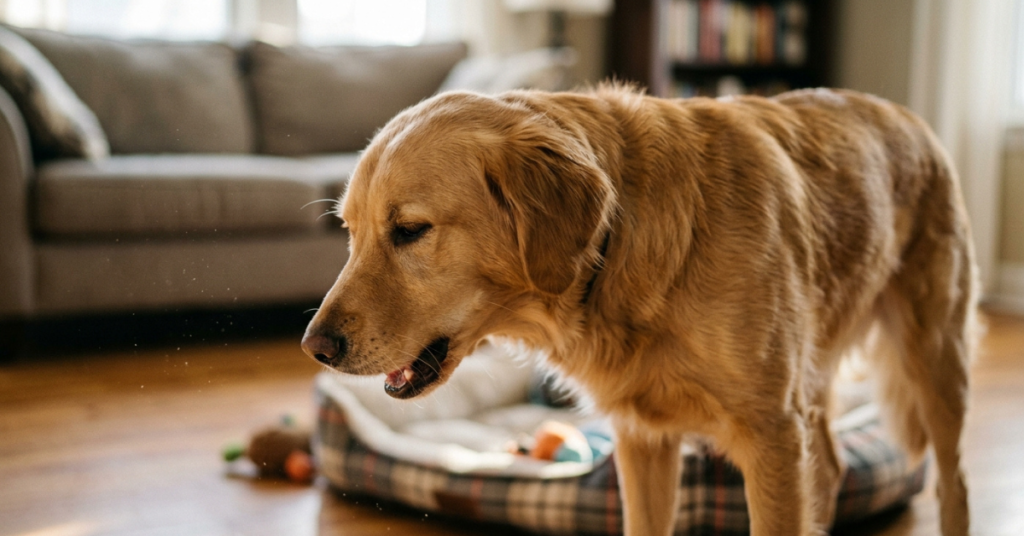
Hearing your dog cough repeatedly can be worrying, especially when the sound resembles choking, gagging, or something stuck in the throat. You might notice it after a walk, while your dog is sleeping, after drinking water, or seemingly out of nowhere. If you’re wondering, why is my dog coughing, the answer depends on the type of cough, how often it happens, and whether other symptoms are present.
A dog’s cough can result from something relatively minor, such as throat irritation, or a more serious condition involving the respiratory system, heart, or airways. Some causes resolve with appropriate care, while others require prompt veterinary treatment.
In this guide, we’ll explore the most common reasons dogs cough, explain what different cough sounds may indicate, and help you recognize when it’s time to seek professional help.
Why Is My Dog Coughing? Common Causes
Coughing is a protective reflex that helps clear irritants, mucus, and foreign material from the airways. However, repeated coughing may signal an underlying health problem.
Here are some of the most common causes.
1. Kennel Cough
Kennel cough, also known as canine infectious respiratory disease, is a contagious respiratory illness that can affect dogs of any age. It’s particularly common among dogs that spend time in kennels, daycare facilities, shelters, grooming salons, or dog parks.
The cough is often dry, harsh, and persistent. Some dogs make a honking sound and gag at the end of a coughing episode.
Other possible symptoms include:
- Sneezing or a runny nose
- Mild tiredness
- Reduced appetite in some cases
- Gagging after coughing
Many dogs recover with supportive care, but puppies, senior dogs, and dogs with existing health problems may develop complications such as pneumonia. Contact your veterinarian if symptoms persist, worsen, or occur alongside fever, poor appetite, or unusual tiredness.
Because kennel cough can spread to other dogs, keep your dog away from shared dog spaces until your veterinarian advises that it’s safe to return.
2. Something Irritating the Throat
Dust, smoke, strong cleaning products, perfume, pollen, and other airborne irritants can trigger coughing. Pulling hard on a collar can also irritate the throat or put pressure on the windpipe.
If your dog starts coughing after exposure to smoke, dusty surroundings, or a strong fragrance, irritation may be responsible. However, don’t assume that irritation is the cause if the coughing continues after the exposure ends.
Try to remove potential irritants and move your dog into a clean, well-ventilated environment. Persistent coughing should be assessed by a veterinarian.
3. Tracheal Collapse
Tracheal collapse occurs when the windpipe loses some of its structural support and narrows, making it harder for air to pass through normally. It is more common in small breeds, including Yorkshire Terriers, Pomeranians, Chihuahuas, and Toy Poodles.
A classic sign is a dry, honking cough that may become worse during exercise, excitement, hot weather, or pressure from a neck collar.
Your veterinarian may recommend diagnostic imaging and other tests to determine whether the windpipe is collapsing. Treatment varies according to severity and may include weight management, medication, changes to exercise, and using a harness instead of a neck collar.
4. Heart Disease
Heart disease can cause coughing in some dogs, particularly when it contributes to fluid accumulation in or around the lungs. However, coughing alone does not establish that a dog has heart failure, and many coughing dogs have respiratory rather than cardiac problems.
Other warning signs may include:
- Reduced stamina during walks
- Faster or more difficult breathing
- Weakness or fainting
- Restlessness while sleeping
- A swollen abdomen in some conditions
If your dog has a persistent cough along with breathing changes or reduced exercise tolerance, arrange a veterinary examination. Breathing difficulty at rest is an emergency.
5. Pneumonia or Another Lung Infection
Pneumonia is inflammation of the lungs that can develop because of infection or aspiration, which occurs when food, liquid, vomit, or other material enters the airways.
Dogs with pneumonia may have a wet-sounding cough, fever, low energy, reduced appetite, nasal discharge, or rapid breathing. Some dogs, particularly those that are very young or medically vulnerable, can become seriously ill.
Pneumonia requires veterinary assessment. Depending on the cause and severity, treatment may involve medication, oxygen support, fluids, or hospitalization.
6. Allergies and Environmental Triggers
Allergies can irritate a dog’s respiratory tract, although itching, skin irritation, paw licking, and sneezing are often more typical signs of canine allergies than a persistent cough.
Dust, pollen, mold, smoke, and household aerosols may also aggravate existing airway disease.
If coughing repeatedly occurs in a particular environment or season, mention the pattern to your veterinarian. Environmental changes may help, but persistent coughing should not automatically be attributed to allergies.
7. Heartworm Disease and Other Parasites
Heartworm disease, transmitted by infected mosquitoes, can damage the heart and pulmonary arteries and may lead to coughing, fatigue, and exercise intolerance. Other parasites can also affect the respiratory system.
The risk of heartworm depends on your location, your dog’s travel history, and preventive care. A veterinarian can recommend appropriate testing and prevention based on those factors.
Do not give human cough medicines or parasite treatments without veterinary guidance.
8. A Foreign Object or Airway Obstruction
Grass, small pieces of food, sticks, or other foreign material can become lodged in a dog’s mouth, throat, or airway. This can trigger sudden coughing, gagging, pawing at the mouth, or distress.
A partial obstruction may cause ongoing coughing, while a complete obstruction can prevent normal breathing.
If your dog is struggling to breathe, has blue or gray gums, collapses, or cannot move air normally, seek emergency veterinary care immediately. Do not blindly reach into the throat, as you could push an object farther in or get bitten.
Even if your dog seems better after a sudden coughing episode, contact a veterinarian if you suspect an inhaled or swallowed object.
What Different Types of Dog Coughing Can Mean
The sound of your dog’s cough can offer useful clues, although it cannot confirm a diagnosis on its own. Pay attention to whether the cough is dry or wet, whether your dog retches afterward, and whether breathing seems normal between episodes.
Why Is My Dog Coughing Like Something Is Stuck in His Throat?
A cough that sounds like your dog has something caught in its throat may be caused by kennel cough, tracheal collapse, throat irritation, or a foreign object.
Dogs with kennel cough often make repeated, forceful coughing sounds followed by a gag or retch. Tracheal collapse can produce a similar honking noise, particularly in small breeds.
If the coughing starts suddenly while your dog is eating or chewing a toy, an obstruction becomes a more immediate concern. Seek emergency care if your dog struggles to breathe, cannot swallow, or shows signs of choking.
Why Is My Dog Coughing and Gagging?
Gagging often happens at the end of a coughing episode because the forceful movement stimulates the throat. This is common with kennel cough and certain airway conditions.
However, repeated gagging may also occur with throat irritation, swallowing difficulties, or a foreign object. If your dog repeatedly retches without producing anything, particularly with a swollen abdomen or restlessness, seek emergency care because bloat may be responsible.
Why Is My Dog Coughing and Hacking So Much?
Frequent hacking can occur with infectious respiratory disease, chronic bronchitis, tracheal collapse, or other airway problems. A dry, repetitive cough may sound harsh even when your dog otherwise appears comfortable.
If the coughing is frequent, interrupts sleep, worsens with activity, or continues for more than a short period, arrange a veterinary examination rather than relying on home remedies.
Why Is My Dog Coughing Up White Foam?
White foam can appear when saliva and mucus mix with air during repeated coughing or retching. It may occur with kennel cough, airway irritation, nausea, or other respiratory and digestive problems.
The appearance of the foam alone cannot identify the cause. Note whether your dog is coughing first or vomiting first, and whether the foam is accompanied by breathing difficulty, lethargy, abdominal swelling, or appetite changes.
Seek urgent veterinary advice if the episodes repeat or your dog seems unwell. Emergency care is necessary if there is respiratory distress, collapse, or repeated unproductive retching with a swollen abdomen.
Why Is My Dog Coughing Up Blood?
Blood in a dog’s cough is not normal and requires prompt veterinary assessment. Possible causes include airway injury, severe infection, lung disease, clotting problems, tumors, or heartworm disease.
Even a small amount of blood warrants a call to your veterinarian, especially if the bleeding recurs. If your dog has substantial bleeding, pale or blue gums, weakness, or difficulty breathing, go to an emergency veterinary clinic immediately.
Do not give aspirin or other human medication unless a veterinarian specifically directs you to do so.
Why Is My Dog Coughing After Drinking Water?
Occasional coughing after drinking quickly may happen when water irritates the throat or enters the airway. Some dogs with tracheal collapse also cough during or after drinking.
Repeated coughing after every drink, however, may indicate a swallowing problem, laryngeal disorder, or a risk of aspiration. A veterinarian should investigate persistent episodes, particularly if your dog also coughs while eating or develops a wet-sounding cough.
Until your dog is assessed, avoid forcing water into its mouth. If swallowing appears difficult or breathing becomes abnormal, seek prompt veterinary care.
Why Is My Dog Coughing and Wheezing?
Wheezing is a high-pitched whistling sound that occurs when air moves through narrowed airways. It can accompany bronchitis, airway inflammation, an obstruction, or other respiratory conditions.
If the wheezing is new, persistent, or associated with rapid breathing, arrange a veterinary examination promptly. Labored breathing, blue or gray gums, or collapse are emergency signs.
Why Is My Dog Coughing Up Phlegm or Mucus?
A cough that produces mucus may be associated with bronchitis, pneumonia, or another respiratory condition. Dogs sometimes swallow respiratory secretions, so you may see little mucus even when a cough sounds wet.
Pay attention to the color and amount of discharge, but don’t rely on appearance alone to determine whether an infection is present. Thick discharge, fever, poor appetite, or low energy should prompt veterinary evaluation.
Why Is My Dog Coughing and Throwing Up?
Forceful coughing can trigger gagging and bring up saliva, mucus, or white foam. This can look like vomiting even when the primary problem is in the respiratory tract.
True vomiting may involve abdominal contractions and the expulsion of stomach contents. Respiratory illness and digestive problems can also occur at the same time, so the distinction isn’t always straightforward.
Record a short video of an episode if it is safe to do so. This can help your veterinarian distinguish coughing, retching, regurgitation, and vomiting.
Why Is My Dog Coughing All of a Sudden?
A sudden cough may follow inhalation of dust, exposure to smoke, excitement, drinking water, or contact with an infectious respiratory illness. It may also indicate a foreign object or an acute airway problem.
If your dog develops a sudden coughing fit but breathes normally afterward, monitor closely and contact your veterinarian if the episode recurs. If breathing is difficult or choking is suspected, do not wait to see whether it improves.
Why Is My Dog Coughing and Sneezing?
Coughing and sneezing together can occur with respiratory infections, environmental irritants, or inflammation affecting several parts of the respiratory tract. Nasal discharge, watery eyes, and reduced energy may provide additional clues.
If your dog has recently been around other dogs, tell your veterinarian about that exposure. Keep your dog away from shared dog areas until an infectious cause has been considered.
What Should I Do If My Dog Keeps Coughing?
If your dog is coughing repeatedly, a few practical steps can help you observe the symptoms safely while arranging appropriate care.
- Check breathing first. Look for labored breathing, unusual posture, open-mouth breathing at rest, or pale, blue, or gray gums.
- Keep your dog calm. Avoid strenuous exercise, running, and excessive excitement until the cause is clearer.
- Remove possible irritants. Keep your dog away from cigarette smoke, aerosols, strong cleaning products, and dusty areas.
- Use a harness rather than a neck collar if collar pressure seems to trigger coughing.
- Record the cough. A short video can help the veterinarian assess its sound, timing, and pattern.
- Arrange a veterinary examination. Do not delay care if coughing is frequent, worsening, or accompanied by other symptoms.
Avoid giving your dog human cough syrup, cold medicine, leftover antibiotics, or other medications without veterinary advice. Some ingredients are toxic to dogs, and suppressing a cough may be inappropriate when the underlying problem involves infection or fluid in the airways.
When Should You Take a Coughing Dog to the Vet?
Not every cough is an emergency, but certain symptoms need immediate attention.
<box>
Seek emergency veterinary care immediately if your dog:
- Struggles to breathe or appears to be choking.
- Has blue, gray, or very pale gums.
- Collapses, loses consciousness, or becomes severely weak.
- Coughs up a significant amount of blood.
- Has repeated unproductive retching with a swollen or painful abdomen.
Contact a veterinarian promptly if your dog:
- Has a persistent, frequent, or worsening cough.
- Develops fever, reduced appetite, or unusual tiredness.
- Produces blood-streaked mucus or develops a wet-sounding cough.
- Coughs repeatedly after eating or drinking.
- Is a puppy, senior dog, or has an existing heart or lung condition.
</box>
If your dog has only coughed once or twice and is otherwise behaving normally, careful observation may be reasonable. However, repeated coughing should not be ignored simply because your dog is still eating or playing.
How Do Veterinarians Diagnose a Dog’s Cough?
A veterinarian will consider your dog’s age, breed, vaccination history, exposure to other dogs, medical history, and the nature of the cough.
Depending on the findings, diagnostic tests may include:
- Physical examination: Listening to the heart and lungs and checking the throat, breathing pattern, and overall condition.
- Chest X-rays: Looking for lung changes, pneumonia, heart enlargement, or other abnormalities.
- Blood tests: Assessing general health and looking for evidence of certain infections or other illnesses.
- Infectious disease testing: Testing may be appropriate when a contagious respiratory infection is suspected.
- Heart evaluation: An echocardiogram or other cardiac tests may be recommended when heart disease is a concern.
- Airway examination: In selected cases, bronchoscopy or other specialized imaging may help identify airway abnormalities or foreign material.
Not every dog needs every test. The veterinarian will select the most appropriate approach based on the symptoms and examination.
How Is Coughing in Dogs Treated?
Treatment depends on the underlying cause rather than the sound of the cough alone.
| Underlying cause | Possible veterinary treatment |
|---|---|
| Mild kennel cough | Supportive care, rest, and monitoring |
| Bacterial respiratory infection | Appropriate antibiotics when indicated |
| Tracheal collapse | Weight management, airway medications, and lifestyle changes |
| Pneumonia | Cause-specific medication and potentially oxygen or hospitalization |
| Heart disease | Cardiac medication and management tailored to the diagnosis |
| Foreign object | Removal by a veterinarian when necessary |
| Environmental irritation | Removing the trigger and treating any resulting inflammation |
Cough suppressants may be suitable in selected cases, but they are not appropriate for every cough. For example, a veterinarian may avoid suppressing a productive cough when clearing airway secretions is important.
Never start antibiotics simply because your dog is coughing. Many respiratory illnesses are not bacterial, and unnecessary antibiotics can cause adverse effects and contribute to antimicrobial resistance.
Can You Treat a Dog’s Cough at Home?
Home care may help keep a dog comfortable while mild symptoms are being assessed, but it cannot replace treatment for pneumonia, airway obstruction, heart disease, or other significant conditions.
Helpful measures include:
- Providing a quiet, comfortable resting place.
- Keeping fresh water available if your dog can swallow normally.
- Avoiding smoke, dust, fragrances, and other airborne irritants.
- Using a harness to reduce pressure on the neck.
- Limiting strenuous activity while symptoms persist.
- Keeping your dog separated from other dogs if an infectious illness is possible.
Do not use essential oils, herbal preparations, honey, or over-the-counter medicines as a substitute for veterinary assessment. Their suitability depends on the dog, the suspected cause, and the product’s ingredients.
If the cough worsens or new symptoms appear, seek veterinary advice rather than extending home treatment.
Frequently Asked Questions
1. Is it normal for dogs to cough occasionally?
An occasional cough can occur after mild irritation, excitement, or drinking water too quickly. However, frequent, persistent, or unexplained coughing is not something to dismiss, particularly if other symptoms develop.
2. How long should a dog’s cough last?
The duration depends on the cause. Kennel cough may last around 10–20 days, while some airway conditions can cause a much longer-lasting cough. If symptoms worsen, fail to improve, or are accompanied by other signs of illness, contact your veterinarian rather than relying on a fixed waiting period.
3. Can kennel cough go away on its own?
Many otherwise healthy dogs recover from uncomplicated kennel cough with supportive care. Puppies, older dogs, and dogs with underlying illnesses may be at greater risk of complications, including pneumonia, so veterinary advice is important.
4. Why does my dog cough more at night?
Coughing at night can occur with tracheal collapse, chronic bronchitis, heart disease, or other respiratory conditions. The timing alone cannot identify the cause. Tell your veterinarian whether the cough occurs during sleep, after lying down, or when your dog gets up.
5. Can allergies cause coughing in dogs?
Environmental irritants and some allergic conditions can contribute to respiratory symptoms. However, persistent coughing should not automatically be blamed on allergies because infections, airway disorders, and other illnesses can produce similar signs.
6. Is a dry cough more serious than a wet cough?
Neither type is automatically more serious. A dry, honking cough may occur with kennel cough or tracheal collapse, while a wet-sounding cough can accompany pneumonia or other lung conditions. The dog’s breathing, energy level, and other symptoms are more important than sound alone.
7. Should I isolate my dog if it has a cough?
If an infectious respiratory illness is possible, keep your dog away from other dogs, avoid shared bowls and toys, and call the veterinary clinic before arriving. This allows the clinic to take appropriate precautions.
8. Can a dog cough because of heartworms?
Yes. Heartworm disease can affect the heart and pulmonary arteries and cause coughing, fatigue, and exercise intolerance. Testing and prevention recommendations depend on exposure risk and veterinary assessment.
9. What does white foam mean when a dog coughs?
White foam may consist of saliva and mucus produced during coughing or retching. It can occur with several respiratory or digestive conditions and does not, by itself, establish a diagnosis. Repeated episodes or any accompanying breathing difficulty require veterinary attention.
10. Will my dog need antibiotics for a cough?
Not necessarily. Antibiotics are used when a bacterial infection is suspected or confirmed and treatment is warranted. Many causes of coughing do not benefit from antibiotics, so the decision should be made by a veterinarian.
Conclusion
If you’re asking yourself, why is my dog coughing, start by observing the sound, frequency, timing, and any symptoms that occur alongside it. A brief cough after drinking water may have a different explanation from repeated honking, wet coughing, blood in the mucus, or coughing accompanied by breathing difficulty.
Kennel cough, airway irritation, tracheal collapse, pneumonia, heart disease, and foreign objects are among the possible causes. Because these conditions can look similar at first, a veterinarian is best placed to identify the problem and recommend appropriate treatment.
Most importantly, never ignore breathing difficulty, blue or gray gums, collapse, or significant bleeding. If the cough is persistent or worsening, arrange a veterinary examination.
For more practical pet-care guidance, explore related articles on canine respiratory health, infectious diseases, and recognizing early signs of illness in dogs.