
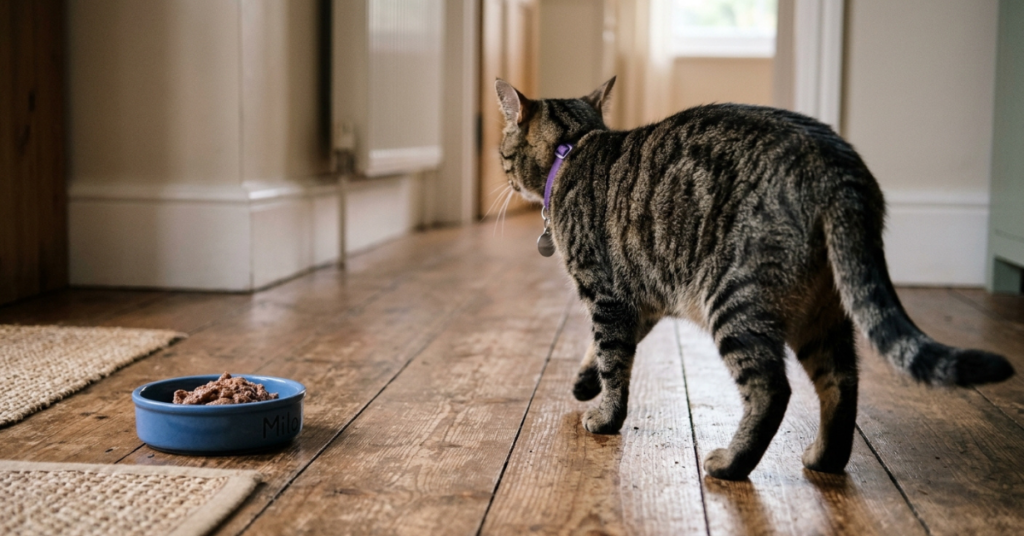
You open a fresh can of cat food, place it in your cat’s bowl, and wait for your furry friend to enjoy the meal. Instead, your cat takes a quick sniff, turns around, and walks away. If this sounds familiar, you may be wondering, why is my cat refusing wet food when it seems perfectly happy to eat everything else?
Cats can be surprisingly particular about their meals. Sometimes, the problem is as simple as the food’s texture, smell, temperature, or flavor. In other cases, refusing wet food may signal dental discomfort, nausea, stress, or another health issue that deserves attention.
The good news is that understanding your cat’s behavior can help you identify the likely cause and decide what to do next. This guide explains the most common reasons cats reject wet food, practical ways to encourage eating, and the warning signs that mean it is time to contact a veterinarian.
Why Is My Cat Refusing Wet Food All of a Sudden?
If your cat previously enjoyed wet food but has suddenly stopped eating it, pay attention to what has changed. A sudden refusal is different from a cat that has never liked wet food in the first place.
Here are some possible explanations:
- A change in the recipe: Even small changes in ingredients, gravy, or manufacturing can affect how a food smells and tastes.
- Food freshness: Wet food that has been left out too long may develop an unpleasant smell or become less appealing.
- Temperature: Refrigerated food can have a weaker aroma than food served closer to room temperature.
- Stress or environmental changes: Moving house, introducing another pet, changing feeding locations, or noisy surroundings can affect appetite.
- Physical discomfort: Dental problems, nausea, digestive upset, or other illnesses may make eating uncomfortable.
The most important distinction is whether your cat is refusing only wet food or showing less interest in all food. If dry food and treats are still being eaten, a preference issue is possible, but it does not completely rule out a medical problem.
If your cat has stopped eating altogether, do not assume it is simply being fussy.
8 Common Reasons Cats Refuse Wet Food
1. Your Cat Dislikes the Texture
Cats have individual preferences when it comes to food texture. One cat may happily eat smooth pâté, while another prefers chunky pieces in gravy or shredded meat in jelly.
If your cat rejects one type of wet food but accepts another, texture may be the issue.
Try offering a small amount of a different consistency, such as:
- Smooth pâté
- Minced or finely chopped food
- Shredded meat
- Chunks in gravy
- Pieces in jelly
Introduce alternatives gradually and make sure the food is complete and balanced for your cat’s life stage.
2. The Smell or Flavor Is Unappealing
Cats rely heavily on their sense of smell when deciding whether to eat. Wet food has a distinctive aroma, and some cats strongly prefer certain proteins or recipes.
Your cat might dislike chicken but enjoy fish, or prefer turkey over beef. A particular gravy or sauce may also put it off.
Start by offering a small portion of a familiar, previously accepted flavor. If you are changing brands, compare the ingredients and introduce the new food gradually when your cat is otherwise healthy and eating normally.
Avoid buying several large packages before you know which variety your cat prefers.
3. The Food Is Too Cold
If you keep opened wet food in the refrigerator, serving it straight from the fridge may make it less appealing. Cold food releases fewer aromatic compounds than food served at room temperature, which can matter to a cat that depends on smell to assess a meal.
To make refrigerated food more tempting:
- Take out the portion you plan to serve.
- Allow it to warm slightly toward room temperature, or gently warm it.
- Stir it thoroughly to distribute the heat.
- Check the temperature before offering it to your cat.
Never serve food that is hot in the middle. If you use a microwave, heat it briefly, mix thoroughly, and check for hot spots before feeding.
4. Your Cat Prefers Dry Food
Some cats develop a strong preference for dry kibble, particularly when they have eaten it for years. Dry food has a different texture, crunch, and smell from wet food, so the two are not always interchangeable from a cat’s perspective.
A cat that eats its usual dry food enthusiastically may simply be less interested in the unfamiliar consistency of wet food.
However, do not immediately remove all dry food to force your cat to eat wet food. Cats should not be starved into accepting a new diet.
Instead, offer a small amount of wet food alongside the familiar diet and increase exposure gradually. If your cat is healthy and eating normally, patience is usually more helpful than pressure.
5. Dental Pain or Mouth Problems
Dental disease is an important reason to consider when a cat suddenly refuses wet food or seems interested in food but struggles to eat.
Possible problems include:
- Inflamed gums
- Broken or damaged teeth
- Tooth resorption
- Mouth ulcers
- Oral infections
Signs of oral discomfort may include drooling, bad breath, pawing at the mouth, dropping food, chewing on one side, or approaching the bowl and then backing away.
Although wet food is often considered easier to eat than dry kibble, that is not always the case. A cat with mouth pain may dislike food touching a sensitive area or may experience pain while swallowing.
If you notice these signs, arrange a veterinary examination rather than trying to solve the problem through food changes alone.
6. Nausea or an Underlying Health Condition
A reduced appetite can be one of the earliest signs that a cat is unwell. Nausea, gastrointestinal problems, kidney disease, pancreatitis, infections, and other conditions can affect a cat’s desire to eat.
Watch for accompanying symptoms such as:
- Vomiting or diarrhea
- Unusual tiredness
- Weight loss
- Increased thirst or urination
- Hiding or withdrawing from family members
- Repeated lip licking, drooling, or swallowing
- Changes in litter box habits
These signs do not establish a diagnosis, but they can help your veterinarian determine what needs to be investigated.
Contact a veterinarian promptly if your cat is eating significantly less than usual. Cats that stop eating can develop serious complications, including hepatic lipidosis (fatty liver disease), particularly if they are overweight. Do not wait several days to see whether the appetite returns.
7. Stress or Changes in the Feeding Environment
Cats often feel more comfortable eating when their surroundings are quiet and predictable. A new pet, unfamiliar visitors, construction noise, or competition around food bowls can interfere with mealtimes.
Even seemingly minor changes can matter. A bowl placed beside a noisy appliance or near a busy walkway may make a nervous cat reluctant to eat.
Try these adjustments:
- Choose a quiet feeding location.
- Keep food and water bowls away from litter trays.
- Provide separate feeding areas in multi-cat households.
- Use a clean, shallow bowl that does not force your cat’s whiskers against the sides.
- Keep feeding times reasonably consistent.
Give your cat space to eat without hovering or repeatedly moving the bowl. A calm environment can make meals more comfortable.
8. The Food Has Spoiled or Been Stored Incorrectly
Wet cat food is perishable, and its quality can deteriorate after opening. Cats may reject food that has dried out, developed an unusual odor, or been left exposed to warm conditions.
To keep food fresh:
- Follow the manufacturer’s refrigeration and storage instructions.
- Refrigerate unused portions promptly in a suitable covered container.
- Use refrigerated leftovers within the period stated on the packaging.
- Wash food bowls regularly.
- Discard food that smells unusual, looks abnormal, or has been left out too long.
As a general food-safety precaution, wet food should not sit at room temperature for extended periods. Many manufacturers advise removing uneaten portions after about one to two hours, with less time appropriate in warm conditions. Follow the product label, particularly in hot weather.
Frequently Asked Questions
Why is my cat refusing wet food but eating dry food?
Your cat may prefer the crunch, flavor, or texture of dry kibble. However, dental discomfort, nausea, or other health problems can also affect food preferences. If the change is sudden or your cat is eating less overall, contact your veterinarian.
How can I make wet cat food more appealing?
Try serving a small portion at room temperature, offering a different texture, or choosing a familiar flavor. Use a clean, shallow bowl in a quiet location. Avoid pressuring your cat to eat or withholding its usual food.
Should I stop giving my cat dry food if it refuses wet food?
No. Do not remove your cat’s regular food to force it to accept wet food. Cats need adequate nutrition every day, and going without food can be dangerous. Introduce wet food gradually while maintaining a nutritionally complete diet.
Can I mix wet and dry cat food together?
Yes, provided both foods are appropriate for your cat and the combined portions meet its nutritional needs. You can offer a small amount of wet food alongside dry kibble or mix the two if your cat accepts the combination. Refrigerate unused wet food promptly and follow the manufacturer’s storage instructions.
Is it normal for an older cat to refuse wet food?
An older cat may develop stronger food preferences, but a new refusal should not automatically be attributed to age. Dental disease, kidney problems, nausea, and other age-related conditions can affect appetite. Arrange a veterinary examination if your older cat’s eating habits change.
Why does my cat lick the gravy but leave the meat?
Some cats prefer liquids and sauces over solid pieces because of their texture or taste. Others may find chewing uncomfortable. Try a smooth pâté or finely minced complete food, but arrange a dental check if your cat repeatedly leaves solid food or shows signs of mouth pain.
Can stress cause a cat to stop eating wet food?
Yes. Changes in routine, household noise, unfamiliar pets, and competition at feeding time can affect a cat’s appetite. Provide a quiet, predictable feeding environment, but seek veterinary advice if the appetite change persists or your cat is eating less overall.
How long can a cat go without eating?
There is no safe period to deliberately leave a cat without food. Appetite loss can become serious quickly, and veterinary guidance recommends prompt attention if an adult cat has not eaten for about 24 hours. Young kittens and cats with existing health problems may need help sooner. Contact a veterinarian rather than waiting for hunger to overcome food refusal.
Should I try a different wet food brand?
You can try another brand if your cat is otherwise healthy and eating normally. Choose a complete and balanced product appropriate for its life stage, and introduce it gradually. If your cat has a prescribed diet, food allergies, or a medical condition, consult your veterinarian before switching.
Conclusion
If you are wondering why your cat is refusing wet food, start by looking at its overall appetite, recent dietary changes, preferred textures, and feeding environment. A different flavor, slightly warmer food, or a quieter feeding area may be all that is needed for a healthy cat with particular tastes.
However, a sudden change in eating habits can also signal dental pain, nausea, stress, or an underlying illness. Do not assume your cat is simply being fussy, especially if it is eating less, losing weight, or showing other symptoms.
Offer food patiently, maintain access to a nutritionally complete diet, and monitor how much your cat actually eats. Most importantly, seek veterinary advice promptly when appetite decreases or food refusal continues.
For more helpful guidance, explore related articles on feline nutrition, healthy feeding routines, cat hydration, and common signs of illness in cats.