
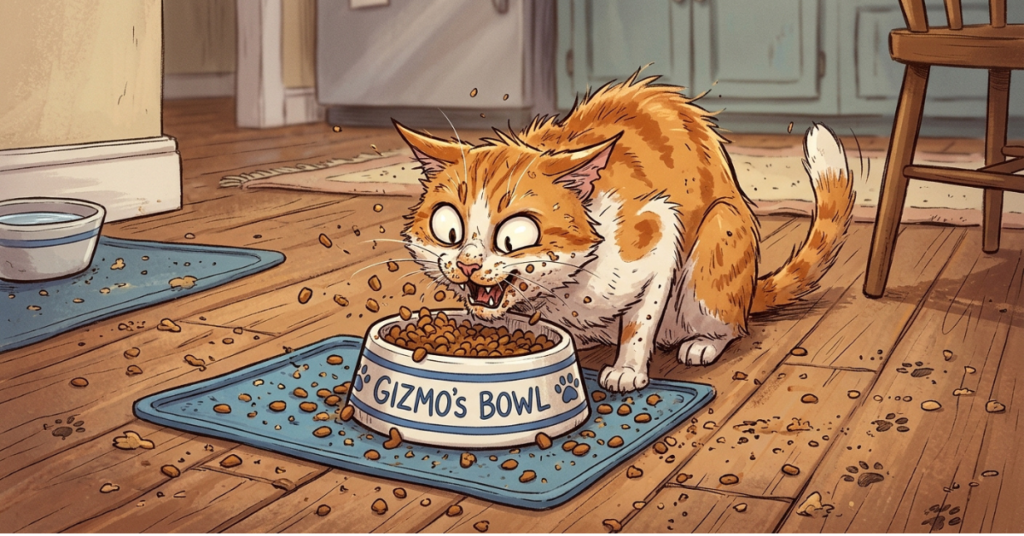
Does your cat finish a full bowl of food in seconds, only to beg for more moments later? Perhaps your cat gulps down meals so quickly that the food comes straight back up. If this sounds familiar, you’re not alone. Many cat owners wonder why their pets seem to inhale their food rather than chew it.
Understanding why your cat is eating too fast starts with looking at their environment, feeding routine, past experiences, and overall health. While some cats are simply enthusiastic eaters, rapid eating can sometimes point to competition over food, increased hunger, or an underlying medical issue.
The good news is that a few practical changes can often help. In this guide, we’ll explore the common reasons cats eat too quickly, explain when the behavior deserves veterinary attention, and share effective ways to encourage slower, healthier meals.
Why Is My Cat Eating Too Fast?
Cats can develop fast-eating habits for several reasons, and the cause isn’t always obvious. Some have learned to eat quickly because food was limited in the past, while others feel pressure to finish their meals before another pet gets there.
Here are the most common explanations.
1. Competition With Other Pets
If you have more than one cat, your pet may feel that every meal is a race. Even when food is readily available, a cat might eat quickly because another animal is nearby.
This behavior can develop when cats share feeding bowls, eat close together, or have previously experienced food competition. Some cats also feel threatened simply by another pet watching them eat.
What you can do:
- Feed each cat in a separate room or at a comfortable distance.
- Keep food bowls away from shared traffic areas.
- Supervise mealtimes if one pet regularly steals another’s food.
- Consider microchip-activated feeders if individual feeding access is difficult to manage.
Giving each cat a calm, predictable feeding space can reduce pressure and help them relax around food.
2. Your Cat Is Genuinely Hungry
A cat that isn’t receiving enough food for its individual needs may eat eagerly whenever a meal appears. Kittens, pregnant or nursing cats, and highly active cats can have greater energy requirements than other pets.
However, don’t assume that every hungry-looking cat needs a larger portion. Some cats beg for food because they enjoy eating, have learned that begging gets results, or aren’t receiving a nutritionally balanced diet.
Review your cat’s daily food intake, body condition, age, activity level, and feeding schedule. Your veterinarian can help determine an appropriate calorie intake based on these factors.
3. Your Cat Has Experienced Food Insecurity
Cats that previously lived outdoors, experienced neglect, or competed for limited food may develop habits that continue long after their circumstances improve.
A cat with a history of food insecurity might gulp down meals because it has learned that food isn’t always available. Even in a safe home, this learned behavior may take time to change.
Try offering predictable meals in a quiet location. Avoid abruptly restricting food or making your cat wait unnecessarily long between meals. Consistency and patience can help build a sense of security.
4. Your Cat Has Learned to Eat Quickly
Sometimes, fast eating is simply a habit reinforced over time. If your cat has always been able to finish meals quickly without consequences, the behavior may continue.
Excitement can also play a role. A cat that eagerly anticipates breakfast or dinner may rush to eat as soon as the bowl reaches the floor.
You can gradually change this pattern by introducing food puzzles, spreading food across a larger surface, or dividing the daily ration into smaller meals.
5. Your Cat Is Experiencing Stress or Anxiety
Changes in the household can affect how a cat behaves around food. Moving homes, introducing a new pet, changes in routine, loud noises, or tension between household animals may increase stress.
Some cats respond by eating less, while others become unusually protective of food or eat as quickly as possible.
Watch for other signs of stress, including hiding, excessive grooming, changes in litter box habits, increased vocalization, or aggression around the food bowl.
Provide a quiet feeding area, maintain a consistent routine, and ensure your cat has access to safe hiding places and separate essential resources.
6. An Underlying Medical Condition Is Increasing Appetite
A sudden increase in appetite deserves particular attention, especially if your cat is eating more than usual but losing weight.
Several medical conditions can affect appetite, including:
- Hyperthyroidism: An overactive thyroid gland, particularly in older cats, can cause increased hunger, weight loss, restlessness, and sometimes vomiting or increased thirst.
- Diabetes mellitus: Cats may become unusually hungry while losing weight and drinking or urinating more frequently.
- Intestinal parasites: Some parasites can contribute to digestive problems, poor nutrient absorption, or weight changes.
- Digestive or absorption disorders: Certain gastrointestinal conditions can interfere with how nutrients are absorbed.
These conditions cannot be diagnosed from eating speed alone. If your cat’s appetite has changed noticeably, arrange a veterinary examination rather than simply increasing the food supply.
Is Eating Too Fast Dangerous for Cats?
Eating quickly isn’t necessarily harmful on its own, but it can cause problems in some cats.
Vomiting or Regurgitation After Meals
One of the most noticeable consequences is bringing food back up shortly after eating.
It’s useful to distinguish between vomiting and regurgitation:
- Regurgitation often happens soon after a meal. Food may come back up with little effort and may still look relatively undigested.
- Vomiting typically involves abdominal contractions, retching, and more forceful expulsion of stomach contents.
Eating too quickly can contribute to regurgitation in some cats, but repeated episodes should not automatically be blamed on speed. Other digestive or medical problems may be responsible.
If this happens frequently, record when it occurs, what the material looks like, and whether your cat shows other symptoms. Share these observations with your veterinarian.
Choking and Digestive Discomfort
Gulping food without taking enough time between mouthfuls may increase the risk of swallowing difficulties in susceptible cats. Eating rapidly can also be associated with discomfort after meals.
True choking is an emergency. Signs may include difficulty breathing, frantic pawing at the mouth, or an inability to make normal sounds. Seek immediate veterinary assistance if you suspect your cat is choking.
Weight Gain and Overeating
Fast eating doesn’t automatically cause obesity, but it can make portion control more difficult, especially when food is constantly available or several pets share meals.
Some cats continue eating even after consuming enough calories. Measuring food portions and monitoring body condition are more reliable ways to manage weight than judging hunger by how quickly the bowl empties.
How to Stop Your Cat From Eating Too Fast
The best approach is to slow your cat down without making mealtimes stressful. Start with simple adjustments and observe which ones work best.
1. Use a Slow Feeder Bowl
A slow feeder has ridges, channels, or raised sections that make it harder for a cat to gulp down a large mouthful at once.
Choose a design that is:
- Suitable for your cat’s size and eating style.
- Stable and easy to clean.
- Made from a safe, durable material.
- Designed with spaces that are easy for your cat to access without frustration.
Start with a relatively simple design. A feeder that is too difficult may discourage a cat from eating enough, particularly if the cat is elderly or has dental or mobility problems.
2. Divide Food Into Smaller Meals
Instead of offering one or two large meals, consider dividing your cat’s daily food allowance into several smaller portions.
For example, you might provide breakfast, lunch, dinner, and a small evening meal. The appropriate schedule depends on your cat’s age, health, lifestyle, and food requirements.
An automatic feeder can help maintain a predictable schedule when you’re away from home. Remember to account for every portion so that more frequent meals don’t unintentionally increase daily calorie intake.
3. Try a Food Puzzle
Food puzzles encourage cats to work for small amounts of food using their paws, noses, or problem-solving skills.
These feeders can provide mental stimulation while slowing down mealtimes. Begin with an easy puzzle and gradually introduce more challenging designs if your cat enjoys using them.
For dry food, you can use a suitable puzzle feeder or distribute measured portions across several feeding stations. For wet food, choose a product specifically designed for that texture and clean it thoroughly after use.
4. Spread Food Across a Larger Surface
If you don’t have a slow feeder, try spreading your cat’s measured meal across a wide, shallow plate rather than placing it in a deep bowl.
This can make it more difficult to consume large mouthfuls at once. For dry food, a clean, food-safe tray may also work, provided the surface is appropriate and easy to sanitize.
Avoid using small objects that could be swallowed or anything with sharp edges. The goal is to make eating slower and more comfortable, not frustrating.
5. Feed Cats Separately
When competition is the main problem, a slow feeder may not be enough. Give each cat a separate eating area where it can enjoy food without being watched, chased, or interrupted.
In multi-cat households, consider providing multiple water stations, resting places, and other resources to reduce tension. Some cats need a closed door between feeding areas to feel secure.
6. Make Mealtimes Predictable
Cats often feel more comfortable when their daily routine is consistent.
Try to serve meals at roughly the same times and in the same quiet location. If your cat becomes extremely excited before feeding, a short play session followed by a meal may help establish a calmer routine.
Avoid punishing your cat for eating quickly. Punishment can increase anxiety without addressing the reason for the behavior.
7. Measure Daily Food Portions
Follow the feeding guidance on your cat’s food packaging as a starting point, then adjust with veterinary advice based on body condition and health needs.
Use a kitchen scale or an accurate measuring tool rather than estimating portions by eye. Remember to include treats, food used in puzzles, and any additional meals in the daily total.
If your cat remains hungry despite receiving an appropriate amount of food, discuss the situation with your veterinarian before making substantial dietary changes.
Should You Change Your Cat’s Food?
Not necessarily. A cat that eats too quickly doesn’t automatically need a different brand or formula.
The first step is to assess the feeding routine, portion size, food texture, and environment. A slow feeder or smaller meals may be enough to improve the situation.
However, diet quality and suitability still matter. Choose a complete and balanced cat food appropriate for your pet’s life stage and any medical needs. If you change foods, transition gradually unless your veterinarian recommends otherwise.
If your cat has trouble chewing, drops food from its mouth, drools excessively, or suddenly starts eating differently, a dental or oral problem may be involved. Arrange a veterinary examination rather than relying on feeding equipment alone.
When Should You Take Your Cat to the Vet?
Occasional enthusiastic eating isn’t always a cause for concern. What matters is whether the behavior is new, persistent, or accompanied by other changes.
Contact your veterinarian if your cat:
- Suddenly becomes much hungrier than usual.
- Loses weight despite eating well.
- Vomits or regurgitates repeatedly after meals.
- Develops diarrhea or persistent digestive problems.
- Drinks or urinates more than usual.
- Seems unusually restless, weak, or lethargic.
- Has difficulty chewing or swallowing.
Seek urgent veterinary care if your cat has difficulty breathing, collapses, repeatedly retches without producing anything, or develops severe or bloody vomiting.
Don’t withhold food for an extended period to slow your cat down. Cats can develop serious complications from prolonged inadequate food intake, particularly if they are overweight or already unwell.
Frequently Asked Questions
Why does my cat eat so fast and then throw up?
Rapid eating can contribute to regurgitation, particularly when a cat swallows large mouthfuls. However, repeated episodes may also indicate digestive disease, food intolerance, or another medical problem. Try smaller portions and a slow feeder, and consult your veterinarian if the problem continues.
Why is my cat always hungry even after eating?
Your cat may have learned to beg for food, may need a different feeding schedule, or may not be receiving the right amount of calories. Persistent hunger accompanied by weight loss, increased thirst, or frequent urination can indicate a medical condition such as hyperthyroidism or diabetes.
Should I feed my cat smaller meals throughout the day?
Smaller, more frequent meals can help some cats eat more slowly and may better match their natural pattern of eating multiple small meals. Keep the total daily amount appropriate for your cat’s needs, and use an automatic feeder if necessary.
Do slow feeder bowls really work for cats?
They can help by making food more difficult to gulp down quickly. However, results vary, and some cats benefit more from separate feeding areas, smaller meals, or food puzzles. Choose a feeder that your cat can use comfortably and safely.
Why does my kitten eat so quickly?
Kittens are growing rapidly and often have substantial energy needs. Excitement, competition with other pets, and irregular access to food may also contribute. Feed a complete kitten diet in suitable portions and follow veterinary advice on meal frequency and growth.
Why does my cat eat quickly even when food is always available?
Constant food availability doesn’t necessarily remove learned habits or anxiety about food. Some cats also eat quickly because of competition, excitement, or increased appetite caused by illness. Consider separate feeding areas and enrichment feeders, and investigate any sudden change in appetite.
Can eating too fast cause bloat in cats?
Bloat, or significant stomach distension, is not a typical consequence of fast eating in cats in the same way it is discussed in dogs. A swollen or painful abdomen, repeated unproductive retching, or sudden severe distress nevertheless requires urgent veterinary assessment.
Is it normal for a cat to finish food in seconds?
Some cats naturally eat more eagerly than others, but finishing every meal in seconds can make it difficult to notice hunger changes or feeding-related problems. If your cat has always behaved this way and is otherwise healthy, try slowing meals down. If the behavior is new or accompanied by other symptoms, seek veterinary advice.
Conclusion
If you’ve been wondering why your cat eats too fast, the answer may be as simple as excitement, habit, or competition with other pets. In other cases, persistent hunger or a sudden change in eating behavior can signal an underlying health issue.
Start by offering measured portions, using a slow feeder, splitting meals into smaller servings, and creating a peaceful feeding environment. Monitor your cat’s weight, digestion, thirst, and general behavior to see whether the changes help.
Most importantly, don’t overlook sudden appetite changes or repeated vomiting. A veterinarian can help identify the cause and recommend a safe feeding plan tailored to your cat. With the right combination of routine, enrichment, and medical care when needed, mealtimes can become calmer and more comfortable for both you and your feline companion.