
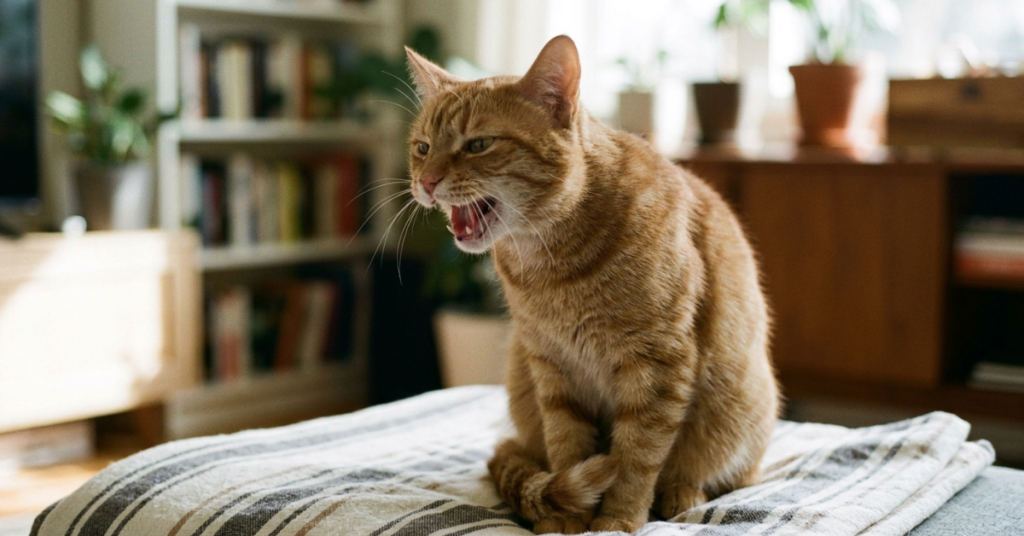
Seeing your cat breathe with its mouth open can be alarming, especially when cats usually breathe quietly through their noses. You might notice your cat panting after running around, sitting with its mouth open on a hot day, or struggling to catch its breath while resting. Although some situations can cause temporary panting, open-mouth breathing in cats can also signal a serious medical problem that requires immediate veterinary attention.
If your cat is breathing with its mouth open while resting, seems to be working hard to breathe, or has pale or bluish gums, treat the situation as an emergency. Contact a veterinarian immediately rather than waiting to see whether the symptoms disappear.
Understanding the possible causes, recognizing warning signs, and knowing what to do can help you protect your cat’s health.
Is It Normal for Cats to Breathe With Their Mouth Open?
Unlike dogs, cats do not typically pant as a regular way to cool themselves down. Most healthy cats breathe through their noses, even after ordinary physical activity.
Occasional, brief panting can happen after intense play, a stressful car ride, or exposure to high temperatures. However, it should stop relatively quickly once your cat is calm and comfortable.
Open-mouth breathing is more concerning when it:
- Starts suddenly without an obvious explanation.
- Continues after your cat has rested.
- Happens while your cat is sleeping or sitting quietly.
- Is accompanied by rapid, shallow, or noisy breathing.
- Occurs alongside coughing, weakness, or unusual lethargy.
- Causes your cat to stretch its neck or extend its elbows while breathing.
Important: If your cat is currently struggling to breathe, do not delay veterinary care while reading through possible causes. Cats can hide illness until their condition becomes serious.
Common Reasons Your Cat May Be Breathing With Its Mouth Open
There are several possible explanations for open-mouth breathing. Some are temporary, while others involve conditions affecting the lungs, heart, airways, or overall health.
1. Overheating or Heat Stress
Cats can overheat in hot weather, poorly ventilated rooms, enclosed spaces, or direct sunlight. Unlike humans, cats rely heavily on grooming and limited sweating through their paw pads to manage body temperature.
When these methods are insufficient, a cat may begin panting.
Other possible signs of overheating include:
- Restlessness or searching for a cooler place.
- Drooling more than usual.
- Red gums or tongue.
- Weakness or difficulty walking.
- Vomiting or collapse in severe cases.
Move your cat to a cool, ventilated area and offer fresh water if it is alert and able to drink normally. Do not force water into its mouth or use ice-cold baths.
If panting continues, or your cat shows weakness, vomiting, confusion, or collapse, seek emergency veterinary care. Heatstroke can become life-threatening quickly.
2. Stress, Fear, or Anxiety
Cats sometimes pant when they feel frightened or overwhelmed. A trip to the veterinarian, a car journey, unfamiliar visitors, loud noises, or conflict with another animal can trigger a stress response.
Stress-related panting may stop once the triggering situation ends and the cat feels safe.
To help your cat settle:
- Move it to a quiet, familiar room.
- Reduce noise and unnecessary handling.
- Allow it to hide if that helps it feel secure.
- Keep other pets and children at a comfortable distance.
Do not automatically assume that open-mouth breathing is caused by anxiety. If it is pronounced, persists after your cat calms down, or occurs alongside visible breathing difficulty, contact a veterinarian promptly.
3. Intense Play or Physical Exertion
A cat that has just chased a toy, sprinted around the house, or engaged in vigorous play may briefly pant from exertion.
In these circumstances, the breathing should return to normal after a short period of rest in a comfortable environment.
However, cats should not routinely pant after mild activity. If your cat starts breathing through its mouth after a few steps, becomes exhausted unusually quickly, or repeatedly pants during normal play, arrange a veterinary examination.
Reduced exercise tolerance can sometimes indicate an underlying heart or respiratory condition.
4. Respiratory Infections
Upper respiratory infections can cause congestion and inflammation in a cat’s nose, throat, and upper airways. When nasal passages become blocked, breathing through the nose may become more difficult.
Possible symptoms include:
- Sneezing and nasal discharge.
- Watery or irritated eyes.
- Reduced appetite.
- Noisy breathing.
- Fever or low energy.
A congested cat may occasionally keep its mouth open, but significant open-mouth breathing should never be dismissed as a simple cold. It can indicate severe obstruction or another respiratory problem.
A veterinarian can determine the cause and recommend appropriate treatment.
5. Asthma and Other Lung Conditions
Feline asthma is an inflammatory condition that narrows the airways and makes breathing difficult. It may cause coughing, wheezing, rapid breathing, or episodes that resemble choking.
During a severe asthma attack, a cat may breathe with its mouth open and show obvious effort when inhaling or exhaling.
Other lung conditions, including pneumonia and fluid accumulation in or around the lungs, can produce similar signs.
Seek emergency care if your cat has open-mouth breathing alongside wheezing, persistent coughing, exaggerated chest movements, or an extended neck. Do not attempt to treat a suspected asthma attack with human medication or an inhaler that has not been prescribed for your cat.
6. Heart Disease
Heart disease is another important cause of breathing difficulties in cats. Conditions such as hypertrophic cardiomyopathy can affect the heart’s ability to function properly and may lead to fluid buildup in or around the lungs.
Some cats show few obvious signs until the disease becomes advanced.
Warning signs can include:
- Rapid breathing while resting.
- Open-mouth breathing.
- Weakness or sudden collapse.
- Reduced activity.
- In some cases, sudden pain or paralysis affecting the hind legs.
Breathing problems related to heart disease require urgent veterinary assessment. A veterinarian may recommend chest imaging, an echocardiogram, and other tests to identify the underlying condition.
7. Pain or Injury
Cats experiencing significant pain may breathe faster or begin panting. Possible causes include falls, road accidents, bite wounds, abdominal pain, or other injuries.
Cats are skilled at hiding discomfort, so subtle changes in posture, movement, appetite, or behavior may be the only early clues.
If open-mouth breathing follows an injury, avoid pressing on your cat’s chest or abdomen. Minimize handling, keep your cat as calm as possible, and seek emergency veterinary care.
8. An Obstruction or Foreign Object
Something lodged in the airway can prevent normal breathing. Severe swelling, a mass, or another physical obstruction can also interfere with airflow.
Signs may include gagging, pawing at the mouth, excessive drooling, unusual breathing sounds, or sudden distress.
An airway obstruction is an emergency. Do not blindly put your fingers into your cat’s throat, as this could push an object deeper or cause injury. If an object is not clearly visible and easily removable without force, leave the examination to a veterinarian.
9. Anemia or Other Serious Illnesses
Anemia occurs when a cat has too few red blood cells or insufficient hemoglobin to carry oxygen effectively. Depending on the severity and underlying cause, this can lead to weakness, rapid breathing, and respiratory distress.
Other serious conditions, including certain metabolic disorders and systemic illnesses, can also affect breathing.
Pale gums, unusual tiredness, reduced appetite, and weakness alongside breathing changes warrant prompt veterinary attention. Open-mouth breathing or collapse requires emergency care.
What Should I Do If My Cat Is Breathing With Its Mouth Open?
The right response depends on how your cat looks and behaves, but breathing difficulty should always be taken seriously.
Step 1: Check for Emergency Warning Signs
Look for signs such as:
- Obvious effort with each breath.
- Blue, gray, or very pale gums.
- Collapse, severe weakness, or reduced responsiveness.
- Loud, strained, or gasping breaths.
- An inability to settle into a comfortable position.
If any of these signs are present, contact an emergency veterinary clinic immediately.
Step 2: Keep Your Cat Calm
Excitement and physical exertion can make breathing problems worse. Move other pets away, reduce noise, and avoid chasing, restraining, or repeatedly picking up your cat.
Allow your cat to remain in whichever position makes breathing easiest.
Step 3: Provide a Comfortable Environment
If overheating is a possibility, move your cat to a cool, well-ventilated area. Offer water only if your cat is alert and can drink comfortably.
Do not force food, water, or medication. Avoid wrapping your cat tightly in a blanket or applying extreme cold.
Step 4: Contact a Veterinarian
Tell the clinic when the breathing problem began, whether it followed exercise or heat exposure, and whether your cat has any other symptoms.
If possible, arrange transport promptly and call ahead so the clinic can prepare. Keep handling to a minimum during transport.
Never wait for a specific duration if your cat is visibly struggling to breathe. Even if the breathing improves, a new or unexplained episode deserves veterinary advice.
How Can You Tell Whether Your Cat Is Having Trouble Breathing?
Recognizing respiratory distress can be difficult because cats may become very quiet when unwell.
Look for changes in both breathing and body posture.
| Sign | What it may indicate |
|---|---|
| Mouth open while breathing at rest | Possible respiratory distress |
| Belly moving noticeably with each breath | Increased breathing effort |
| Neck stretched forward | Attempt to improve airflow |
| Elbows held away from the body | A posture sometimes seen with breathing difficulty |
| Blue or gray gums | Potentially inadequate oxygenation |
| Rapid breathing during sleep | Possible heart or lung disease |
| Collapse or severe weakness | A potentially life-threatening emergency |
No single sign identifies the exact cause. A veterinary examination is necessary to distinguish among respiratory, cardiac, and other medical problems.
How to Check Your Cat’s Resting Breathing Rate
If your cat is calm, asleep, and not purring, you can count its breaths to provide useful information to your veterinarian.
- Watch the chest rise and fall. One complete rise and fall counts as one breath.
- Count the breaths for 30 seconds.
- Multiply that number by two to calculate breaths per minute.
- Repeat once if your cat remains comfortable.
A typical resting respiratory rate for a healthy cat is often around 20–30 breaths per minute. Consistently elevated rates, particularly above 30–35 while fully relaxed or asleep, deserve veterinary advice; a rate above 40 is especially concerning.
These figures are guidelines, not a diagnosis. If your cat is breathing through its mouth or showing visible effort, do not delay emergency care to count breaths.
How Do Veterinarians Diagnose Open-Mouth Breathing in Cats?
Because several conditions can produce similar symptoms, a veterinarian will consider your cat’s history, physical examination, and the severity of its breathing difficulty.
Depending on the situation, diagnostic procedures may include:
- Physical examination: Checking breathing effort, gum color, heart sounds, and overall condition.
- Oxygen support: Providing supplemental oxygen if breathing is compromised.
- Chest X-rays or ultrasound: Looking for lung abnormalities, fluid, or signs of heart-related problems.
- Blood tests: Assessing anemia, infection, and other systemic conditions.
- Heart testing: An electrocardiogram or echocardiogram when heart disease is suspected.
- Airway evaluation: Further investigation if obstruction or a respiratory disorder is suspected.
A severely distressed cat may need oxygen and stabilization before extensive diagnostic testing can safely take place.
Treatment Options for Cats Breathing With Their Mouth Open
Treatment depends on the underlying cause. There is no single remedy that safely addresses every type of open-mouth breathing.
Possible treatments include:
- Overheating: Controlled cooling and veterinary treatment for heat-related illness.
- Asthma: Veterinarian-prescribed anti-inflammatory medication and, where appropriate, bronchodilators.
- Respiratory infections: Supportive care and targeted medication when indicated.
- Heart disease or fluid accumulation: Oxygen, medications, and other emergency interventions depending on the diagnosis.
- Airway obstruction: Veterinary removal of the obstruction and additional treatment if needed.
- Pain or injury: Appropriate pain management and treatment of the underlying damage.
Never give your cat human painkillers, cold medicines, or leftover prescriptions without veterinary instructions. Some common human medications are highly toxic to cats.
How to Help Prevent Breathing Problems in Cats
Not every cause can be prevented, but everyday care can reduce certain risks and help you recognize problems earlier.
- Keep your cat indoors or provide supervised outdoor access to reduce injury risks.
- Ensure access to shade, fresh water, and cool resting areas during hot weather.
- Avoid leaving your cat in a parked vehicle, even for a short period.
- Keep your home free of cigarette smoke, aerosols, and strong airborne irritants.
- Maintain regular veterinary checkups.
- Monitor changes in activity, appetite, weight, and sleeping breathing rate.
- Keep your cat’s vaccinations and preventive healthcare up to date.
- Introduce carriers, car rides, and unfamiliar environments gradually to reduce stress.
Cats with known heart or respiratory conditions may benefit from an individualized monitoring plan recommended by their veterinarian.
Frequently Asked Questions
1. Why is my cat breathing with its mouth open but acting normally?
Even if your cat appears alert, open-mouth breathing can indicate an early respiratory problem. Cats may hide discomfort, so normal behavior does not rule out illness. If your cat is breathing through its mouth at rest, seek immediate veterinary assessment.
2. Why is my cat panting with its mouth open after playing?
Brief panting may occur after vigorous play or intense excitement. Stop the activity and let your cat rest in a cool, quiet place. The breathing should return to normal promptly; if it persists, recurs frequently, or involves visible effort, contact a veterinarian.
3. Is it normal for cats to pant in hot weather?
No. Although heat can trigger panting, it is not a normal response to dismiss in cats. Open-mouth breathing in hot weather may indicate overheating or heatstroke, both of which can require urgent treatment.
4. Why is my cat breathing with its mouth open while lying down?
Open-mouth breathing while resting or lying down is particularly concerning because your cat is not exercising. Potential causes include asthma, heart disease, fluid around the lungs, or another respiratory problem. Seek emergency veterinary care rather than waiting for the breathing to improve.
5. Can stress cause open-mouth breathing in cats?
Yes, severe fear or stress can trigger temporary panting, particularly during travel or a veterinary visit. However, breathing difficulty can look similar to stress-related panting. If it persists after your cat settles, occurs at rest, or seems labored, seek veterinary attention immediately.
6. Why is my kitten breathing with its mouth open?
Kittens can experience breathing problems caused by respiratory infections, congenital abnormalities, overheating, airway obstruction, or other illnesses. Because young animals can deteriorate quickly, open-mouth breathing in a kitten should be assessed urgently by a veterinarian.
7. Should I be worried if my cat’s mouth is open but it is not panting?
It depends on what you observe. Cats sometimes leave their mouths slightly open after smelling something unusual, a behavior associated with the flehmen response. This is different from repeatedly breathing through an open mouth. If the mouth remains open during breathing or your cat appears uncomfortable, seek veterinary advice promptly.
8. What is a normal breathing rate for a cat?
A healthy cat commonly takes around 15–30 breaths per minute while resting or sleeping. A consistently elevated rate, especially above 35 breaths per minute, warrants veterinary consultation. Open-mouth breathing or obvious breathing effort is an emergency regardless of the measured rate.
9. Can a cat recover from breathing difficulties?
Yes, many cats recover when the underlying cause is identified and treated promptly. The outlook depends on the condition, its severity, and how quickly treatment begins. Some causes are manageable long-term, while others require emergency intervention.
10. Can I treat my cat’s open-mouth breathing at home?
There is no universally safe home treatment because the causes vary considerably. Keep your cat calm, minimize handling, and arrange urgent veterinary care. Do not give human medication or force food or water into your cat’s mouth.
Conclusion
If you’re wondering why your cat is breathing with its mouth open, the most important thing to understand is that this is not typical breathing behavior for cats and should be taken seriously. Brief panting may follow intense activity or stress, but open-mouth breathing can also indicate asthma, heart disease, overheating, an airway obstruction, or another serious medical condition.
Watch for rapid breathing, exaggerated chest or abdominal movements, unusual posture, weakness, and changes in gum color. Most importantly, do not wait for symptoms to worsen if your cat is struggling to breathe.
If your cat is currently breathing through its mouth at rest or showing signs of respiratory distress, seek emergency veterinary care immediately. Early assessment can make a critical difference to your cat’s recovery.
For more practical pet-care guidance, explore related articles on feline health, common cat illnesses, and recognizing early warning signs in your pets.
Disclaimer: This article is for educational purposes only and does not replace professional veterinary diagnosis or treatment. Open-mouth breathing accompanied by breathing difficulty should be treated as an emergency.