
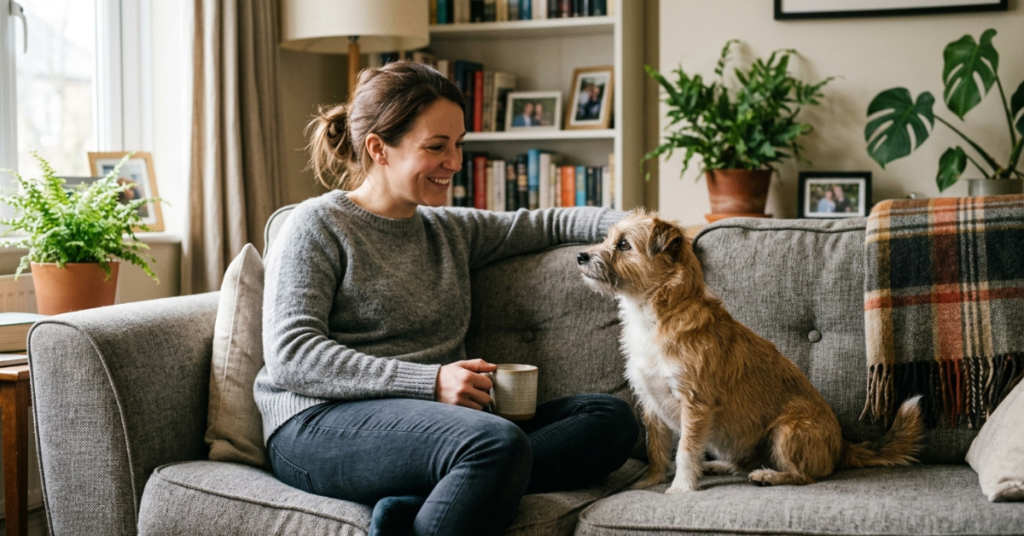
You look up from your phone, glance across the room, and there is your dog, staring directly at you. Maybe they are lying comfortably on the floor, sitting beside your chair, or watching you while you eat. Their eyes seem fixed on you, and you cannot help wondering what is going through their mind.
If you have ever asked yourself, why does my dog stare at me, the answer depends on the situation. Dogs use eye contact to communicate with people, express affection, anticipate routines, request attention, and respond to their surroundings. Sometimes, a stare is simply your dog’s way of checking in with their favorite person.
However, not every look means the same thing. Your dog’s posture, facial expression, tail movement, and the circumstances surrounding the stare can help you understand what they are trying to communicate. Here are the most common explanations, along with signs that a change in staring behavior may need attention.
1. Your Dog Loves You and Feels Connected to You
One of the sweetest explanations for your dog’s gaze is affection. Dogs often look at people they trust, particularly when they feel relaxed, safe, and comfortable in their company.
Research published in Science in 2015 found that mutual gazing between dogs and their owners was associated with increased oxytocin, a hormone involved in social bonding, in both species. This suggests that gentle eye contact can play a role in strengthening the relationship between dogs and humans.
You may notice this affectionate stare when your dog is resting beside you, sitting quietly at your feet, or looking up at you after a long day.
Signs your dog is showing affection include:
- Relaxed facial muscles and soft eyes.
- A loose, comfortable body posture.
- Gentle tail wagging or resting close to you.
- Choosing to stay near you without demanding anything.
A relaxed gaze is usually nothing to worry about. You can respond with a gentle voice, a little affection if your dog enjoys it, or simply let them enjoy your company.
2. Your Dog Wants Something From You
Dogs quickly learn that looking at their owners can produce results. If staring has earned your dog a walk, a treat, a game of fetch, or a scratch behind the ears in the past, they may repeat the behavior.
In this case, your dog is not necessarily trying to express deep emotions. They may have learned a straightforward lesson: looking at you is an effective way to communicate a need.
Pay attention to what happens immediately before and after the stare. Your dog might look at you, glance toward the door, and look back again. They may stare at their leash, stand near their food bowl, or bring you a favorite toy.
Common requests include:
- Going outside to relieve themselves.
- Getting food or a treat.
- Playing or going for a walk.
- Receiving attention or physical affection.
- Having a door opened or accessing a favorite spot.
Once you recognize the pattern, you can respond appropriately. For example, if your dog needs to go outside, take them out rather than assuming they simply want attention.
3. Your Dog Is Hungry or Hoping for Food
Food is a major reason dogs watch their owners closely. If your dog begins staring as soon as you enter the kitchen or sit down with a meal, they may be anticipating a snack.
Dogs are excellent at learning daily routines. They often recognize the sounds of food packaging, the time their meals usually arrive, and the familiar movements associated with preparing dinner.
If you have occasionally shared food from your plate, your dog may also have learned that staying nearby and looking hopeful sometimes pays off.
To manage food-related staring, keep feeding times consistent and reward calm behavior away from the table. Avoid regularly giving scraps in response to begging, as doing so can reinforce the habit.
Remember that persistent hunger accompanied by weight loss, increased thirst, or other physical changes is different from ordinary food begging. Those symptoms warrant a conversation with your veterinarian.
4. Your Dog Wants Your Attention
Sometimes, the explanation is as simple as boredom. Your dog may stare because they want you to interact with them, particularly if you have been working, watching television, or using your phone for an extended period.
Dogs are social animals, and many enjoy activities that involve their owners. When they have not had enough exercise, play, or mental stimulation, they may try different ways to get your attention.
You might notice your dog staring and then nudging your hand, dropping a toy in your lap, pawing at your leg, or making small noises.
Try offering appropriate activities, such as:
- A short walk or a game of fetch.
- Food puzzles and scent-based games.
- A brief training session using rewards.
- Quiet companionship or gentle petting, if welcomed.
If your dog repeatedly demands attention, teach them that settling quietly can also earn rewards. This helps them learn a healthier balance between interaction and independent relaxation.
5. Your Dog Is Waiting for Your Next Move
Dogs pay close attention to human body language. Over time, they learn that particular movements, words, and routines predict what happens next.
Picking up your keys might signal that you are leaving. Putting on walking shoes could mean an outdoor adventure is coming. Standing near the cupboard might suggest that food or treats are about to appear.
Your dog may stare because they are watching for a familiar signal. They are trying to work out whether something exciting, predictable, or important is about to happen.
This is particularly common in dogs that have established daily routines with their owners.
If your dog looks at you before sitting, lying down, or moving toward the door, they may be waiting for a cue. Consistent verbal commands and hand signals can make communication clearer and reduce confusion.
6. Your Dog Is Trying to Understand Your Emotions
Dogs can use human facial expressions, voices, posture, and behavior to gather information about how people are feeling. Some dogs become especially attentive when their owners sound upset, move differently, or behave unusually.
For example, your dog might watch you closely when you are crying, speaking in a raised voice, or sitting quietly after a stressful day.
It is tempting to interpret this as your dog understanding every detail of your emotional experience. However, research supports a more careful conclusion: dogs can respond to human emotional cues, but a stare alone cannot tell us exactly what they understand or feel.
Look at the wider interaction. Does your dog approach gently, remain nearby, or appear uncertain? Their response may reflect familiarity, learned behavior, curiosity, or sensitivity to changes in your behavior.
7. Your Dog Feels Uncertain or Anxious
Not every stare is friendly or relaxed. A dog may watch you closely when they feel uncertain, especially if they are in an unfamiliar environment or cannot predict what will happen next.
This can occur during thunderstorms, visits to the veterinarian, interactions with unfamiliar people, or changes in the household.
An anxious dog may also follow you around, pant when they are not hot, pace, tremble, tuck their tail, or repeatedly seek reassurance.
Look for the following warning signs:
- Ears held back or a lowered body posture.
- Frequent lip licking or yawning in a stressful situation.
- Panting, trembling, pacing, or attempts to hide.
- A tense body or difficulty settling down.
These signals must be interpreted in context because the same behavior can have several explanations. If your dog appears distressed, reduce the pressure, give them space, and provide access to a quiet, safe area.
If anxiety is frequent or interferes with everyday life, consult your veterinarian or a qualified, reward-based canine behavior professional.
8. Your Dog Is Guarding Something
A fixed stare can sometimes signal discomfort, defensiveness, or resource guarding. This is particularly important when your dog is eating, chewing a bone, holding a toy, or resting in a place they consider safe.
Unlike an affectionate gaze, a warning stare may come with a stiff body, a closed mouth, a rigid tail, a lowered head over an object, or a growl.
Some dogs also show the whites of their eyes while keeping their head turned away. This expression is sometimes called whale eye and can indicate tension, although context matters.
If your dog appears tense or protective, do not stare back, reach toward the guarded item, or punish a growl. Instead, calmly create distance and seek professional guidance if the behavior recurs.
A growl is useful communication that a dog is uncomfortable. Respecting that signal can help prevent escalation.
9. Your Dog Is Watching You From Across the Room
Have you ever noticed your dog staring at you from the other side of the room while doing absolutely nothing else?
This behavior is often normal. Your dog may simply enjoy being near you, be monitoring your movements, or be waiting for an opportunity to join an activity.
Some dogs are naturally more observant than others. Breeds developed for herding, guarding, or working closely with people may be especially attentive to movement and changes in their environment, although individual personality and experience matter more than breed alone.
If your dog looks relaxed, breathes normally, and can comfortably turn their attention elsewhere, there is usually little reason for concern.
You do not need to respond to every glance. Dogs can observe their surroundings without needing anything from you.
10. Your Dog Stares While Lying Down
When a dog looks at you while lying on the floor, couch, or bed, the meaning often depends on how relaxed they appear.
A dog stretched out with loose muscles, soft eyes, and a comfortable posture may simply be enjoying your presence. They may also be waiting for you to get up, anticipating a walk, or hoping you will invite them to join you.
However, lying down does not automatically mean that your dog is comfortable. A dog that remains unusually still, appears tense, or watches you with a rigid expression may feel uncertain or uncomfortable.
Consider the full picture rather than focusing only on eye contact. If your dog is relaxed and behaving normally, this is generally ordinary social behavior.
11. Your Dog Stares at You Without Blinking
An unblinking stare can feel surprisingly intense, particularly when your dog holds eye contact for several seconds without moving.
There are several possible explanations. Your dog may be concentrating on a cue, anticipating food, watching for movement, or feeling tense about something nearby.
The important distinction is between a soft, attentive gaze and a hard, fixed stare.
A relaxed dog may look at you steadily while keeping their body loose. A dog that is uncomfortable may become rigid, close their mouth, lower their head, or appear ready to react.
If you are unsure, avoid forcing eye contact or moving your face close to your dog’s. Give them room, observe their body language, and redirect the interaction gently when appropriate.
12. Your Dog Stares at You When You Eat
Mealtimes can turn even a well-behaved dog into a determined observer. If your dog watches every bite, they may be hoping you will share some food or have learned that meals are an opportunity to get attention.
The smell of food, familiar dining routines, and previous rewards can all contribute to this behavior.
You can make mealtimes easier by:
- Feeding your dog their own meal according to their usual schedule.
- Giving them a comfortable place to settle while you eat.
- Rewarding calm behavior away from the table.
- Avoiding inconsistent feeding from your plate.
Be careful with table scraps. Foods such as chocolate, grapes, raisins, onions, and products containing xylitol can be dangerous for dogs. Some other human foods can also cause problems depending on the ingredient and amount.
If you want to offer treats, choose dog-safe options and keep them within your dog’s overall daily calorie needs.
13. Your Dog Stares at You While You Pet Them
If your dog looks into your eyes while you pet them, they may be enjoying the interaction, checking in with you, or responding to your movements.
A relaxed expression, loose body, and voluntary leaning toward your hand can suggest that the attention is welcome. Some dogs enjoy gentle strokes around the chest or shoulders more than having their heads touched.
However, a dog that turns their head away, repeatedly licks their lips, stiffens, or tries to move away may be asking for a break.
Try pausing the petting for a moment and see what your dog does. If they move closer or nudge your hand, they may want more. If they walk away, respect their choice.
This simple approach helps you understand your dog’s preferences instead of assuming that every stare means they want to be touched.
14. Your Dog Stares at You and Whines
When staring is accompanied by whining, your dog is giving you additional information. They may need to go outside, want food, feel excited, seek attention, or be experiencing discomfort.
The surrounding circumstances can help narrow down the possibilities.
For instance, a dog staring and whining near the door after a long period indoors may need a bathroom break. A dog whining while pacing or repeatedly changing position may be uncomfortable or distressed.
Pay attention to when the behavior occurs, how long it lasts, and whether it is new.
If your dog suddenly begins whining and staring more than usual, especially alongside changes in appetite, mobility, sleep, or bathroom habits, contact your veterinarian. Do not assume that persistent vocalization is simply attention-seeking.
15. Your Dog Stares at You While Pooping
It can feel awkward when your dog maintains eye contact while going to the bathroom, but this behavior is fairly common.
One possible explanation is that dogs remain alert to their surroundings when they are in a vulnerable position. Your dog may look at you because you are a familiar presence, because they expect you to remain nearby, or because they have learned to check in with you during walks.
There is no strong evidence that every dog does this for one specific reason, so it is best not to assign a single universal meaning to the behavior.
If your dog seems comfortable, passes stool normally, and behaves as usual, the staring itself is generally not a concern. If you notice straining, pain, blood in the stool, or persistent difficulty passing feces, speak with your veterinarian.
16. Your Dog Stares at You While You Sleep
Waking up to find your dog watching you can be unsettling, especially if they seem to do it regularly.
In many cases, the behavior is harmless. Your dog may be resting nearby, responding to a sound or movement, waiting for you to wake up, or following the household’s usual morning routine.
Some dogs are also more alert at night than their owners expect, particularly when they hear unfamiliar noises.
Make sure your dog has a comfortable sleeping space, enough exercise and enrichment during the day, and a consistent bedtime routine. If they repeatedly wake you, consider whether they need a bathroom break or are reacting to noises in the environment.
A sudden increase in nighttime restlessness, confusion, pacing, or unusual staring deserves more attention, particularly in older dogs. Your veterinarian can help determine whether an underlying problem is contributing to the change.
17. Your Dog Stares at You All the Time
If your dog seems to watch you constantly, the reason may be a combination of attachment, habit, anticipation, and learned behavior.
Dogs that spend much of their day with their owners can become very familiar with their routines. Some are naturally clingy, while others have learned that staying close is the best way to avoid missing walks, meals, or playtime.
However, constant staring may also occur when a dog struggles to settle independently or becomes distressed whenever their owner moves away.
Consider whether your dog can comfortably rest in another room, play independently, and remain relaxed when you are busy. If they can, frequent eye contact may simply be part of their personality.
If your dog becomes distressed when separated from you, gradually teach them to settle in a safe space and consider professional advice if the problem persists.
18. Why Does My Dog Stare at Me and Look Sad?
A dog with lowered eyes, drooping ears, or a quiet expression can look sad to a human observer. But facial expressions alone cannot reliably tell you what your dog is feeling.
Your dog might be tired, seeking attention, responding to your mood, or simply relaxing. Some dogs also use facial movements that humans interpret as sadness because those expressions resemble our own.
What matters is whether your dog’s behavior is normal for them.
Watch for changes such as reduced appetite, loss of interest in play, unusual hiding, reduced activity, irritability, or disrupted sleep. These signs can indicate pain, illness, or emotional distress and should not be dismissed as sadness alone.
If the expression comes with a noticeable change in behavior, arrange a veterinary assessment rather than relying on appearance to identify the cause.
19. Your Dog Stares at You When You Move Around the House
Some dogs follow their owners’ movements with their eyes even when they remain in the same spot. They may watch you walk into the kitchen, move between rooms, or pick up household objects.
This behavior can reflect curiosity, routine recognition, or an expectation that you might invite them to participate in something.
Dogs often become familiar with patterns that predict enjoyable activities. If putting on a jacket usually means a walk, for example, your dog may watch closely as soon as you reach for it.
If your dog remains calm and can relax without following you, there is generally no reason to discourage this behavior. If they become panicked whenever you leave their sight, however, the issue may involve separation-related distress rather than ordinary curiosity.
How to Tell What Your Dog’s Stare Means
The easiest way to understand your dog’s gaze is to consider their eyes, body posture, surroundings, and recent behavior together.
| What you notice | Possible meaning |
|---|---|
| Soft eyes and a relaxed body | Comfort, affection, or calm attention |
| Looking between you and the door | May need to go outside |
| Staring near the food bowl | Hunger or anticipation |
| Bringing a toy and looking at you | Invitation to play |
| A rigid body and fixed stare | Tension, discomfort, or guarding |
| Staring with pacing and whining | A need, excitement, anxiety, or discomfort |
| Sudden unusual staring with confusion | Possible medical or neurological concern |
These are clues, not definitive diagnoses. The same behavior can have different meanings depending on the individual dog and the situation.
When Should You Worry About Your Dog Staring?
Most ordinary social staring is harmless. However, a sudden change in your dog’s gaze or behavior can sometimes indicate a health problem.
Contact your veterinarian if your dog develops persistent or unusual staring along with symptoms such as:
- Disorientation or difficulty recognizing familiar people.
- Repeatedly staring at a wall or into space and failing to respond normally.
- Episodes of unresponsiveness, unusual facial movements, or repetitive movements.
- Sudden changes in walking, balance, vision, or coordination.
- New nighttime confusion, restlessness, or significant behavioral changes.
Some neurological conditions, including focal seizures, can cause unusual episodes of staring or altered awareness. A single stare does not mean your dog is having a seizure, but repeated episodes involving reduced responsiveness warrant prompt veterinary assessment.
Seek emergency veterinary care if an episode involves collapse, a seizure lasting five minutes or longer, repeated seizures without recovery, or sudden severe neurological symptoms.
Do not try to diagnose a medical problem from eye contact alone. If possible and safe, record a short video of an unusual episode to show your veterinarian.
How to Respond When Your Dog Stares at You
You do not need to stop your dog from looking at you. Instead, respond according to the context and teach useful behaviors where necessary.
- Check basic needs. Consider whether your dog needs water, a bathroom break, food at their usual mealtime, exercise, or rest.
- Observe their body language. Look for relaxed muscles, soft eyes, a loose tail, or signs of tension and discomfort.
- Reward appropriate behavior. If your dog wants attention, reward calm ways of asking rather than reinforcing persistent barking or demanding behavior.
- Avoid forced eye contact. Some dogs find prolonged direct staring intimidating, especially when they are already nervous.
- Provide mental and physical enrichment. Walks, sniffing opportunities, interactive toys, and short training sessions can help reduce boredom.
- Seek help when behavior changes. If staring becomes unusually frequent, compulsive, or associated with physical symptoms, ask your veterinarian for advice.
The goal is not to interpret every look perfectly. It is to understand your dog’s usual behavior well enough to recognize when something is different.
Frequently Asked Questions
Why does my dog stare at me so much?
Your dog may be seeking attention, anticipating a walk or meal, expressing affection, or monitoring your movements. If the behavior is normal for your dog and their body language is relaxed, it is usually harmless.
Why does my dog stare at me constantly, even when I do nothing?
Some dogs enjoy observing their owners or have learned that eye contact often leads to rewards. Others may struggle with boredom or settling independently. Consider whether your dog can relax comfortably when you are busy.
Why does my dog stare at me in a creepy way?
A prolonged, motionless gaze can look unsettling to humans. It may simply reflect concentration or anticipation, but a rigid posture and hard stare can signal discomfort or defensiveness. Avoid staring back if your dog seems tense.
Why does my dog stare at me without blinking?
Your dog may be concentrating on you, waiting for a cue, or watching for something to happen. A soft gaze is different from a rigid, fixed stare. If the behavior comes with unusual unresponsiveness or other neurological signs, seek veterinary advice.
Why does my dog stare at me while lying down?
Your dog may feel safe and relaxed near you, enjoy your company, or be waiting for you to move. Look at their overall posture and behavior to distinguish ordinary relaxation from tension or discomfort.
Why does my dog stare at me from across the room?
Dogs often monitor their owners because they are socially connected to them or familiar with their routines. If your dog looks relaxed and can turn their attention elsewhere, this is usually normal.
Why does my dog stare at me when I eat?
Your dog may be hoping for food, responding to the smell of your meal, or repeating behavior that has previously earned a treat. Consistent feeding routines and rewarding calm behavior away from the table can help.
Why does my dog stare at me when I pet them?
Your dog may enjoy the interaction, check in with you, or respond to your movements. If they lean toward your hand and remain relaxed, they may welcome the attention. If they stiffen or move away, give them a break.
Why does my dog stare at me and whine?
Your dog may need to go outside, want attention, feel excited, or experience discomfort. Consider the timing and accompanying behavior. New or persistent whining, particularly with physical symptoms, deserves veterinary attention.
Why does my dog stare at me while pooping?
Your dog may look at you because you are a familiar presence while they are in a vulnerable position, or because checking in has become part of their routine. There is no single explanation that applies to every dog.
Why does my dog stare at me while I sleep?
Your dog may be resting nearby, reacting to noises, or waiting for you to wake up. If the behavior is new and accompanied by nighttime confusion or restlessness, consult your veterinarian.
Does my dog staring at me mean they love me?
It can be a sign of affection, particularly when accompanied by relaxed body language and voluntary closeness. However, dogs also stare to request things, monitor activity, or respond to uncertainty, so context is important.
Should I stare back at my dog?
Gentle eye contact may be comfortable for a familiar, relaxed dog, but prolonged direct staring can feel threatening to some dogs. Let your dog choose whether to maintain eye contact and give them space if they seem uncomfortable.
Conclusion
So, why does your dog stare at you? In many cases, the answer is a combination of affection, curiosity, learned routines, and a desire to communicate. Your dog might be hoping for dinner, waiting for a walk, enjoying your company, or simply keeping track of what their favorite human is doing.
The most important clue is the context surrounding the gaze. A relaxed dog looking at you from the couch is very different from a tense dog holding a rigid stare or one experiencing sudden episodes of unresponsiveness.
Pay attention to your dog’s usual habits, learn to recognize their body language, and respond to their needs without assuming that every look has the same meaning. And if unusual staring appears suddenly or comes with changes in health or behavior, your veterinarian is the best person to help identify the cause.