
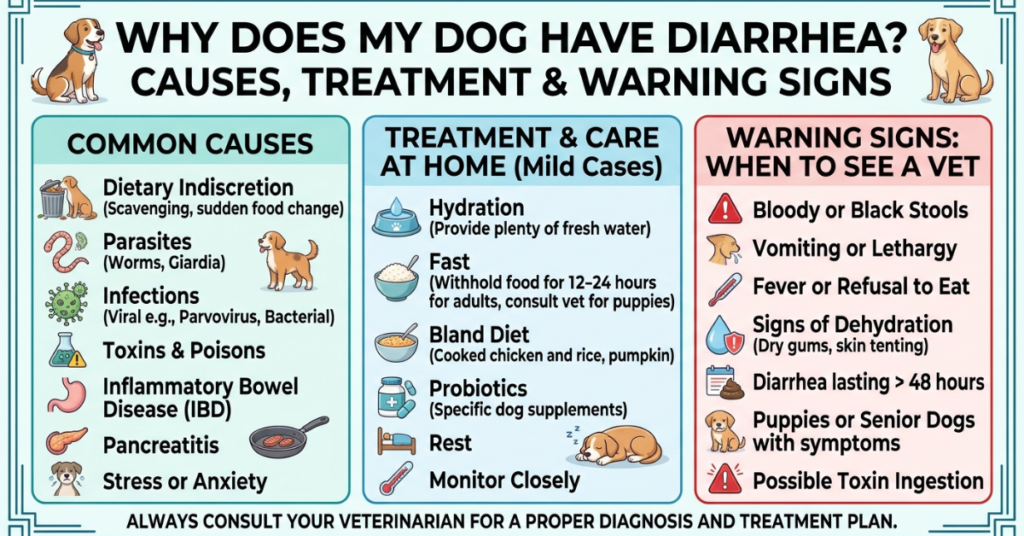
Finding loose, watery stool in your dog’s usual bathroom spot can be worrying, especially when your pet seems perfectly happy otherwise. If you’re wondering, why does my dog have diarrhea, the answer can range from something as simple as eating table scraps to a digestive infection or an underlying medical condition.
Diarrhea is a common problem in dogs, but not every case has the same cause or requires the same treatment. Your dog’s age, diet, energy level, stool appearance, and the duration of symptoms can all help determine what might be happening.
The good news is that mild digestive upset often improves quickly. However, certain symptoms, including bloody stool, repeated vomiting, severe weakness, and dehydration, can signal a problem that needs prompt veterinary attention.
In this guide, we’ll explore the most common causes of canine diarrhea, what you can safely do at home, and how to recognize when your dog needs professional care.
What Causes Diarrhea in Dogs?
Diarrhea occurs when your dog’s digestive system cannot properly absorb water or when the intestines produce excess fluid. The result is stool that is softer, looser, or more watery than usual.
Several factors can trigger this problem, and the timing of the symptoms may provide useful clues.
1. Sudden Changes in Diet
A quick switch from one dog food to another can upset the digestive system. Your dog’s intestines need time to adjust to new ingredients, fat levels, and nutrient combinations.
Even a food that is generally healthy may cause digestive trouble if introduced too quickly.
Common dietary triggers include:
- Switching dog food without a gradual transition.
- Eating fatty table scraps or leftovers.
- Getting too many treats.
- Drinking milk or consuming dairy products.
- Eating spoiled food or garbage.
To reduce the risk, introduce new food gradually over approximately seven to ten days, unless your veterinarian recommends a different schedule.
2. Eating Something They Shouldn’t
Dogs are naturally curious, and many will eat almost anything they find on the floor, in the garden, or inside a garbage bin. Foreign foods, greasy leftovers, and contaminated substances can irritate the digestive tract.
Some items are much more dangerous than others. Chocolate, grapes, raisins, xylitol-containing products, certain medications, and some household chemicals can be toxic to dogs.
If you suspect your dog swallowed something poisonous or a foreign object, contact a veterinarian immediately rather than waiting for diarrhea to develop.
3. Intestinal Parasites
Parasites such as roundworms, hookworms, whipworms, and Giardia can cause loose stool. Some dogs also experience weight loss, poor appetite, a dull coat, or mucus in their stool.
Puppies and dogs exposed to contaminated soil, water, or feces may be particularly vulnerable. However, even adult dogs that appear healthy can carry intestinal parasites.
A veterinarian can examine a stool sample and recommend the appropriate treatment. Avoid giving deworming medication without confirming which treatment is suitable for your dog.
4. Bacterial or Viral Infections
Certain infections can inflame the intestines and cause diarrhea, sometimes accompanied by vomiting, fever, tiredness, or reduced appetite.
Parvovirus is a particularly serious concern in puppies and dogs that are not fully vaccinated. It can cause severe vomiting, bloody diarrhea, and rapid dehydration.
If your puppy has diarrhea alongside vomiting, weakness, or a refusal to eat, seek veterinary care urgently. Do not assume the symptoms will resolve on their own.
5. Stress and Anxiety
Dogs can develop digestive upset during stressful situations, including moving homes, boarding, traveling, meeting unfamiliar animals, or changes in their daily routine.
Stress-related diarrhea is often temporary, but it should not automatically be blamed on anxiety. Persistent symptoms, blood in the stool, or other signs of illness deserve veterinary evaluation.
6. Food Intolerance or Allergies
Some dogs struggle to digest particular ingredients or react adversely to certain foods. Depending on the underlying issue, they may experience recurring diarrhea, gas, vomiting, itchy skin, or ear irritation.
A veterinarian may recommend a controlled elimination diet to identify the suspected ingredient. Randomly changing foods repeatedly can make it harder to identify the actual cause.
7. Underlying Medical Conditions
Recurring or persistent diarrhea can sometimes be linked to conditions affecting the pancreas, liver, intestines, or other organs.
Examples include:
- Inflammatory bowel disease.
- Pancreatitis.
- Disorders affecting nutrient absorption.
- Certain endocrine or metabolic diseases.
- Medication side effects.
If digestive problems keep returning, a veterinary examination can help distinguish a temporary upset from a chronic condition that requires ongoing management.
Why Does My Dog Have Diarrhea All of a Sudden?
Sudden diarrhea often develops after a dietary mistake, a stressful event, exposure to contaminated food, or an intestinal infection. Sometimes, the cause is never identified, particularly when symptoms are mild and resolve quickly.
Think about what happened during the previous 24 to 48 hours:
- Did you introduce a new food or treat?
- Could your dog have eaten something outdoors?
- Has your dog recently visited a park, daycare, or boarding facility?
- Have you started a new medication?
- Are there any other symptoms, such as vomiting or unusual tiredness?
These details can help your veterinarian narrow down the possibilities.
If your dog has only one or two episodes of loose stool and remains energetic, drinks normally, and has no other symptoms, careful monitoring may be reasonable. Repeated watery diarrhea, worsening symptoms, or any warning signs should prompt veterinary advice.
Why Does My Dog Have Diarrhea at Night?
Nighttime diarrhea can happen when intestinal irritation causes your dog to need the toilet more frequently. A meal eaten earlier in the day, stress, food intolerance, parasites, or an underlying digestive disorder may contribute.
If your dog has diarrhea only at night, pay attention to whether it happens after dinner, after evening treats, or at a consistent time regardless of meals.
Keep a simple record of:
- Meal and treat times.
- The number of bowel movements.
- Stool consistency and appearance.
- Any nighttime restlessness or accidents indoors.
- Changes in appetite, thirst, or energy.
A consistent nighttime pattern does not identify a diagnosis by itself. If the problem continues, wakes your dog repeatedly, or occurs alongside weight loss or other symptoms, arrange a veterinary assessment.
Why Does My Dog Have Diarrhea but Is Acting Normal?
A dog can have diarrhea and still play, eat, drink, and behave normally. This can occur with mild dietary upset, a recent food change, or temporary intestinal irritation.
Normal behavior is reassuring, but it does not completely rule out parasites, infection, or other health problems.
For an otherwise healthy adult dog with mild symptoms, you can monitor stool frequency, water intake, appetite, and energy. Contact your veterinarian if the diarrhea persists beyond 24 to 48 hours, becomes more severe, or is accompanied by additional symptoms.
Puppies, senior dogs, very small dogs, and dogs with existing medical conditions may become unwell more quickly, so they warrant earlier veterinary advice.
Why Does My Dog Have Diarrhea With Blood or Mucus?
Blood and mucus can provide clues about irritation in the digestive tract, but they cannot establish the cause on their own.
Blood in the Stool
Small streaks of bright red blood may occur when the lower intestine or rectum becomes irritated. Possible causes include intestinal inflammation, parasites, dietary problems, and infections.
However, bloody diarrhea can also be a sign of a more serious condition, including acute hemorrhagic diarrhea syndrome or parvovirus.
Contact a veterinarian promptly if you notice blood in your dog’s stool. Seek emergency care if the bleeding is heavy, the stool is black and tar-like, or your dog also has repeated vomiting, weakness, pale gums, abdominal pain, or collapse.
Mucus in the Stool
Mucus is a slippery, jelly-like substance that may coat the stool. A small amount can occur with irritation of the large intestine, sometimes called colitis.
Potential triggers include stress, dietary changes, parasites, and intestinal inflammation. A single episode in an otherwise well dog may not be an emergency, but persistent mucus, repeated diarrhea, or accompanying blood warrants veterinary advice.
Why Does My Dog Have Diarrhea and Vomiting?
Diarrhea accompanied by vomiting can result from dietary indiscretion, gastrointestinal infections, parasites, pancreatitis, or exposure to toxins. Having both symptoms increases the risk of dehydration because your dog loses fluid through two routes.
Seek urgent veterinary care if your dog:
- Vomits repeatedly or cannot keep water down.
- Has bloody diarrhea or vomit.
- Appears weak, unusually sleepy, or disoriented.
- Has a painful or swollen abdomen.
- Shows signs of dehydration.
- May have swallowed a toxin or foreign object.
Puppies and unvaccinated dogs with vomiting and diarrhea need especially prompt assessment because serious infections can progress quickly.
Do not give human anti-diarrheal medicines or anti-vomiting drugs unless a veterinarian specifically directs you to do so.
Why Does My Dog Have Diarrhea All the Time or On and Off?
Recurring diarrhea may indicate that something continues to irritate your dog’s digestive system. It can also suggest that an underlying condition has not been identified or adequately treated.
Common possibilities include food intolerance, intestinal parasites, chronic inflammation, medication effects, and disorders affecting digestion or absorption.
Your veterinarian may recommend:
- A physical examination and medical history.
- Stool testing for parasites or infection when appropriate.
- Blood tests to check hydration and organ function.
- Additional imaging or testing if symptoms persist.
- A supervised dietary trial.
Try not to switch between multiple dog foods without a plan. Keeping meals consistent and recording symptoms can make it easier to identify a pattern.
Why Does My Dog Have Diarrhea for 3 Days or a Week?
Diarrhea that continues for three days is no longer something to dismiss as a brief digestive upset. Contact your veterinarian if your dog’s symptoms have lasted that long, even if your pet still appears reasonably comfortable.
Diarrhea lasting a week requires veterinary assessment. Prolonged fluid loss can cause dehydration, while ongoing intestinal problems may lead to weight loss, poor nutrient absorption, or other complications.
Seek care sooner if your dog is a puppy, elderly, has another medical condition, or develops blood in the stool, repeated vomiting, reduced appetite, or unusual tiredness.
Do not wait for a specific number of days if your dog is deteriorating. The severity of the symptoms matters as much as their duration.
Why Does My Dog Have Diarrhea After Giving Birth?
A mother dog may experience digestive upset after giving birth because of changes in her routine, stress, dietary changes, or consuming placentas. However, diarrhea should not automatically be considered a normal part of recovery.
A postpartum dog may also develop complications, including uterine infection or other illnesses, that require prompt veterinary attention.
Contact your veterinarian if diarrhea persists or is accompanied by fever, weakness, poor appetite, foul-smelling vaginal discharge, abdominal discomfort, or reduced interest in the puppies.
If the mother is nursing, consult your veterinarian before using medications or supplements. Treatment must take her recovery and the safety of her puppies into account.
What to Do When Your Dog Has Diarrhea
If your dog is an otherwise healthy adult, has mild diarrhea, and shows no warning signs, the following steps may help while you monitor the situation.
1. Keep Fresh Water Available
Make sure your dog has access to clean drinking water. Diarrhea causes fluid loss, and repeated episodes can lead to dehydration.
Watch for dry or sticky gums, reduced urination, weakness, or unusual lethargy. These signs warrant veterinary advice, particularly when symptoms are ongoing.
2. Offer a Gentle, Digestible Diet
If your dog is alert, not vomiting, and willing to eat, ask your veterinarian whether a short-term, easily digestible diet is appropriate.
A veterinary gastrointestinal diet may be a suitable option. In some cases, a veterinarian may suggest plain, lean, cooked chicken with plain white rice for a short period, provided those foods are safe for the individual dog.
This homemade combination is not nutritionally complete for long-term feeding, and chicken is unsuitable for dogs with a relevant allergy. Puppies, diabetic dogs, and dogs with other medical conditions may need a different feeding plan.
Avoid fatty foods, rich treats, bones, heavily seasoned meals, and sudden diet changes.
3. Avoid Unapproved Medication
Never assume that medication intended for people is safe for dogs. Some human medicines can be toxic or inappropriate depending on the cause of diarrhea and your dog’s medical history.
Do not give antibiotics, dewormers, painkillers, or anti-diarrheal products without veterinary guidance.
4. Monitor Stool and Other Symptoms
Keep track of how often your dog passes stool and whether it is watery, unusually dark, bloody, or covered in mucus.
If possible, take a clear photo or collect a fresh stool sample in a clean container for your veterinarian. A sample may help with diagnostic testing.
5. Know When Home Care Is Not Enough
Home monitoring is appropriate only for mild cases without warning signs. Contact your veterinarian if diarrhea continues beyond 24 to 48 hours, occurs repeatedly, or worsens.
Seek urgent care for bloody or black stool, repeated vomiting, marked weakness, abdominal pain, suspected poisoning, or signs of dehydration. Very young puppies and medically vulnerable dogs should be assessed sooner.
How Veterinarians Diagnose the Cause of Diarrhea
Because many different problems can produce similar symptoms, a veterinarian may combine several methods to identify the cause.
Medical history: Your veterinarian may ask about diet, recent changes, medications, vaccination status, parasite prevention, travel, and possible exposure to toxins.
Stool testing: A fecal examination may detect parasites or other organisms. Additional tests may be needed depending on the suspected cause.
Blood tests: These can help assess dehydration, inflammation, electrolyte imbalances, and organ function.
Imaging: X-rays or ultrasound may be appropriate when a blockage, abdominal abnormality, or other complication is suspected.
Dietary assessment: If symptoms recur, a controlled food trial may help investigate intolerance or allergy.
Not every dog needs every test. The recommended approach depends on the dog’s condition, history, examination findings, and response to initial treatment.
How to Prevent Diarrhea in Dogs
You cannot prevent every episode, but a few practical habits can lower the risk.
- Introduce new food gradually rather than changing diets overnight.
- Keep rubbish, spoiled food, and potentially toxic substances out of reach.
- Avoid feeding rich or fatty table scraps.
- Keep vaccinations and parasite prevention up to date according to veterinary advice.
- Provide clean drinking water.
- Supervise your dog outdoors to reduce scavenging.
- Use treats in moderation and avoid frequent changes in ingredients.
- Arrange veterinary checks for recurring digestive problems.
Consistent feeding routines and sensible prevention can make a real difference to your dog’s digestive health.
Frequently Asked Questions
1. Should I be worried if my dog has diarrhea?
Not every episode is serious. Mild diarrhea in an otherwise healthy adult dog may resolve within a day, but persistent symptoms, blood, repeated vomiting, weakness, or dehydration require veterinary attention.
2. How long does diarrhea usually last in dogs?
A mild episode may improve within 24 hours. If it continues beyond 24 to 48 hours, contact your veterinarian. Seek help sooner if your dog is young, medically vulnerable, or showing warning signs.
3. What can I feed my dog when they have diarrhea?
Depending on your dog’s health and symptoms, a veterinarian may recommend a highly digestible veterinary diet or a short-term bland diet. Ensure fresh water is available, and avoid fatty foods, rich treats, and sudden dietary changes.
4. Can stress cause diarrhea in dogs?
Yes. Anxiety, travel, boarding, and changes in routine can contribute to digestive upset. However, persistent diarrhea or symptoms such as blood, vomiting, or lethargy should not be attributed to stress without considering other causes.
5. Why is my dog’s diarrhea yellow?
Yellow stool can occur when intestinal contents move through the digestive tract quickly or when diet and digestion change. It is not specific to one disease. If the color change persists or comes with vomiting, poor appetite, pain, or weakness, consult your veterinarian.
6. Why does my dog have diarrhea but no vomiting?
Diarrhea can occur on its own because of dietary changes, food intolerance, stress, parasites, or intestinal inflammation. The absence of vomiting is reassuring but does not rule out a significant problem.
7. Can I give my dog Imodium or Pepto-Bismol?
Do not give these medicines unless your veterinarian specifically approves them. Their suitability depends on the dog’s condition, other medications, and the underlying cause, and they may be unsafe in certain circumstances.
8. Is bloody diarrhea an emergency?
Bloody diarrhea deserves prompt veterinary advice. Heavy bleeding, black tar-like stool, repeated vomiting, pale gums, weakness, or collapse should be treated as an emergency.
9. Can worms cause diarrhea in dogs?
Yes. Intestinal parasites, including roundworms, hookworms, whipworms, and Giardia, can cause diarrhea. Stool testing and appropriate veterinary treatment can help identify and manage the infection.
10. When should I take my dog to the vet for diarrhea?
Seek urgent care for blood or black stool, repeated vomiting, severe lethargy, abdominal pain, suspected poisoning, or dehydration. Arrange veterinary advice if diarrhea persists beyond 24 to 48 hours, and seek earlier assessment for puppies, senior dogs, and pets with existing health problems.
Conclusion
If you’re asking, why does my dog have diarrhea, start by considering recent food changes, scavenging, stress, parasites, and other possible digestive problems. The appearance and duration of the stool, together with your dog’s appetite, energy, and other symptoms, can help guide the next step.
For mild cases, access to fresh water, appropriate feeding, and careful monitoring may be enough while symptoms settle. However, persistent diarrhea, blood in the stool, repeated vomiting, or signs of dehydration should never be ignored.
When in doubt, contact your veterinarian rather than relying on home remedies or unapproved medication. Early assessment can help identify the cause, prevent complications, and get your dog feeling better sooner.