
There’s something special about settling into bed or sitting on the couch, only to have your cat curl up on your chest, lap, or legs. If you’ve ever wondered, “Why does my cat sleep on me?” the answer usually involves a combination of comfort, warmth, security, and affection.
Cats spend a large part of their lives sleeping, so choosing where to rest matters. When your cat repeatedly picks you instead of a soft blanket or an empty bed, it may be responding to your body heat, familiar scent, or the sense of safety it associates with you.
However, not every cat has the same reason for cuddling. Some seek attention, others prefer warm sleeping spots, and some simply enjoy being close to their favorite person. Here’s what your cat’s sleeping habits may reveal about your relationship.
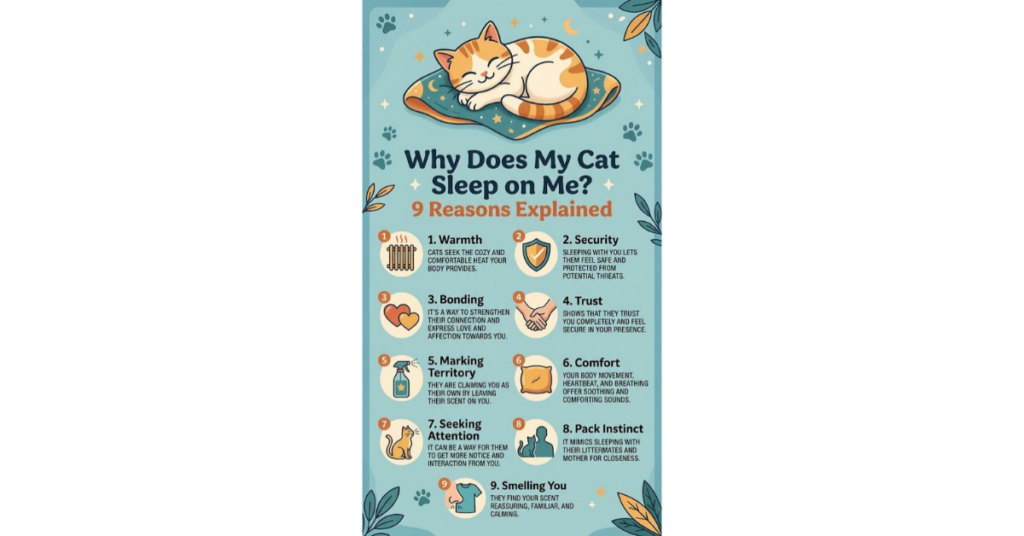
Why Does My Cat Sleep on Me? 9 Common Reasons
Cats don’t usually choose their sleeping places randomly. Their instincts, surroundings, daily routines, and relationships can all influence where they settle down.
Here are nine common explanations for why your cat loves sleeping on you.
1. Your Cat Feels Safe and Secure With You
One of the most common reasons cats sleep on their owners is that they feel safe around them.
Sleep leaves an animal less alert to its surroundings. Although domestic cats can relax in comfortable homes, they still retain instincts that influence where they rest. A familiar person may provide a reassuring environment where a cat feels comfortable letting its guard down.
If your cat curls up beside you, tucks its paws underneath its body, or falls asleep while you’re relaxing, it may be showing that it feels secure in your presence.
This is particularly meaningful if your cat chooses to sleep near you regularly rather than hiding away or constantly changing sleeping spots.
2. Your Body Heat Keeps Your Cat Warm
Cats often seek warm places to sleep, and your body provides a convenient source of warmth.
A cat’s normal body temperature is higher than a human’s, generally around 100.5–102.5°F (38.1–39.2°C). Even so, cats often prefer warm resting spots because maintaining body heat and finding comfortable temperatures are important parts of their daily behavior.
Your chest, lap, and legs can all make appealing sleeping locations, especially when the room is cool.
You might notice your cat becoming particularly interested in cuddling:
- During colder weather.
- When you’re sitting under a blanket.
- After you’ve settled into bed.
- When you remain still for a long time.
If your cat frequently seeks warmth, provide a comfortable bed or blanket as another option.
3. Your Cat Loves You and Wants to Bond
Cats can form strong social bonds with people, even though they sometimes express affection differently from dogs.
Sleeping on you may be one way your cat maintains that connection. Close physical contact can be comforting, and familiar routines help reinforce the bond between a cat and its owner.
Other signs that your cat feels attached to you may include:
- Rubbing its face against your hands or legs.
- Following you from room to room.
- Greeting you when you return home.
- Purring while resting beside you.
- Giving you slow blinks.
- Choosing to sit or sleep near you even when other places are available.
No single behavior proves exactly what a cat feels, but a combination of relaxed body language and repeated voluntary contact can indicate a positive relationship.
4. Your Scent Is Familiar and Comforting
Cats have a highly developed sense of smell. Familiar scents help them recognize their surroundings and distinguish people, animals, and objects they know.
Your clothing, skin, bedding, and natural body odor all carry familiar scent cues. Sleeping close to you may therefore help your cat feel more comfortable in its environment.
Cats also use scent glands around their cheeks, forehead, and other parts of their bodies to leave familiar scent marks. When your cat rubs its face against you before settling down, it may be combining social contact with scent marking.
This doesn’t mean your cat is deliberately claiming ownership of you in a human sense. Rather, familiar smells can contribute to a sense of familiarity and security.
5. Your Cat Likes Hearing Your Heartbeat and Breathing
Some cats prefer sleeping on a person’s chest because it provides a combination of warmth, gentle movement, familiar smells, and rhythmic sounds.
Your breathing and heartbeat may contribute to a soothing environment, especially when you’re lying quietly. The warmth and movement of your chest can also make it an appealing resting place.
However, there isn’t strong scientific evidence that every cat sleeps on its owner’s chest specifically to hear a heartbeat. It’s more accurate to view these sounds as possible parts of a comfortable sleeping environment rather than the definite reason for the behavior.
If your cat consistently settles on your chest, it may simply find that location especially cozy.
6. Your Cat Wants Attention
Cats quickly learn which behaviors get a response from their owners.
If your cat jumps onto your lap and receives petting, talking, or gentle cuddles, it may repeat the behavior because it enjoys the interaction. Even if you don’t intentionally reward it, moving your hands toward your cat or speaking to it can reinforce the routine.
Some cats are especially likely to seek contact when their owners stop working, sit down, or get into bed.
If your cat wakes you by lying on your face or chest, it may also have learned that this behavior gets you moving. In some cases, the goal is attention, breakfast, playtime, or access to a preferred activity.
7. Your Cat Is Following Its Natural Sleeping Instincts
Cats are both predators and potential prey in the wild, so choosing a secure resting place is important to their natural behavior.
Domestic cats often prefer sleeping locations where they feel protected, can monitor their surroundings, or can quickly respond to changes around them.
Your body may offer a familiar resting spot that feels predictable and comfortable. Some cats also like sleeping on elevated places, which is why they may choose your chest or shoulder when you’re reclining.
Cats are often described as nocturnal, but they are generally crepuscular, meaning they tend to be most active around dawn and dusk. Their sleep patterns can still vary considerably depending on age, environment, feeding schedule, and individual personality.
8. Your Cat Is Seeking Reassurance
Changes in a cat’s environment can influence its desire for physical contact.
A new home, unfamiliar visitors, loud noises, changes in routine, or the introduction of another pet may make a cat seek more reassurance from a trusted person.
If your cat suddenly starts sleeping on you more often, consider whether anything has changed recently. Increased closeness may be a normal response to an unfamiliar environment, although it doesn’t automatically mean your cat is stressed.
Look for other signs of anxiety, such as hiding, reduced appetite, excessive grooming, unusual vocalization, or changes in litter box habits.
A predictable routine, quiet resting areas, hiding places, and positive interactions can help your cat feel more secure.
9. Your Cat Has Developed a Sleeping Routine
Cats are creatures of habit, and they often return to places where they’ve slept comfortably before.
If your cat has been sleeping on your lap every evening or curling up beside you every night, the behavior may simply have become part of its routine.
Your cat may associate a particular time of day with relaxation, petting, or closeness. Once that routine becomes established, it may continue even when other sleeping spots are available.
Consistency is one reason cats sometimes appear to know exactly when you’re about to sit down or go to bed.
What Does It Mean When My Cat Sleeps on Different Parts of My Body?
Your cat’s preferred sleeping position can offer clues about what it finds comfortable. However, the location alone doesn’t provide a reliable way to interpret its emotions.
Why Does My Cat Sleep on Me at Night?
If your cat regularly joins you at bedtime, several factors may explain the habit.
First, your bed is likely warm and comfortable. Second, your nighttime routine may have become a familiar signal that it’s time to settle down. Third, your cat may enjoy sleeping near a trusted person when the house is quiet.
However, cats don’t always follow the same schedule as humans. Some wake up early, move around during the night, or become active while you’re trying to sleep.
If nighttime cuddling becomes disruptive, try these approaches:
- Schedule play before bed. Interactive play can provide mental and physical stimulation.
- Offer a comfortable alternative. Place a soft cat bed near your bed or in another preferred sleeping area.
- Maintain a consistent routine. Regular feeding and play times can help make your cat’s schedule more predictable.
- Reward the desired behavior. Offer attention or treats when your cat uses its own bed.
- Avoid punishment. Scolding or frightening your cat can increase stress and won’t necessarily teach it where to sleep.
You don’t need to stop the behavior if you enjoy it and it doesn’t interfere with your sleep or health.
Why Does My Cat Sleep on Me and Purr?
Purring while sleeping on you often accompanies comfort, relaxation, or social contact.
If your cat has relaxed muscles, soft eyes, neutral ears, and a comfortable posture, purring is generally consistent with a positive resting experience. Your cat may simply be enjoying your warmth and company.
However, purring doesn’t always mean happiness. Cats may also purr when they’re frightened, uncomfortable, or in pain, so context matters.
Pay attention to other signs, including appetite, movement, breathing, grooming, and whether your cat reacts normally when you approach. If purring accompanies obvious discomfort or a sudden change in behavior, contact a veterinarian.
Why Has My Cat Suddenly Started Sleeping on Me?
A sudden change in sleeping habits can have several explanations, ranging from harmless changes in preference to a need for veterinary attention.
Your cat may be seeking more warmth, responding to a change in household routine, or becoming more interested in physical contact as your relationship develops.
Age can also influence behavior. Kittens may seek warmth and security, while older cats may prefer accessible, comfortable resting places.
Nevertheless, don’t assume that increased clinginess always means your cat loves you more. If the behavior changes suddenly and is accompanied by any of the following, speak with a veterinarian:
- Reduced appetite or unusual thirst.
- Weight loss or unexplained weight gain.
- Difficulty jumping or walking.
- Hiding or unusual aggression.
- Changes in urination or defecation.
- Persistent vocalization or signs of pain.
- Unusual tiredness or reduced interest in play.
Seek prompt veterinary care if your cat has difficulty breathing, collapses, or appears to be in severe distress.
Should You Let Your Cat Sleep on You?
For most healthy adults, sleeping with a healthy, routinely cared-for cat is generally a matter of personal preference. There are benefits, but it’s also worth considering hygiene, sleep quality, and individual health circumstances.
Benefits of Sleeping With Your Cat
- Companionship: Physical closeness can make some people feel comforted and less lonely.
- Bonding: Quiet time together can reinforce a positive relationship.
- Relaxation: Some owners find their cat’s presence soothing at bedtime.
- Routine: A familiar nighttime habit can become a pleasant part of daily life.
These benefits are personal and vary from one household to another.
Possible Drawbacks to Consider
- Interrupted sleep: Your cat may move, groom itself, vocalize, or wake you early.
- Allergies: Cat dander can aggravate symptoms in sensitive individuals.
- Hygiene: Cats can carry dirt, parasites, and germs into sleeping areas.
- Safety: Very young children, people with weakened immune systems, and certain medically vulnerable individuals may need additional precautions.
Keep your cat’s vaccinations, parasite prevention, and routine veterinary care up to date. Wash your hands after cleaning the litter box, and keep the litter tray away from food preparation and sleeping areas.
If your cat disrupts your sleep or worsens your allergies, providing a separate comfortable sleeping area is a reasonable alternative.
Frequently Asked Questions
1. Does my cat sleep on me because it loves me?
It may. Sleeping on you can be a sign of trust, social attachment, and comfort, although warmth and habit can also explain the behavior. Look at your cat’s overall body language and interactions rather than relying on one behavior alone.
2. Why does my cat sleep on my chest?
Your chest provides warmth, familiar smells, and gentle movement from breathing. Some cats enjoy the close contact, while others simply find the position comfortable.
3. Why does my cat sleep on me every night?
Your cat may have developed a routine around bedtime and learned that your bed is a safe, warm place to rest. Familiarity, comfort, and companionship can all contribute to the habit.
4. Why does my cat sleep on my feet?
Your feet and legs provide warmth while allowing your cat to remain close without being held. This position may also give the cat more freedom to move away when it wants.
5. Does my cat trust me if it sleeps on me?
Sleeping on you can be consistent with trust because your cat is choosing to rest in close contact with you. However, individual sleeping preferences differ, and a cat that sleeps nearby rather than directly on you can also feel secure.
6. Why does my cat follow me and then sleep on me?
Your cat may enjoy your company, seek attention, or prefer resting in the same area where you spend time. Following you and then settling down nearby can be part of its normal social routine.
7. Why does my cat sleep on me when I’m sick?
Your cat may notice changes in your behavior, movement, routine, or scent and respond by spending more time near you. However, there is no reliable evidence that cats can consistently diagnose human illnesses simply by sleeping on their owners.
8. Why does my cat sleep on me but not my partner?
Cats develop individual preferences based on familiarity, interactions, routines, warmth, and sleeping positions. Your cat may prefer your sleeping style or simply have developed a stronger habit of resting with you. It doesn’t necessarily mean your cat dislikes your partner.
9. Does sleeping on me mean my cat is protective?
It may be a sign of closeness, but sleeping on you doesn’t establish that your cat is deliberately protecting you. Comfort, warmth, and familiarity are more straightforward explanations.
10. Should I worry if my cat suddenly becomes clingy?
Not necessarily. Environmental changes or a new preference can explain increased contact, but sudden clinginess combined with changes in appetite, movement, grooming, or litter box habits warrants a veterinary assessment.
Conclusion
So, why does my cat sleep on me? In most cases, the explanation involves a mix of warmth, security, familiar scents, affection, and routine. Your cat may enjoy your company, feel comfortable in your presence, or simply consider your lap or chest the best place to take a nap.
Pay attention to your cat’s usual habits and body language to better understand what makes it comfortable. If the behavior changes suddenly or comes with signs of illness, consult a veterinarian rather than assuming it’s only a sign of affection.
Otherwise, if your cat’s cuddles are welcome and everyone is sleeping comfortably, enjoy the quiet companionship. Sometimes the simplest explanation is that your cat has found a warm, familiar place to rest—and that place happens to be you.