
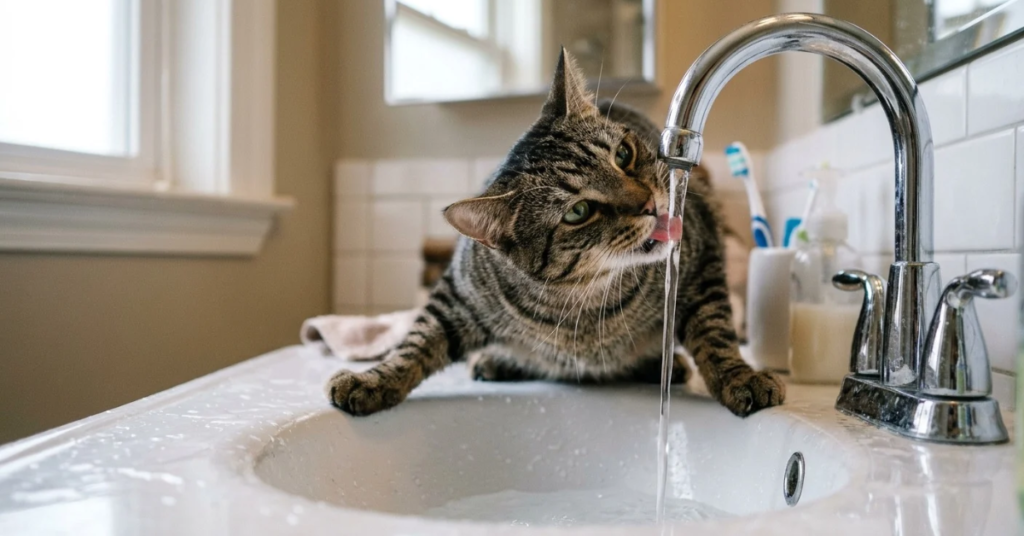
You fill your cat’s water bowl with fresh water, only to find them waiting beside the bathroom sink, staring at the faucet until you turn it on. If this sounds familiar, you’re not alone. Many cat owners wonder, why does my cat like drinking from the faucet when clean water is already available nearby?
The behavior is surprisingly common, and it usually comes down to a combination of instinct, curiosity, sensory preferences, and learned habits. Running water may seem more appealing to your cat than still water sitting in a bowl. The sound, movement, temperature, and location of the faucet can all play a role.
In most cases, a cat that enjoys drinking from the tap is simply expressing a natural preference. However, a sudden increase in thirst or frequent trips to the sink can sometimes indicate an underlying health problem.
Let’s explore why cats behave this way, whether faucet water is safe, and what you can do to keep your feline friend properly hydrated.
1. Cats Are Naturally Attracted to Moving Water
One of the main reasons cats drink from faucets is that moving water catches their attention.
Cats rely heavily on their senses to understand their surroundings. The movement and sound of flowing water can make a faucet much more interesting than a quiet bowl sitting in the corner of a room.
There may also be an instinctive element to this preference. In the wild, cats encounter water from different sources, including streams and other moving bodies of water. Although domestic cats have adapted to living alongside humans, many still respond strongly to movement and environmental cues.
However, it’s worth understanding that not every cat instinctively prefers running water. Some happily drink from bowls throughout their lives, while others become fascinated by dripping taps, showers, or water fountains.
What this means for your cat: If your pet consistently chooses flowing water over still water, it may simply be a matter of preference rather than a sign that something is wrong.
2. Running Water May Taste or Smell Different
Cats have a much stronger sense of smell than humans, and scent plays an important role in how they experience food and water.
Water that has been sitting in a bowl can collect dust, food particles, saliva, or other contaminants. Even when the water looks clean to you, your cat may notice subtle changes in its smell or taste.
Fresh water flowing from a faucet may seem more appealing because it has a different temperature, taste, or odor. Some cats also prefer cool water, particularly during warmer weather.
The faucet itself isn’t necessarily providing better-quality water. Tap water quality varies by location, and running water isn’t automatically safer or cleaner than water in a bowl.
Does your cat dislike the water bowl?
Consider whether any of these factors could be affecting your cat’s preference:
- Water freshness: The water may have been sitting out for too long.
- Bowl cleanliness: Soap residue, dust, or accumulated debris may affect its smell.
- Material: Some cats dislike plastic bowls because they can retain odors or develop scratches that harbor bacteria.
- Temperature: Your cat may prefer cooler water.
- Water source: The smell or taste of your household tap water may differ from filtered water.
Try providing freshly changed water in a clean ceramic or stainless-steel bowl. If your cat starts drinking more readily, the issue may have been the bowl or water itself rather than a strong preference for faucets.
3. Your Cat Might Dislike the Location of Its Water Bowl
Sometimes, the problem isn’t the water. It’s where you put it.
Cats can be particular about their environment, and the placement of a water bowl may influence whether they feel comfortable drinking from it.
For example, a bowl placed directly beside a litter tray, in a noisy hallway, or near a busy feeding area may be less appealing to some cats.
Some cats also prefer to drink in a location where they can see their surroundings clearly. A bathroom sink or kitchen faucet may offer a quieter or more comfortable drinking spot than the area where their bowl is kept.
Cats may also develop individual preferences for keeping their food and water separate. While this isn’t universal, offering water away from the food bowl can encourage some cats to drink more.
How to make the water bowl more appealing
Try these simple adjustments:
- Move the water bowl to a quiet, accessible location.
- Keep it away from the litter box.
- Place water in several rooms so your cat has more choices.
- Use a wide, shallow bowl that allows easy access without crowding the whiskers.
- Wash the bowl daily and replace the water regularly.
Give your cat time to explore the new setup. You may discover that a small change makes the water bowl much more attractive.
4. Drinking From the Faucet Is a Form of Entertainment
For many cats, a faucet isn’t just a source of water. It’s an interactive toy.
The sound of dripping water, the movement of a stream, and the opportunity to paw at the sink can turn drinking into a stimulating activity.
Cats are natural hunters and explorers. They often investigate objects that move, make unusual sounds, or respond to their actions. Turning on a faucet creates an experience that a stationary water bowl simply cannot offer.
Some cats even appear to play with water before drinking it. They may tap the stream with a paw, lick water from their toes, or watch droplets fall into the sink.
This behavior can be especially noticeable in young cats and energetic breeds, although cats of any age may enjoy it.
Why does my cat play with the water before drinking?
Your cat may be exploring the movement, testing the water, or simply enjoying the sensation. Pawing at water can also be a way of interacting with an unfamiliar surface or stream.
If the behavior is relaxed and your cat otherwise eats, drinks, and behaves normally, there’s generally no reason to worry.
You can encourage this playful curiosity with safe alternatives, such as supervised water play or a pet drinking fountain.
5. Your Cat Has Learned That the Faucet Gets Your Attention
Cats are excellent at learning routines, especially when those routines lead to something they enjoy.
Imagine your cat meows beside the sink. You turn on the faucet, and your cat gets a refreshing drink. The next day, your cat repeats the behavior, and you respond in the same way.
Over time, your cat learns that sitting by the sink, pawing at the tap, or vocalizing can make water appear.
This is an example of learned behavior. The faucet becomes rewarding because it provides both water and an interaction with you.
Some cats may even develop a daily routine around their favorite tap. They might follow you into the bathroom in the morning or wait near the kitchen sink whenever you approach it.
If you don’t mind providing occasional supervised faucet access, the habit isn’t necessarily harmful. However, relying on a running tap can become inconvenient and may prevent your cat from drinking when you’re away.
A pet water fountain can help satisfy the preference for flowing water without requiring you to turn on the faucet every time.
6. Is Drinking From the Faucet Safe for Cats?
Generally, drinking from a faucet is safe if the water itself is safe for human consumption and the sink is clean.
However, a few precautions are worth taking.
Check your tap water quality
Water safety depends on your local supply and household plumbing. If your tap water has an unusual smell, discoloration, or a known contamination issue, don’t assume it is safe simply because it is running.
Follow local drinking-water guidance and use an appropriate filtration or alternative water source if necessary.
Keep the sink clean
Bathroom and kitchen sinks can contain cleaning-product residue, toothpaste, soap, food debris, or other substances that shouldn’t be swallowed.
Rinse the sink thoroughly before allowing your cat to drink from it, and never let your cat drink water containing cleaning chemicals.
Avoid very hot water
Always check the temperature. Hot water can burn your cat’s mouth, and a faucet that changes temperature unexpectedly can pose a risk.
Don’t let faucet access replace regular water availability
Even if your cat loves the tap, fresh drinking water should remain available throughout the day and night.
A cat that depends entirely on you turning on the faucet may not drink enough when you are sleeping, working, or away from home.
The bottom line: Occasional drinking from a clean faucet is usually fine, but your cat should also have a reliable, safe source of fresh water.
7. Could Your Cat’s Faucet Habit Be a Sign of Excessive Thirst?
Most cats that enjoy running water are displaying a harmless preference. However, it’s important to distinguish ordinary curiosity from a genuine increase in thirst.
Cats can develop medical conditions that cause them to drink and urinate more frequently. These include chronic kidney disease, diabetes mellitus, and hyperthyroidism, particularly in older cats.
Pay attention if your cat has suddenly started visiting the faucet much more often than usual or seems unable to get enough water.
Other warning signs may include:
- Visiting the water bowl or faucet repeatedly throughout the day.
- Producing larger amounts of urine or urinating more frequently.
- Losing weight despite eating normally or eating more than usual.
- Vomiting or experiencing changes in appetite.
- Becoming unusually tired or showing changes in normal behavior.
- Having a noticeably larger or more persistent thirst than before.
These signs don’t automatically mean your cat is ill, but they warrant attention.
When should you contact a veterinarian?
Arrange a veterinary appointment if your cat develops a persistent increase in thirst, changes in urination, unexplained weight loss, or other unusual symptoms.
A veterinarian may recommend an examination, blood tests, and a urine test to investigate the cause.
If your cat is straining to urinate, repeatedly attempting to urinate without producing urine, or showing signs of severe illness, seek urgent veterinary care. Urinary blockage is a life-threatening emergency, particularly in male cats.
Don’t restrict your cat’s water to reduce excessive drinking. If an underlying condition is responsible, access to water is essential.
8. How Much Water Should a Cat Drink Each Day?
A cat’s water needs depend on body weight, diet, activity level, age, temperature, and overall health.
As a general veterinary guideline, many healthy adult cats need approximately 40–60 milliliters of total water per kilogram of body weight daily, although individual requirements vary. This includes water obtained from food, not just water consumed directly from a bowl.
For example, a 4-kilogram adult cat might need roughly 160–240 milliliters of total water per day.
Cats eating wet food receive a significant amount of moisture from their meals. Dry food contains much less water, so cats eating mostly kibble may need to drink more separately.
| Factor | How it affects hydration |
|---|---|
| Wet food | Supplies substantial moisture through meals |
| Dry food | Provides little moisture, increasing reliance on drinking water |
| Hot weather | May increase water requirements |
| Activity level | Can influence fluid needs |
| Health conditions | Some illnesses increase thirst or alter fluid balance |
These figures are estimates rather than strict targets. You shouldn’t force your cat to drink a particular amount if it is otherwise healthy and your veterinarian has not recommended a specific intake.
If you’re concerned about hydration, observe your cat’s drinking and urination habits and discuss significant changes with a veterinarian.
9. How to Encourage Your Cat to Drink More Water
If your cat loves faucet water but rarely drinks from its bowl, there are several ways to make hydration easier.
Try a cat water fountain
A pet drinking fountain provides circulating water that may appeal to cats attracted to movement and sound.
Look for a model that is easy to disassemble and clean. Filters need regular replacement according to the manufacturer’s instructions, and the reservoir should be cleaned routinely to prevent buildup.
Not every cat will prefer a fountain, so introduce it gradually and keep the usual water bowl available.
Offer multiple water stations
Place clean water bowls in several quiet locations around your home. This gives your cat options and makes water accessible wherever it spends time.
If you have multiple cats, provide enough separate drinking locations to reduce competition.
Consider wet cat food
Wet food can help increase overall moisture intake. If you want to change your cat’s diet, select a nutritionally complete food appropriate for its age and health needs.
You can also ask your veterinarian whether adding a little water to your cat’s food would be suitable.
Refresh the water regularly
Replace drinking water at least daily, and more often if it becomes dirty or contains food particles.
Wash bowls with mild dish soap, rinse them thoroughly, and avoid leaving cleaning residue behind.
Make the transition gradually
If your cat is accustomed to faucet water, don’t suddenly remove access without providing an appealing alternative.
Introduce a fountain or new bowl while maintaining access to the existing water source. Once your cat consistently drinks from the alternative, you can reduce supervised faucet visits if needed.
10. Should You Let Your Cat Drink From the Faucet?
Whether you should allow faucet drinking depends on the water quality, your cat’s habits, and the condition of your sink.
If your cat occasionally drinks from a clean, safe tap and has no unusual symptoms, there is generally little reason to stop the behavior completely.
However, consider an alternative if your cat insists on drinking only from the faucet, jumps onto potentially dangerous surfaces, or tries to access hot water.
A fountain is often a practical compromise because it provides moving water on demand. It can also make hydration more convenient when you’re not home.
Most importantly, don’t mistake a preference for running water for proof that your cat is dehydrated. Look at the overall picture, including appetite, urination, energy levels, and any changes in drinking behavior.
Frequently Asked Questions
1. Why does my cat prefer the faucet over its water bowl?
Your cat may prefer the movement, sound, temperature, or taste of running water. Bowl material, cleanliness, placement, and learned habits can also influence the preference. Try a clean, wide bowl or a pet water fountain to see whether your cat responds positively.
2. Is it normal for cats to drink from the tap?
Yes. Many cats are attracted to running water, and drinking from a faucet is usually normal if the cat is otherwise healthy. However, a sudden increase in drinking or frequent urination should be discussed with a veterinarian.
3. Why does my cat meow at the faucet?
Your cat may have learned that meowing gets you to turn on the tap. The sound may also be a way of requesting attention or signaling that your cat wants access to its favorite drinking spot.
4. Why does my cat drink from the bathroom sink but not its bowl?
Your cat may enjoy the sink’s location, prefer cooler or fresher water, dislike the bowl’s material, or find the running stream more stimulating. Experiment with bowl placement, water freshness, and a fountain.
5. Do cats prefer running water to still water?
Some cats do, while others show no particular preference. Moving water provides visual and auditory stimulation, and some cats may find it more appealing than water that has been sitting in a bowl.
6. Is faucet water better for cats than bottled water?
Not necessarily. The safety and quality of water matter more than whether it comes from a tap or a bottle. If your local tap water is safe to drink, it is generally suitable for cats. Bottled water isn’t automatically healthier.
7. Can drinking from the faucet help prevent dehydration?
Access to appealing water sources can support hydration, but drinking from a faucet doesn’t automatically prevent dehydration. Fresh water should always be available, and wet food or a fountain may help increase overall moisture intake.
8. Why has my cat suddenly started drinking much more water?
A sudden increase in thirst can be associated with diabetes, kidney disease, hyperthyroidism, certain medications, or other health issues. Arrange a veterinary appointment if the change persists, especially if you notice increased urination, weight loss, or changes in appetite.
9. Should I buy a water fountain for my cat?
A fountain is worth considering if your cat repeatedly seeks running water. Choose one that’s quiet, stable, easy to clean, and appropriate for your cat’s size. Keep a regular water bowl available until you know your cat is drinking reliably from the fountain.
10. How can I stop my cat from demanding faucet water?
Provide fresh water in several locations and consider introducing a pet fountain. Avoid making faucet access the only way your cat can drink. If the behavior is new or accompanied by excessive thirst, investigate possible medical causes before treating it as a habit.
Conclusion
So, why does your cat like drinking from the faucet? In most cases, the answer is a combination of curiosity, sensory preferences, environmental comfort, and learned behavior. Running water can be more interesting than a stationary bowl, and some cats simply enjoy the experience.
You can support this preference by keeping water fresh, choosing an appealing bowl, offering several drinking locations, or introducing a pet fountain. Make sure your cat always has access to safe drinking water, even when you’re not home.
Remember that the context matters. If your cat has always loved the faucet and otherwise behaves normally, the habit is usually nothing to worry about. If drinking suddenly increases or comes with changes in urination, appetite, or weight, consult your veterinarian.
A few small adjustments can help your cat stay hydrated while keeping its favorite drinking ritual safe and convenient.