
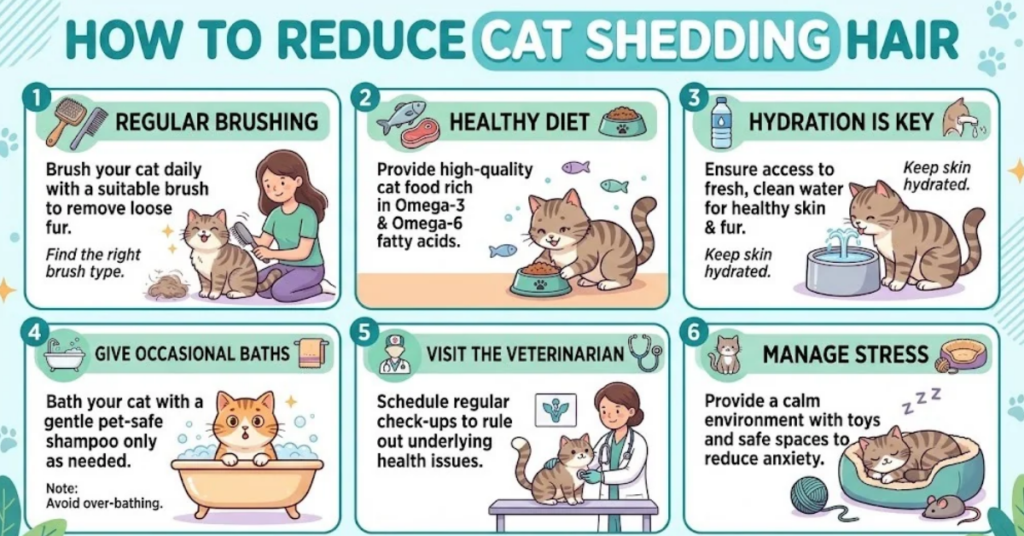
Cats make wonderful companions, but finding their hair on your clothes, furniture, carpets, and bedding can become frustrating. If you’re wondering how to reduce cat shedding hair, the good news is that several simple changes to your cat’s grooming routine, diet, and daily care can help control loose fur.
Shedding is a natural process that allows cats to get rid of old or damaged hair and maintain a healthy coat. However, excessive hair loss can sometimes indicate an underlying problem, such as allergies, parasites, stress, or nutritional deficiencies.
The goal isn’t to stop shedding completely. Instead, you want to minimize loose hair, support healthy skin, and keep your cat’s coat in good condition. In this guide, we’ll explore practical ways to manage cat shedding and explain when it’s time to consult a veterinarian.
Why Do Cats Shed So Much Hair?
Before learning how to reduce cat shedding hair, it’s helpful to understand why it happens in the first place.
Cats naturally lose hair as part of their normal hair-growth cycle. Old hairs fall out and are replaced by new ones, helping the coat remain clean and functional.
Several factors influence how much a cat sheds, including:
-
Seasonal changes: Many cats shed more heavily during seasonal transitions, particularly when temperatures and daylight hours change.
-
Breed: Some breeds have thicker or longer coats and may leave more visible loose hair.
-
Indoor living: Indoor cats may shed throughout the year because artificial lighting and stable temperatures can influence their natural shedding patterns.
-
Age: Kittens, adult cats, and senior cats can have different grooming and coat-care needs.
-
Health and nutrition: Poor nutrition, skin conditions, parasites, and certain medical problems can contribute to excessive hair loss.
A little loose fur around the house is normal. However, bald patches, irritated skin, excessive scratching, or sudden changes in shedding deserve attention.
12 Effective Ways to Reduce Cat Shedding Hair
You don’t need an expensive grooming routine to manage your cat’s loose fur. Consistent brushing, good nutrition, and a comfortable living environment can make a noticeable difference.
Here are 12 practical ways to keep shedding under control.
1. Brush Your Cat Regularly
Regular brushing is one of the most effective ways to reduce loose cat hair around your home. It removes dead hair before it falls onto your furniture, clothes, and carpets.
Brushing also helps distribute natural skin oils throughout the coat, keeping the fur softer and healthier.
The ideal brushing frequency depends on your cat’s coat:
| Cat Coat Type | Recommended Brushing Frequency |
|---|---|
| Short-haired cats | 1–2 times per week |
| Medium-haired cats | 2–3 times per week |
| Long-haired cats | Daily or every other day |
| Thick or dense coats | Several times per week |
Start with short grooming sessions, especially if your cat isn’t accustomed to being brushed. Reward calm behavior with treats so grooming becomes a positive experience.
2. Choose the Right Cat Brush
Not every brush works for every cat. Using the wrong grooming tool can irritate the skin or fail to remove loose undercoat hair.
Consider these common grooming tools:
-
Slicker brush: Useful for removing loose hair and gently working through small tangles in many medium- and long-haired coats.
-
Soft bristle brush: A good option for short-haired cats and cats with sensitive skin.
-
Rubber grooming brush: Helps collect loose fur while providing a gentle massage.
-
Wide-tooth comb: Useful for carefully removing tangles from longer coats.
-
Undercoat rake: Designed to remove loose undercoat hair from suitable double-coated cats.
Choose a brush according to your cat’s coat length and texture. Avoid pressing hard, repeatedly brushing the same area, or using de-shedding tools too aggressively.
3. Feed Your Cat a Balanced, High-Quality Diet
Nutrition plays an important role in maintaining healthy skin and fur. A cat that doesn’t receive adequate nutrients may develop a dull coat, brittle hair, or other skin and coat problems.
Choose a complete and balanced cat food appropriate for your pet’s age and life stage.
Look for food that provides:
-
High-quality animal-based protein.
-
Essential fatty acids.
-
Appropriate vitamins and minerals.
-
Adequate calories for maintaining a healthy body condition.
Cats are obligate carnivores, meaning they have specific nutritional requirements that must be met through an appropriate diet.
If your cat’s coat looks unhealthy despite receiving a balanced diet, consult a veterinarian before making major dietary changes.
4. Provide Enough Fresh Drinking Water
Hydration supports your cat’s overall health, including normal skin function. Although drinking more water won’t automatically stop shedding, adequate hydration is an important part of maintaining a healthy coat.
Some cats prefer drinking from moving water rather than a stationary bowl.
Try these simple ideas:
-
Keep fresh water available throughout the day.
-
Wash and refill water bowls regularly.
-
Place water bowls away from litter boxes.
-
Consider a cat water fountain if your pet enjoys running water.
-
Offer appropriate wet food to increase dietary moisture.
If your cat suddenly starts drinking much more or less than usual, speak with a veterinarian because changes in thirst can sometimes signal a health problem.
5. Add Omega-3 Fatty Acids When Appropriate
Omega-3 fatty acids are important nutrients that support normal skin function and can help manage certain inflammatory skin conditions.
Some cat foods already contain omega-3 sources, including fish oil. However, adding supplements without considering your cat’s existing diet can lead to unnecessary or excessive supplementation.
Before introducing fish oil or another fatty acid supplement:
-
Check the nutritional information of your cat’s current food.
-
Discuss the supplement with your veterinarian.
-
Choose a product specifically formulated for cats.
-
Follow the recommended veterinary dosage.
Omega-3 supplements aren’t a guaranteed solution for shedding. Their usefulness depends on your cat’s nutritional needs and overall health.
6. Bathe Your Cat Only When Necessary
Bathing can remove loose hair, dirt, and certain substances from a cat’s coat. However, most healthy cats groom themselves effectively and don’t need frequent baths.
Excessive bathing can strip natural oils from the skin and cause dryness or irritation, potentially making coat problems worse.
If your cat genuinely needs a bath:
-
Use a shampoo specifically formulated for cats.
-
Avoid human shampoo and harsh cleaning products.
-
Use lukewarm water.
-
Rinse thoroughly to remove shampoo residue.
-
Dry your cat gently and keep it warm.
If your cat has a skin condition, ask your veterinarian whether a medicated shampoo is appropriate.
7. Keep Fleas and Other Parasites Under Control
Fleas can cause intense itching, irritation, and hair loss. Some cats are particularly sensitive to flea saliva, which can trigger flea allergy dermatitis.
Other parasites, including certain mites, can also contribute to skin irritation and abnormal hair loss.
To help protect your cat:
-
Use veterinarian-recommended flea prevention.
-
Check the coat regularly for signs of fleas or flea dirt.
-
Wash pet bedding as appropriate.
-
Vacuum carpets and furniture regularly.
-
Treat other household pets when advised by your veterinarian.
Never use a flea treatment intended for dogs on a cat unless a veterinarian specifically confirms that it is safe. Some dog flea products contain permethrin, which is highly toxic to cats.
8. Reduce Stress in Your Cat’s Environment
Stress can affect a cat’s behavior and grooming habits. Some cats respond to anxiety by licking or chewing their fur excessively, which can result in noticeable hair loss.
Common sources of stress include:
-
Moving to a new home.
-
Introducing another pet.
-
Changes in household routines.
-
Loud noises or unfamiliar visitors.
-
Competition over food, water, or litter boxes.
You can help your cat feel more comfortable by maintaining predictable routines and providing safe places to rest.
Try offering scratching posts, elevated resting areas, interactive toys, and quiet spaces where your cat can retreat when needed.
If excessive grooming continues or produces bald patches, arrange a veterinary examination rather than assuming stress is the only cause.
9. Keep Your Cat’s Living Environment Clean
A clean environment won’t stop your cat’s natural hair-growth cycle, but it can make loose fur easier to manage.
Regular cleaning also helps reduce accumulated dust, dander, and allergens around your home.
Create a simple cleaning routine:
-
Vacuum carpets and rugs several times a week as needed.
-
Use a lint roller on clothing and upholstery.
-
Wash cat bedding regularly.
-
Clean favorite resting spots.
-
Use washable furniture covers.
-
Consider an air purifier with a suitable HEPA filter.
A vacuum designed for pet hair can be particularly useful if your cat spends most of its time on carpets or upholstered furniture.
10. Check Your Cat’s Skin and Coat Regularly
Regularly examining your cat’s skin can help you identify problems before they become more serious.
Look for signs such as:
-
Redness or inflammation.
-
Dandruff or flaky skin.
-
Bald patches.
-
Scabs or sores.
-
Excessive scratching.
-
Greasy or unusually dry fur.
-
Changes in coat texture.
A healthy coat generally looks clean and reasonably smooth, although its appearance varies by breed.
If you notice sudden hair loss, persistent irritation, or unusual skin changes, contact your veterinarian for an examination.
11. Avoid Overgrooming and Excessive Brushing
Brushing helps remove loose hair, but more grooming isn’t always better.
Excessive brushing can irritate the skin, damage delicate hair, and make grooming uncomfortable. This is especially important for cats with thin coats or sensitive skin.
For better results:
-
Use gentle strokes.
-
Follow the direction of hair growth.
-
Avoid pulling at knots.
-
Stop if your cat shows signs of discomfort.
-
Take breaks during longer grooming sessions.
If your cat develops mats that cannot be removed easily, seek help from a professional groomer or veterinarian. Never use scissors close to the skin to cut out tight mats because cat skin can easily be injured.
12. Schedule Regular Veterinary Checkups
Sometimes excessive shedding is a symptom of an underlying medical condition rather than a grooming issue.
Potential causes include:
-
Allergies.
-
Flea infestations.
-
Fungal infections such as ringworm.
-
Skin infections.
-
Nutritional deficiencies.
-
Hormonal or other systemic disorders.
-
Pain or stress-related overgrooming.
Routine veterinary checkups help identify health problems and ensure your cat receives appropriate preventive care.
If shedding suddenly increases, becomes patchy, or occurs alongside weight changes, lethargy, itching, or changes in appetite, don’t rely on home grooming alone.
Seasonal Cat Shedding: Why Does It Increase at Certain Times?
Have you noticed more cat hair around your home during certain months? Seasonal shedding is one reason.
Many cats naturally shed more during seasonal transitions as their coats adjust to changing temperatures and daylight hours.
Spring Shedding
During spring, cats that develop thicker coats during colder months may lose some of their winter undercoat. This can lead to increased loose hair, particularly in cats with dense or double coats.
Regular brushing during this period can help remove loose fur before it spreads around the house.
Fall Shedding
Some cats develop a thicker coat as temperatures drop. During this transition, they may shed their lighter summer coat to make room for a denser winter coat.
Why Indoor Cats Shed Throughout the Year
Indoor cats may experience less pronounced seasonal shedding because their environment is relatively consistent.
Artificial lighting, heating, air conditioning, and stable indoor temperatures can influence natural shedding patterns. As a result, some indoor cats release small amounts of hair throughout the year rather than having one obvious shedding season.
Which Cat Breeds Shed the Most?
The amount of hair a cat sheds depends on its breed, coat type, genetics, health, and grooming habits.
Some breeds have dense or long coats that require more frequent maintenance.
| Cat Breed | Coat Type | Shedding and Grooming |
|---|---|---|
| Persian | Long and dense | High grooming requirements |
| Maine Coon | Long and thick | Regular brushing needed |
| British Shorthair | Short and dense | Moderate to noticeable shedding |
| Ragdoll | Medium to long | Regular brushing recommended |
| Siberian | Thick, triple-layered coat | Seasonal shedding can be substantial |
| American Shorthair | Short and dense | Moderate shedding |
| Siamese | Short and fine | Generally lower grooming requirements |
Even cats with short hair shed. Short-haired breeds may leave less noticeable hair than long-haired breeds, but they still lose hair as part of their natural growth cycle.
When Is Cat Shedding a Sign of a Health Problem?
Normal shedding generally produces an even distribution of loose hair without causing bald patches or significant skin irritation.
However, certain symptoms suggest that something else may be happening.
Watch for these warning signs:
-
Sudden or unusually heavy hair loss.
-
Circular or irregular bald patches.
-
Constant licking, biting, or scratching.
-
Red, swollen, or irritated skin.
-
Scabs, sores, or open wounds.
-
Excessive dandruff or changes in coat texture.
-
Changes in appetite, thirst, or body weight.
Some conditions, such as ringworm, can spread to other animals and people. If you suspect a contagious skin condition, arrange veterinary care and follow advice about limiting contact until the diagnosis is clear.
When to see a vet: Contact your veterinarian if shedding is accompanied by bald spots, persistent itching, skin lesions, or changes in your cat’s behavior. Seek prompt care if your cat seems unwell or has rapidly worsening symptoms.
Does Shaving a Cat Reduce Shedding?
Shaving your cat might seem like an easy way to eliminate loose hair, especially during warmer months. However, shaving isn’t generally recommended as a shedding-control method.
A cat’s coat provides several important functions:
-
Helps regulate body temperature.
-
Protects the skin from sun exposure.
-
Provides a protective barrier against minor environmental irritants.
-
Supports normal skin and coat health.
Shaving doesn’t stop hair from growing or eliminate the natural shedding cycle. It may also expose your cat’s skin to sunburn and other injuries.
If your cat has severe matting or a medical condition requiring clipping, let a veterinarian or qualified professional groomer handle it.
How to Reduce Cat Hair Around Your Home
Even with proper grooming, some loose hair is inevitable. Fortunately, you can make your home easier to maintain with a few simple habits.
Here are some practical solutions:
-
Use washable furniture covers: Place removable covers on sofas, chairs, and your cat’s favorite sleeping spots.
-
Keep a lint roller nearby: Use it to remove hair from clothing and upholstery.
-
Vacuum regularly: Choose a vacuum designed to handle pet hair.
-
Wash bedding frequently: Clean blankets and pet beds to remove accumulated fur.
-
Use microfiber cloths: Slightly damp microfiber cloths can collect loose hair from suitable hard surfaces.
-
Consider an air purifier: A HEPA-filter air purifier can help capture airborne particles, including some pet dander.
Combining these cleaning habits with regular brushing can make a noticeable difference in how much fur accumulates around your home.
Frequently Asked Questions
1. How can I reduce my cat’s shedding naturally?
Brush your cat regularly, provide a complete and balanced diet, ensure access to fresh water, and maintain a healthy living environment. These habits support healthy skin and help remove loose hair before it spreads around your home.
2. Why is my indoor cat shedding so much?
Indoor cats can shed throughout the year because artificial lighting and consistent temperatures may influence their natural seasonal shedding patterns. However, unusually heavy shedding, itching, or bald patches should be evaluated by a veterinarian.
3. Does bathing a cat help reduce shedding?
Bathing can remove loose hair temporarily, but most healthy cats don’t need regular baths. Excessive bathing may dry out their skin, so use a cat-specific shampoo only when necessary.
4. What is the best brush for reducing cat shedding?
The best brush depends on your cat’s coat. Rubber grooming brushes and soft bristle brushes often work well for short-haired cats, while slicker brushes and wide-tooth combs can help maintain longer coats.
5. Does changing cat food reduce shedding?
A nutritionally complete diet can support healthy skin and hair growth. If your cat has a nutritional deficiency or an unsuitable diet, correcting it may improve coat condition. However, changing food won’t necessarily eliminate normal shedding.
6. Can fish oil stop cats from shedding?
Fish oil contains omega-3 fatty acids that support skin health and may benefit cats with certain inflammatory skin conditions. However, it won’t stop normal shedding. Ask your veterinarian before adding supplements to your cat’s diet.
7. What months do cats shed the most?
Many cats experience increased shedding during spring and fall as their coats adjust to seasonal changes. Indoor cats may shed more consistently throughout the year.
8. Is excessive cat shedding a sign of illness?
It can be. Excessive shedding accompanied by bald patches, redness, itching, sores, or changes in behavior may indicate allergies, parasites, infections, or another medical condition. A veterinarian can identify the underlying cause.
9. Should I brush my cat every day?
Long-haired cats often benefit from daily brushing to prevent tangles and remove loose undercoat hair. Short-haired cats generally need brushing once or twice a week, although individual needs vary.
10. Can I completely stop my cat from shedding?
No. Shedding is a natural part of a cat’s hair-growth cycle. The goal should be to manage loose hair, maintain a healthy coat, and identify any unusual hair loss rather than eliminate shedding entirely.
Conclusion
Learning how to reduce cat shedding hair comes down to maintaining a consistent grooming routine, providing proper nutrition, supporting hydration, and keeping your cat’s environment comfortable.
Regular brushing is one of the simplest and most effective ways to collect loose fur before it ends up on your furniture and clothes. A balanced diet, parasite prevention, stress management, and routine veterinary checkups also contribute to healthy skin and coat condition.
Remember that some shedding is completely normal. If your cat suddenly starts losing excessive amounts of hair or develops bald patches, itching, or irritated skin, consult a veterinarian instead of relying solely on home remedies.
With the right care and a little consistency, you can keep your cat comfortable, support a healthier coat, and spend less time cleaning up loose fur. Explore more pet grooming and cat-care guides to discover additional ways to keep your feline companion happy and healthy.