
A long-haired cat’s beautiful, fluffy coat comes with a little extra responsibility. Those soft, flowing locks can quickly develop tangles, knots, and painful mats if they aren’t maintained regularly. That’s why understanding how often you should groom a long haired cat is essential for keeping your feline companion comfortable, healthy, and looking its best.
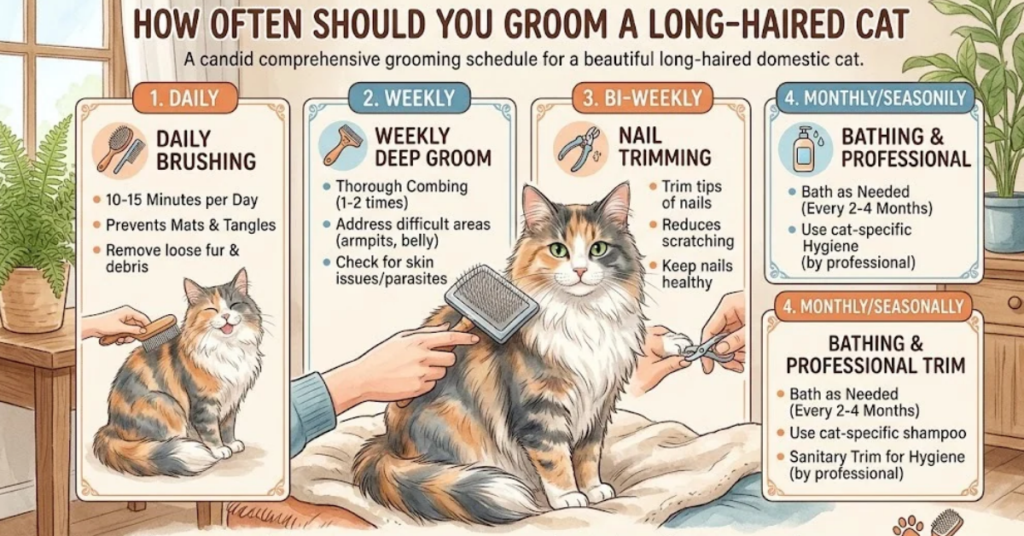
In general, long-haired cats should be brushed daily or at least every other day to prevent tangles and remove loose fur. However, the ideal grooming schedule depends on the cat’s breed, coat thickness, age, lifestyle, and overall health. Some cats need more attention around areas where mats commonly develop, such as behind the ears, under the legs, around the belly, and beneath the tail.
This guide explains how frequently to brush, bathe, trim, and professionally groom a long-haired cat, along with practical techniques that make grooming easier for both you and your pet.
How Often Should You Groom a Long Haired Cat?
Most long-haired cats benefit from daily brushing, although brushing every other day may be sufficient for some cats with less dense or easily maintained coats. Regular grooming prevents loose hair from accumulating, reduces tangles, and helps stop small knots from turning into difficult mats.
Unlike short-haired cats, long-haired breeds have more fur that can become tangled as they move, sleep, play, and groom themselves. Their undercoat may also trap loose hair, dirt, and debris.
Here is a general grooming schedule:
| Grooming Activity | Recommended Frequency |
| Brushing and combing | Daily or every other day |
| Checking for tangles and mats | Daily |
| Eye and face cleaning | As needed |
| Ear inspection | Weekly |
| Nail trimming | Approximately every 2–4 weeks, as needed |
| Bathing | Only when necessary |
| Professional grooming | As needed, depending on coat condition |
These are general guidelines rather than strict rules. A Persian cat with a thick, dense coat may need more frequent attention than a long-haired cat with a relatively silky, low-maintenance coat.
Why Do Long-Haired Cats Need Regular Grooming?
Cats are naturally clean animals. They spend considerable time licking their coats to remove dirt and distribute natural oils. However, self-grooming isn’t always enough to maintain a long, thick coat.
Regular grooming provides several important benefits.
1. Prevents Mats and Tangles
Mats develop when loose hairs become tangled with surrounding fur. Over time, these knots tighten and can pull against the skin, causing discomfort or even painful skin irritation.
Daily brushing helps remove loose hair before it becomes trapped in the coat. Pay particular attention to areas where friction and movement encourage tangles.
2. Reduces Shedding Around the House
Long-haired cats naturally shed hair throughout the year, with some experiencing heavier seasonal shedding.
Brushing removes loose fur before it ends up on furniture, carpets, clothing, and bedding. Although grooming cannot eliminate shedding completely, it can make loose hair easier to manage.
3. Helps Reduce Hairballs
Cats swallow loose fur while licking themselves. Most of this hair passes through the digestive system, but some may collect in the stomach and eventually be vomited as a hairball.
Regular brushing reduces the amount of loose hair available for your cat to swallow. It cannot prevent every hairball, but it can help reduce excessive ingestion of fur.
4. Supports Healthy Skin and Coat
Gentle brushing helps distribute natural skin oils throughout the coat, keeping the fur looking smoother and healthier.
It also gives you an opportunity to notice unusual changes, including:
- Redness or skin irritation.
- Fleas or flea dirt.
- Dry or flaky skin.
- Small wounds or scabs.
- Unusual lumps or bumps.
- Excessive hair loss.
Identifying these problems early can help you seek veterinary advice before they become more serious.
5. Strengthens Your Bond With Your Cat
Grooming can become a relaxing bonding activity when your cat is comfortable with the process.
Gentle brushing, positive reinforcement, and short grooming sessions help build trust. Many cats eventually begin to enjoy the attention, especially when grooming is introduced gradually.
How Often Should You Brush Different Long-Haired Cat Breeds?
Not all long-haired cats have the same coat texture or grooming requirements. Some breeds have dense undercoats that are particularly prone to matting, while others have finer, silkier fur.
Here is a general look at the grooming needs of popular long-haired breeds.
Persian Cats
<AsyncImage query=”beautiful Persian long haired white cat fluffy coat portrait” aspectRatio=”16:9″ width=”100%”/>
Persian cats have long, thick coats that require significant maintenance. Their dense fur can become tangled quickly, particularly around the belly, armpits, legs, and behind the ears.
Recommended schedule: Daily brushing, ideally combined with a metal comb to reach the underlying layers of fur.
Persians generally benefit from consistent grooming rather than occasional long sessions. Missing several days can allow small tangles to develop into difficult mats.
Maine Coon Cats
<AsyncImage query=”Maine Coon long haired cat full coat portrait” aspectRatio=”16:9″ width=”100%”/>
Maine Coons have thick, semi-long coats with a soft undercoat. Their fur can develop knots, particularly around the chest, belly, and hindquarters.
Recommended schedule: Several times a week, increasing to daily brushing during heavier shedding periods or whenever tangles develop.
Ragdoll Cats
<AsyncImage query=”Ragdoll long haired fluffy cat blue eyes portrait” aspectRatio=”16:9″ width=”100%”/>
Ragdolls have silky, semi-long coats that typically lack a dense undercoat. Their fur may be easier to maintain than that of some other long-haired breeds, but it can still tangle around friction-prone areas.
Recommended schedule: Two to three times a week, with additional brushing whenever you notice knots or increased shedding.
Himalayan Cats
<AsyncImage query=”Himalayan long haired cat fluffy coat flat face portrait” aspectRatio=”16:9″ width=”100%”/>
Himalayan cats have long, dense coats similar to Persian cats. Their fur requires regular attention to prevent matting and maintain its condition.
Recommended schedule: Daily brushing and combing.
Norwegian Forest Cats
<AsyncImage query=”Norwegian Forest Cat thick long double coat portrait” aspectRatio=”16:9″ width=”100%”/>
Norwegian Forest Cats have a thick, weather-resistant double coat designed to protect them in colder climates. Their undercoat can become especially dense during seasonal shedding.
Recommended schedule: Several times a week during normal periods and more frequently during seasonal coat changes.
Important: These breed-specific schedules are starting points. Individual coat condition, age, health, and grooming tolerance should determine the actual routine.
What Is the Best Way to Groom a Long-Haired Cat?
Having the right technique makes grooming more comfortable and effective. Instead of rushing through the process, work gently and systematically to remove loose hair and identify tangles.
Follow these steps to groom your long-haired cat at home.
Step 1: Choose the Right Grooming Tools
The right tools make a noticeable difference when managing long fur.
Consider keeping these items available:
- Slicker brush: Helps remove loose hair and separate tangles from the outer coat.
- Wide-toothed metal comb: Reaches deeper into the coat and helps identify hidden knots.
- Fine-toothed comb: Useful for checking smaller areas and removing remaining loose debris.
- Cat grooming gloves: Can help remove loose surface hair from cats that dislike traditional brushes.
- Cat nail clippers: Designed to trim claws safely.
- Soft grooming cloth: Useful for gently cleaning the face and around the eyes.
Choose tools specifically designed for cats. Avoid brushes with sharp or overly aggressive teeth that can scratch sensitive skin.
Step 2: Start With the Areas That Tangle Easily
Begin with areas where mats commonly form, including:
- Behind the ears.
- Under the chin.
- Around the neck and chest.
- Under the front legs.
- Along the belly.
- Around the back legs.
- Beneath the tail.
Use gentle strokes and avoid pulling on the fur. If you discover a small tangle, try separating it carefully with your fingers before using a comb.
Step 3: Brush in the Direction of Hair Growth
Brush gently in the direction the fur naturally grows. This helps remove loose hair without causing unnecessary discomfort.
For cats with thick double coats, use a suitable comb to check whether the underlying fur is also free from tangles. Brushing only the surface may leave hidden mats underneath.
Step 4: Check for Mats and Knots
Run your fingers gently through the coat to identify areas that feel unusually thick or tangled.
Small, loose tangles may be manageable with a wide-toothed comb. However, tightly packed mats close to the skin should be handled by a professional groomer or veterinarian.
Never cut a mat out with ordinary scissors. Cat skin is thin and can easily become trapped inside a mat, making accidental cuts a serious risk.
Step 5: Finish With Rewards
After grooming, offer your cat a favorite treat, gentle praise, or playtime.
Positive reinforcement helps your cat associate brushing with a pleasant experience. Keep early sessions short, especially if your cat isn’t accustomed to regular grooming.
How Often Should You Bathe a Long-Haired Cat?
Despite their thick coats, long-haired cats generally do not need frequent baths. Cats are naturally equipped to clean themselves, and regular brushing is usually more important than bathing.
A healthy indoor cat may rarely need a full bath unless its coat becomes particularly dirty, greasy, contaminated, or difficult to maintain.
Bathing may be appropriate when:
- Your cat gets into something sticky or dirty.
- Its coat develops excessive oil or buildup.
- A veterinarian recommends a medicated shampoo.
- A specific skin condition requires therapeutic bathing.
- Your cat cannot clean itself properly because of age, obesity, or mobility problems.
When bathing is necessary, use a cat-specific shampoo and lukewarm water. Avoid human shampoos, including baby shampoo, because their formulations may irritate feline skin.
After bathing, rinse thoroughly and gently dry your cat with a soft towel. Keep your pet warm and comfortable until its coat is dry.
How Often Should You Trim a Long-Haired Cat’s Fur?
Most long-haired cats do not need a full haircut. Their natural coat provides insulation and protection, so shaving or trimming it unnecessarily is generally not recommended.
However, occasional sanitary trimming may help keep certain areas clean, especially around the rear end and paws.
Consider trimming when:
- Fur around the rear becomes regularly soiled.
- Long hair grows between the paw pads and affects comfort.
- A veterinarian or professional groomer recommends it.
- Your cat has recurring hygiene problems related to its coat.
A professional groomer can determine whether trimming is necessary and use appropriate tools to avoid injuring the skin.
Avoid shaving your cat simply because the weather is warm. A cat’s coat helps regulate temperature and offers protection from environmental exposure.
How Often Should You Take a Long-Haired Cat to a Professional Groomer?
Not every long-haired cat needs regular professional grooming. If you can maintain your cat’s coat at home without problems, routine brushing and occasional nail care may be enough.
However, professional grooming can be useful for cats with particularly dense coats, recurring mats, or difficulty tolerating home grooming.
A professional appointment may include:
- Thorough brushing and combing.
- Removal of manageable mats.
- Sanitary trimming when appropriate.
- Nail trimming.
- Cleaning around the paws and other problem areas.
- Advice about maintaining the coat at home.
Some owners arrange professional grooming every few weeks or every couple of months, depending on their cat’s needs. There is no universal appointment schedule that applies to every breed.
If your cat develops severe matting, painful skin irritation, or a coat that cannot be brushed comfortably, consult a veterinarian rather than waiting for a routine grooming appointment.
How to Groom a Long-Haired Cat That Hates Being Brushed
Some cats enjoy being brushed, while others become nervous as soon as they see a grooming tool. The key is to introduce grooming slowly and avoid turning it into a stressful experience.
Try these techniques:
- Choose a calm environment: Groom your cat in a quiet room away from loud noises and distractions.
- Introduce the brush gradually: Allow your cat to sniff and investigate the grooming tool.
- Start with short sessions: Brush for just 30 seconds to a minute initially.
- Choose comfortable areas: Begin around the back or shoulders if your cat enjoys being touched there.
- Offer treats: Reward calm behavior to create positive associations.
- Take breaks: Stop if your cat becomes uncomfortable or frustrated.
- Build consistency: Gradually increase grooming time as your cat becomes more relaxed.
Watch for signs of stress, including flattened ears, tail flicking, growling, hiding, or attempts to escape.
Never force a grooming session if your cat is distressed. If grooming consistently causes fear or aggression, ask your veterinarian or a qualified feline behavior professional for guidance.
Signs Your Long-Haired Cat Needs More Frequent Grooming
Your current grooming routine may not be sufficient if your cat regularly develops tangles or struggles to keep its coat clean.
Look for these warning signs:
- Small knots appearing behind the ears or under the legs.
- Fur that feels greasy, clumped, or unusually dirty.
- Loose hair accumulating heavily throughout the coat.
- Mats developing around the belly or hindquarters.
- Your cat spending excessive time licking or biting certain areas.
- Difficulty keeping the rear end clean.
Older cats, overweight cats, and those with arthritis or other mobility problems may need additional grooming assistance because they cannot reach every part of their bodies comfortably.
If your cat suddenly stops grooming itself, develops bald patches, or shows signs of pain, don’t assume the problem is simply poor coat maintenance. A veterinary examination can help identify an underlying health issue.
Frequently Asked Questions About Grooming Long-Haired Cats
1. Should you brush a long-haired cat every day?
Daily brushing is recommended for most long-haired cats because it removes loose hair and prevents tangles from developing into mats. Some cats with less demanding coats may do well with brushing every other day or several times a week.
2. What happens if you don’t groom a long-haired cat?
Without regular grooming, loose fur can become tangled and form mats. Severe matting may pull on the skin, cause discomfort, trap dirt, and contribute to skin irritation or infection.
3. How long should a grooming session last?
A short session of around 5–10 minutes may be enough for routine maintenance, although cats with thicker coats may need more time. It is better to groom in several comfortable sessions than force your cat to tolerate a long, stressful brushing session.
4. Do long-haired indoor cats need grooming?
Yes. Indoor cats still shed, develop tangles, and accumulate loose hair. They may encounter less outdoor dirt, but their long coats still require regular brushing and occasional maintenance.
5. Can I use a regular human hairbrush on my cat?
It is better to use grooming tools specifically designed for cats. Human hairbrushes may remove some surface hair but often cannot reach the undercoat or manage tangles effectively.
6. Should I shave my long-haired cat in summer?
Generally, no. A cat’s coat provides insulation and protection from environmental exposure. Shaving is usually unnecessary unless recommended for a medical or grooming reason by a veterinarian or qualified professional.
7. How do I remove mats from my long-haired cat?
Small, loose tangles can sometimes be gently separated with your fingers or a wide-toothed comb. Never pull forcefully or use scissors close to the skin. Severe or tight mats should be removed by a professional groomer or veterinarian.
8. Do older long-haired cats need more grooming?
Often, yes. Older cats may develop arthritis, reduced flexibility, or other mobility problems that make self-grooming difficult. Regular brushing and assistance with hard-to-reach areas can help maintain their coat and comfort.
9. How often should I trim my long-haired cat’s nails?
Many cats need nail trimming approximately every 2–4 weeks, although the frequency varies depending on age, activity, scratching habits, and nail growth. Check the claws regularly and trim only the sharp tip, avoiding the pink quick.
10. Can regular grooming prevent hairballs?
Regular brushing can reduce the amount of loose fur your cat swallows while licking itself, which may help reduce hairball formation. However, grooming cannot prevent all hairballs, and frequent vomiting or repeated unproductive retching should be discussed with a veterinarian.
Conclusion
So, how often should you groom a long haired cat? For most cats, daily brushing or at least every-other-day grooming is a good starting point. However, the ideal routine depends on coat density, breed, age, health, and how easily the fur becomes tangled.
Regular brushing, occasional nail trimming, basic hygiene checks, and bathing only when necessary can keep your cat’s coat in excellent condition. Pay special attention to areas where mats develop, use suitable grooming tools, and make each session as comfortable as possible.
Most importantly, don’t wait until your cat develops painful knots before starting a grooming routine. A few minutes of gentle care each day can make a significant difference. If you’re unsure about your cat’s grooming needs or notice severe matting or skin problems, consult your veterinarian or a professional feline groomer.