
A dog’s mouth can tell you a lot about its age, health, and development. If you’ve ever caught your dog yawning or noticed tiny teeth on the floor, you might have wondered how many teeth it actually has.
So, how many teeth does a dog have? A typical adult dog has 42 permanent teeth, while a puppy usually has 28 baby teeth. The difference comes down to growth: puppies begin with a smaller set of temporary teeth, which gradually fall out as their adult teeth develop.
Understanding your dog’s teeth isn’t just an interesting fact. It can also help you recognize normal teething, spot dental problems early, and keep your four-legged companion comfortable as it grows.
How Many Teeth Do Adult Dogs Have?
Most healthy adult dogs have 42 permanent teeth. These teeth usually finish developing during the first several months of life, replacing the smaller baby teeth that puppies are born without.
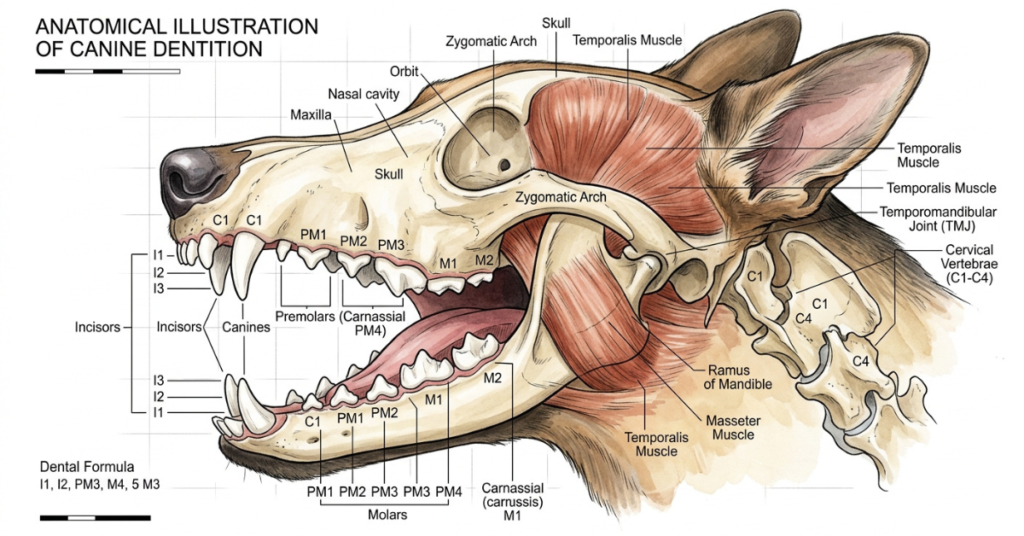
An adult dog’s teeth are designed for different purposes, including grabbing food, tearing meat, and grinding or crushing parts of a meal.
Here’s how those 42 teeth are divided:
| Type of tooth | Number | Main purpose |
|---|---|---|
| Incisors | 12 | Nipping, picking up objects, and grooming |
| Canines | 4 | Gripping, holding, and tearing |
| Premolars | 16 | Cutting and shearing food |
| Molars | 10 | Crushing and grinding food |
| Total | 42 |
Dogs have six incisors on the upper jaw and six on the lower jaw. Their four prominent canine teeth consist of two upper and two lower canines.
Premolars and molars sit farther back in the mouth. These teeth help dogs process food, while the sharp canines are particularly useful for gripping and holding objects.
Keep in mind that 42 is the normal adult tooth count, not a guarantee that every dog will have exactly that number. Some dogs may have missing teeth, extra teeth, or teeth removed because of injury or dental disease.
How Many Teeth Do Puppies Have?
Puppies typically have 28 deciduous teeth, commonly called baby teeth or milk teeth. These temporary teeth begin appearing when puppies are around two to three weeks old.
Unlike human babies, puppies don’t have teeth at birth. Their first teeth emerge relatively quickly, allowing them to begin transitioning from nursing to eating solid food.
A puppy’s 28 baby teeth include:
- 12 incisors
- 4 canines
- 12 premolars
Puppies don’t have baby molars. Their adult teeth develop as they grow, providing the additional teeth needed for a typical adult total of 42.
Baby teeth are usually small, narrow, and surprisingly sharp. Anyone who has played with a teething puppy has probably experienced those tiny teeth firsthand!
When Do Puppies Lose Their Baby Teeth?
Puppies generally start losing their baby teeth at around three to four months of age. The process continues as permanent teeth emerge, and most dogs have their full adult set by approximately six to seven months.
The timing can vary between individual dogs, so a puppy may develop its permanent teeth a little earlier or later than another puppy of the same age.
Here’s a general timeline of canine dental development.
| Puppy age | What usually happens |
|---|---|
| Birth | No visible teeth |
| 2–3 weeks | Baby teeth begin emerging |
| 6–8 weeks | Most or all 28 baby teeth are present |
| 3–4 months | Baby teeth begin falling out |
| 4–6 months | Many permanent teeth emerge |
| 6–7 months | Most dogs have their adult teeth |
During teething, you might notice your puppy chewing more frequently, drooling, or having mildly irritated gums. You may also find a tiny tooth on the floor, although puppies often swallow their loose baby teeth while eating or playing. This is usually harmless.
Signs Your Puppy Is Teething
Common signs include:
- Chewing furniture, toys, or other household objects.
- Mild gum redness or tenderness.
- Increased interest in soft or flexible chew toys.
- Small spots of blood on toys.
- Finding a fallen baby tooth.
- Temporary changes in chewing behavior.
Offer appropriately sized puppy-safe chew toys and supervise your puppy while it chews. Avoid very hard objects, such as bones or antlers, because they can fracture developing or permanent teeth.
If your puppy seems to be in significant pain, refuses food, or has substantial bleeding or swelling, contact your veterinarian.
What Are the Different Types of Dog Teeth?
A dog’s teeth aren’t all the same. Each type has a particular shape and function that helps the animal eat, groom, and interact with its surroundings.
1. Incisors
Incisors are the small teeth at the very front of the mouth. Adult dogs have 12 of them, arranged in rows on the upper and lower jaws.
Dogs use their incisors for delicate tasks, such as picking up small pieces of food, nibbling, and removing debris from their fur.
2. Canine Teeth
Canines are the long, pointed teeth located beside the incisors. Adult dogs have four canines, two above and two below.
These teeth help dogs grip objects, hold food, and tear it into manageable pieces. Their prominent appearance is one reason many people associate sharp teeth with dogs.
3. Premolars
Premolars are located behind the canines. Adult dogs typically have 16 premolars, eight in each jaw.
Their edges help shear food into smaller pieces. Premolars also play a role when dogs chew toys or carry objects in their mouths.
4. Molars
Molars are positioned toward the back of the mouth. Adult dogs generally have ten molars: four in the upper jaw and six in the lower jaw.
Their broader surfaces help crush and grind food. Although dogs are adapted to tearing and shearing food, molars are also useful for breaking down harder pieces.
Do All Dog Breeds Have the Same Number of Teeth?
Most adult dogs, whether tiny Chihuahuas or large German Shepherds, have the same standard complement of 42 permanent teeth.
However, the size and shape of a dog’s mouth can affect how comfortably those teeth fit together. Small breeds may be more prone to crowding because their jaws have less room for the full set of teeth.
Brachycephalic breeds, such as Pugs and Bulldogs, have shortened skulls and may experience dental crowding or misalignment. This can make it harder to clean between teeth and may increase the risk of certain oral problems.
Some dogs may also have retained baby teeth, meaning a deciduous tooth remains in place after its permanent replacement begins to emerge. This is particularly important to check in small-breed puppies.
If two teeth appear to occupy the same position, or a baby canine remains beside an emerging adult canine, arrange a veterinary dental examination. Retained baby teeth can contribute to crowding, trapped food, and abnormal tooth positioning.
How to Tell Whether Your Dog’s Teeth Are Healthy
Counting teeth is useful, but their condition matters just as much. Dental disease can develop even when a dog has all 42 adult teeth.
Healthy teeth are generally clean and intact, while the gums should not be persistently swollen, painful, or bleeding. Some mild yellowing can develop with age, but heavy tartar buildup deserves attention.
Look out for these warning signs:
- Persistent bad breath.
- Red, swollen, or bleeding gums.
- Yellow or brown deposits near the gumline.
- Difficulty chewing or dropping food.
- Pawing at the mouth or rubbing the face.
- Loose, broken, or discolored teeth.
- Reduced appetite or reluctance to eat hard food.
Dogs can hide oral pain surprisingly well. A dog that continues eating may still have a painful tooth, gum infection, or other dental problem.
If you notice any of these signs, arrange a veterinary examination. Facial swelling, significant bleeding, or an inability to eat warrants prompt veterinary attention.
How to Keep Your Dog’s Teeth Clean
Dental care is an important part of responsible dog ownership. Regular cleaning can help reduce plaque, slow tartar accumulation, and support healthier gums.
1. Brush Your Dog’s Teeth Regularly
Brushing is one of the most effective ways to control plaque at home. Ideally, brush your dog’s teeth daily using a soft-bristled toothbrush and toothpaste specifically formulated for dogs.
Never use ordinary human toothpaste unless a veterinarian specifically directs you to a suitable product. Some human toothpastes contain ingredients, including xylitol, that can be dangerous to dogs.
Introduce brushing gradually:
- Let your dog sniff and taste a small amount of dog toothpaste.
- Gently touch its lips and gums to help it become comfortable.
- Start brushing a few teeth at a time.
- Gradually work toward brushing the outer surfaces of all teeth.
- Reward calm behavior and keep each session positive.
Consistency matters more than trying to complete a long brushing session before your dog is comfortable with the process.
2. Choose Appropriate Dental Chews
Some dental chews can help reduce plaque and tartar. Look for products specifically designed for dogs and follow the manufacturer’s size and weight recommendations.
Products carrying the Veterinary Oral Health Council (VOHC) Seal have met established standards for reducing plaque or tartar, depending on the product’s approved claim.
Dental chews should complement brushing rather than replace it. Supervise your dog while chewing, and avoid products that are so hard they could damage its teeth.
3. Schedule Veterinary Dental Checkups
Your veterinarian can examine the teeth and gums for problems that may not be visible during a quick look at home.
Professional dental cleaning may be recommended when tartar has accumulated or gum disease has developed. A thorough cleaning typically requires anesthesia so the veterinary team can examine and clean the teeth safely, including areas below the gumline.
Ask your veterinarian how frequently your dog needs dental examinations based on its age, breed, medical history, and oral health.
4. Avoid Dangerous Chewing Materials
Dogs love chewing, but not every chew item is safe. Extremely hard bones, antlers, hooves, and similarly rigid objects can cause painful tooth fractures.
Choose items with some flexibility and an appropriate size for your dog. Remove damaged toys and supervise chewing to reduce the risk of choking or swallowing large pieces.
Can Dogs Lose Their Teeth?
Yes. Puppies naturally lose their baby teeth as their adult teeth emerge. This is a normal stage of development, usually completed by around six to seven months of age.
Adult dogs, however, should not routinely lose teeth. Tooth loss in a mature dog can result from periodontal disease, trauma, tooth fractures, or other dental conditions.
Periodontal disease develops when plaque and bacteria accumulate around the teeth and trigger inflammation in the gums and supporting tissues. Over time, the structures that hold the teeth in place can become damaged.
If an adult dog has a loose tooth or a tooth falls out, arrange a veterinary examination even if the dog seems comfortable. The underlying problem may affect other teeth as well.
Do not attempt to pull out a loose tooth yourself. A veterinarian can determine the cause and recommend the safest treatment.
Frequently Asked Questions
1. How many teeth does a dog have as an adult?
A typical adult dog has 42 permanent teeth: 12 incisors, four canines, 16 premolars, and ten molars. Individual dogs may have fewer or more because of missing, extra, or previously removed teeth.
2. How many teeth does a puppy have?
A puppy usually has 28 baby teeth. These begin appearing at around two to three weeks of age and are gradually replaced by permanent teeth as the puppy grows.
3. At what age do dogs get all their adult teeth?
Most dogs have their full set of permanent teeth by six to seven months of age. The exact timing varies, and retained baby teeth may require veterinary attention.
4. Do dogs have more teeth than humans?
Yes. Most adult dogs have 42 permanent teeth, while adults typically have 32 permanent teeth, including wisdom teeth. Puppies have 28 baby teeth, compared with 20 primary teeth in human children.
5. Why does my puppy have two teeth in the same spot?
This may happen when a baby tooth remains in place while its permanent replacement begins to emerge. The condition is called a retained deciduous tooth and is particularly common in small breeds. A veterinarian should assess it because the overlapping teeth can cause crowding and other dental problems.
6. Do small dogs have fewer teeth than large dogs?
Not usually. Most adult dogs of all sizes have 42 teeth. However, small breeds may experience more dental crowding because their teeth have less room within their jaws.
7. Is it normal for dogs to have bad breath?
Persistent bad breath is not something to ignore. It may indicate plaque, tartar, gum disease, or another health problem. Arrange a veterinary dental check if the odor continues, especially if you notice bleeding gums or difficulty chewing.
8. Can I brush my dog’s teeth with human toothpaste?
No. Use toothpaste specifically formulated for dogs. Some human toothpastes contain xylitol, which is toxic to dogs, while other ingredients may upset their stomachs if swallowed.
9. Do dogs need professional teeth cleaning?
Some dogs need professional cleaning to remove hardened tartar and treat dental disease. Your veterinarian can assess whether cleaning is necessary and recommend an appropriate schedule. Home brushing helps, but it cannot remove established tartar below the gumline.
10. What should I do if my adult dog’s tooth falls out?
Contact your veterinarian to identify the cause. Tooth loss in an adult dog may indicate periodontal disease, injury, or another problem. Seek prompt care if the tooth loss is accompanied by bleeding, swelling, or difficulty eating.
Conclusion
So, how many teeth does a dog have? Most adult dogs have 42 permanent teeth, while puppies start with 28 baby teeth that are gradually replaced during their first six to seven months.
Knowing the difference between puppy and adult teeth can help you understand your dog’s development and recognize potential problems. More importantly, regular brushing, suitable dental chews, and routine veterinary checkups can help keep those teeth in good condition.
If your dog is still teething, check for retained baby teeth as its adult teeth emerge. If your adult dog has persistent bad breath, bleeding gums, or a loose tooth, don’t wait for the problem to get worse. A veterinary dental examination can help protect your dog’s comfort, health, and quality of life.