
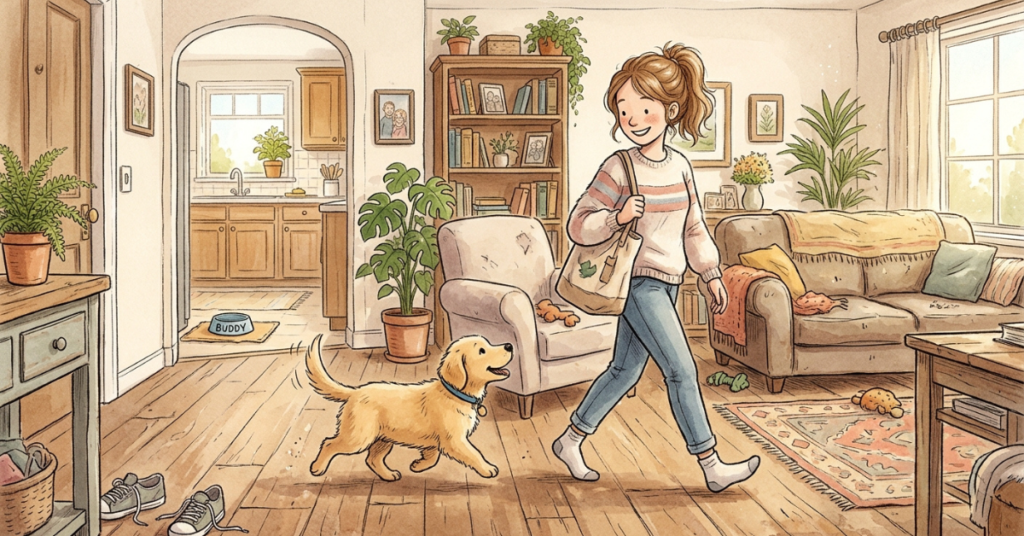
You get up to grab a glass of water, and your dog gets up too. You walk into another room, and there they are, right behind you. Even a quick trip to the bathroom can turn into a little parade with your four-legged companion leading the way.
If you’ve ever wondered, why does my dog follow me everywhere, you’re certainly not alone. Many dogs love staying close to their favorite people, and this behavior is often a normal expression of affection, curiosity, or trust. However, constant following can sometimes point to boredom, anxiety, or a change in your dog’s health.
The key is understanding what’s motivating your dog’s behavior. Let’s explore the most common reasons dogs follow their owners, how to recognize when something might be wrong, and what you can do to help your pet feel comfortable on their own.
1. Your Dog Loves You and Feels Safe Around You
One of the simplest explanations is that your dog enjoys your company. Dogs are social animals that have evolved alongside humans, forming close relationships with the people who care for them.
When your dog follows you around the house, it may be their way of staying connected to someone they trust. Your presence can provide comfort, reassurance, and a sense of security, especially in unfamiliar or unpredictable situations.
You might notice your dog:
- Following you from room to room without demanding attention.
- Settling down near your feet while you work.
- Choosing to sleep in the same room as you.
- Relaxing when you sit beside them, even if you’re not interacting.
These are generally reassuring signs, particularly when your dog can also relax independently.
What it means: Your dog may simply feel happiest when you’re nearby. You don’t necessarily need to change anything if the behavior is relaxed and doesn’t interfere with either of your routines.
2. Your Dog Has Learned That Following You Brings Rewards
Dogs are excellent at recognizing patterns. If following you often leads to food, playtime, a walk, or a little attention, your dog may have learned that staying close is worthwhile.
Think about your daily routine. Perhaps you head toward the kitchen before feeding your dog, pick up your keys before going outside, or walk to a cupboard whenever it’s time for a treat. Your dog can learn to associate these movements with something enjoyable.
Even small rewards can reinforce the habit. If your dog follows you and you respond by petting them, talking to them, or giving them a snack, they may repeat the behavior more frequently.
How to recognize reward-seeking behavior
Look for signs such as:
- Your dog follows you most closely around mealtimes.
- They become especially attentive when you enter the kitchen.
- They bring you a toy when you sit down.
- They follow you more often when they expect a walk or another favorite activity.
This doesn’t mean your dog is being manipulative. They’re simply learning what works in their environment.
What you can do: Keep rewarding calm behavior, including moments when your dog settles on their own. You can also introduce a predictable daily schedule for meals, walks, and play to help reduce unnecessary anticipation.
3. Your Dog Is Naturally Curious About What You’re Doing
Dogs explore the world through their senses, especially smell, hearing, and sight. Your everyday activities can be surprisingly interesting to them, even when you’re doing something as ordinary as folding laundry or moving between rooms.
When you leave one space for another, your dog may follow because they want to investigate. A new sound, an unfamiliar smell, or the possibility of an interesting activity can capture their attention.
This is particularly common in puppies and younger dogs, which are still learning about their surroundings.
For example, your dog might follow you into the kitchen because they smell food, into the garden because they hear something outside, or into your office because they want to see what you’re doing.
What it means: If your dog looks relaxed, explores naturally, and can settle down when nothing interesting happens, curiosity may be a major reason for their behavior.
Providing safe opportunities to explore, sniff, and play can help satisfy this natural instinct.
4. Your Dog Is Bored and Wants More Attention
Sometimes, following is your dog’s way of saying, “Can we do something together?”
Dogs need more than food, water, and a comfortable place to sleep. Depending on their age, breed, temperament, and health, they also need physical activity, mental stimulation, and social interaction.
When these needs aren’t being met, your dog may follow you because they are looking for something to do.
Common signs of boredom include:
- Following you while repeatedly bringing toys.
- Nudging your hand or pawing at you for attention.
- Barking, whining, or becoming restless.
- Chewing household objects or getting into things they shouldn’t.
- Struggling to settle even after you’ve finished an activity.
A bored dog may appear clingy simply because you’re the most interesting thing available.
How to keep your dog mentally stimulated
Try incorporating a few simple activities into your dog’s daily routine:
- Sniffing walks: Allow your dog time to investigate safe scents instead of rushing through every walk.
- Food puzzles: Use suitable puzzle feeders or toys to make mealtimes more engaging.
- Short training sessions: Practice familiar cues or teach a new trick for a few minutes each day.
- Interactive play: Choose games such as fetch or tug, where appropriate for your dog’s age and physical condition.
- Independent activities: Offer a safe chew or food-stuffed toy while you work nearby.
The goal isn’t to keep your dog busy every minute. It’s to provide enough appropriate activity that they can comfortably relax afterward.
5. Your Dog Feels Nervous or Wants Reassurance
Not every dog follows their owner because they’re happy or looking for attention. Some dogs stay close because something in their environment makes them feel uncertain.
Thunderstorms, fireworks, unfamiliar visitors, construction noise, or changes in the household can make a dog seek comfort from someone they trust. Dogs that have experienced neglect, abandonment, or other stressful situations may also be more cautious about being alone.
If your dog follows you everywhere in the house, pay attention to their body language. They may be seeking reassurance if they:
- Stay pressed against your legs or lean on you.
- Tuck their tail, flatten their ears, or repeatedly lick their lips.
- Pant, tremble, or pace when unfamiliar noises occur.
- Seem unable to settle until you’re nearby.
These signs don’t automatically mean your dog has an anxiety disorder, but they can help you understand what your pet is feeling.
How to help: Create a quiet, comfortable resting area where your dog can retreat when things feel overwhelming. Stay calm, avoid forcing them into frightening situations, and reward relaxed behavior. If the fear is persistent or intense, ask your veterinarian about appropriate support.
6. Your Dog’s Age or Breed May Play a Role
Some dogs are naturally more inclined to stay close to people than others. Their individual temperament, early experiences, breeding history, and age can all influence how much companionship they seek.
Why puppies follow their owners
Young puppies are still learning how to navigate the world. Following you helps them explore their surroundings while staying close to a familiar source of safety.
Puppies also learn by observing people. As they grow, it’s helpful to teach them that being alone for short periods can be safe and rewarding, rather than expecting them to be independent without guidance.
Why some breeds are especially clingy
Certain breeds were developed to work closely with humans. Herding dogs, for example, often have a strong tendency to monitor movement and remain attentive to their handlers. Other dogs may simply have personalities that make them particularly people-oriented.
Breeds commonly described as affectionate or companion-focused include:
- Labrador Retrievers
- Golden Retrievers
- Border Collies
- Cavalier King Charles Spaniels
- Australian Shepherds
Breed tendencies aren’t guarantees. An independent dog can be affectionate, and a naturally social dog can learn to spend time alone comfortably.
Why older dogs may become more attached
Senior dogs sometimes become more dependent on familiar people as their needs change. Reduced vision or hearing, joint discomfort, cognitive changes, and general age-related changes can make their surroundings feel less predictable.
If an older dog suddenly starts shadowing you, don’t automatically assume it’s just a sign of affection. A veterinary checkup can help identify physical or cognitive changes that might be contributing to the behavior. The American Kennel Club’s guide to dogs following their owners also discusses the relationship between attachment, breed, and health.
7. Your Dog May Have Separation Anxiety
This is one of the most important possibilities to understand when your dog seems unable to be away from you.
Separation anxiety is more than wanting to spend time together. It involves significant distress when a dog is separated from their owner or another important attachment figure.
A dog that follows you around the house but happily sleeps in another room when you’re busy may simply enjoy your company. A dog that panics as soon as you leave, however, may need additional support.
Signs of separation anxiety in dogs
Watch for a combination of these behaviors, particularly when you leave home:
- Persistent barking, whining, or howling.
- Pacing, panting, or excessive drooling.
- Scratching at doors or windows or attempting to escape.
- Destructive chewing, especially around exits.
- Urinating or defecating indoors despite being house-trained.
- Refusing food or being unable to settle when left alone.
These signs can have other causes, so they aren’t enough to confirm a diagnosis on their own. Recording your dog’s behavior while you’re away can help reveal whether the problem occurs specifically during separation.
According to the American Kennel Club’s separation anxiety guide, gradual training and appropriate professional support can help dogs learn to cope with time apart.
Important: Never punish a dog for anxious behavior. Fear and panic aren’t deliberate misbehavior, and punishment may make the problem worse. If your dog shows repeated signs of distress, consult a veterinarian or a qualified canine behavior professional.
Why Does My Dog Follow Me Everywhere in the House?
If your dog follows you from the bedroom to the kitchen, bathroom, living room, and back again, the explanation is often a combination of the reasons above.
Your dog may enjoy your company, expect something exciting to happen, or simply want to know what you’re doing. Because your home is familiar and you are an important part of your dog’s daily life, staying close may feel like the most natural choice.
The circumstances can offer useful clues:
| When your dog follows you | What it might mean |
|---|---|
| Around mealtimes | Anticipating food or treats |
| When you pick up your keys | Expecting a walk or noticing departure cues |
| During thunderstorms | Seeking reassurance |
| When you sit down to work | Wanting companionship or stimulation |
| Constantly, with signs of panic when you leave | Possible separation-related distress |
| Suddenly, despite previously being independent | Possible stress, discomfort, or a health change |
These are general clues rather than definitive explanations. Look at the overall pattern, including your dog’s body language and how easily they settle when you stop moving.
Is It Normal for a Dog to Follow You Everywhere All the Time?
In many cases, yes. Dogs are social animals, and following a trusted person around the home is a common behavior.
The important distinction is whether your dog can cope when you aren’t immediately available. A dog can be deeply attached to you while still being comfortable resting in another room or staying home alone for an appropriate period.
Consider speaking to a veterinarian if the behavior:
- Starts suddenly or becomes noticeably more intense.
- Comes with changes in appetite, sleep, movement, or toileting.
- Appears alongside confusion, unusual vocalization, or signs of pain.
- Involves persistent distress whenever you’re out of sight.
A sudden behavior change deserves particular attention, especially in older dogs. Don’t assume that increased clinginess is purely emotional when a physical problem may be involved.
How to Help Your Dog Become More Independent
You don’t need to stop your dog from following you altogether. The goal is to help them enjoy your company without feeling that they must stay beside you every second.
Here are practical ways to encourage healthy independence.
1. Teach your dog to settle in a comfortable spot
Choose a dog bed or mat in a quiet part of your home. Reward your dog for lying there calmly, starting with short periods while you’re nearby.
Gradually increase the time they spend relaxing in that spot. Keep training sessions positive and move at a pace your dog can handle.
2. Reward independent behavior
If your dog settles on their bed while you work or relaxes in another room, quietly reward that behavior with praise or an occasional suitable treat.
This helps your dog learn that good things happen when they relax independently, not only when they follow you.
3. Practice short, easy separations
Start by stepping a short distance away while your dog remains comfortable. Gradually practice brief periods out of sight, returning before your dog becomes distressed.
Increase the duration slowly rather than expecting your dog to cope with a long absence immediately. If they become anxious, make the next practice session easier.
For dogs with established separation anxiety, a structured treatment plan from a veterinarian or qualified behavior professional is more appropriate than simply leaving them to get used to it.
4. Provide enough exercise and mental stimulation
A dog with appropriate daily activity may find it easier to settle down. The right amount depends on their age, breed, health, and energy level.
Consider sniffing walks, interactive play, food puzzles, and short training sessions. Mental enrichment can be particularly useful for dogs that follow you because they’re bored.
5. Make your routine predictable
Consistent meal times, walks, rest periods, and play sessions can help your dog understand what to expect throughout the day.
Predictability won’t eliminate every reason for clinginess, but it can reduce uncertainty for some dogs.
6. Avoid encouraging constant dependence
There’s nothing wrong with cuddling your dog or letting them spend time beside you. You don’t need to withhold affection to teach independence.
Instead, give them opportunities to enjoy other activities, spend time with other trusted household members, and relax in their own space. The aim is a healthy balance between companionship and confidence.
Frequently Asked Questions
Why does my dog follow me everywhere I go?
Your dog may follow you because they enjoy your company, feel safe around you, expect food or play, or are curious about your activities. If the behavior is relaxed and your dog can settle independently, it’s usually normal.
Why does my dog follow me everywhere around the house?
Dogs often move from room to room with their owners because they’re social, interested in household activities, or accustomed to being near their favorite person. If your dog becomes distressed whenever you leave the room, consider whether anxiety or another underlying issue could be involved.
Why does my dog follow me to the bathroom?
Your dog may be curious, accustomed to being near you, or interested in what happens next. Bathrooms also offer plenty of new smells and sounds to investigate. This behavior is generally harmless unless it becomes disruptive or is accompanied by signs of distress.
Why does my dog follow me everywhere but not my partner?
Your dog may have a stronger attachment to you because you provide most of their meals, walks, training, or playtime. Personality and past experiences can also influence which household member a dog prefers to stay close to. Encourage your partner to build positive associations through enjoyable activities and gentle interaction.
Does my dog follow me everywhere because they love me?
Affection is certainly one possible explanation. Dogs can form strong social bonds with their caregivers, and choosing to spend time near you can be a sign of trust and companionship. However, following alone doesn’t prove a particular emotion; context and body language matter.
What is a Velcro dog?
A Velcro dog is an informal term for a dog that likes to stay very close to their owner, often following them from room to room. This behavior isn’t automatically a problem. It becomes a concern when the dog struggles to relax independently or experiences significant distress during separation.
Should I worry if my dog follows me everywhere all the time?
Not necessarily. If your dog is relaxed, healthy, and comfortable spending time alone, frequent following may simply reflect their personality. If the behavior is new, escalating, or associated with anxiety or physical symptoms, arrange a veterinary assessment.
Why does my dog suddenly follow me everywhere?
A sudden change may be related to a change in routine, a frightening experience, stress, pain, sensory loss, or another medical issue. Monitor your dog’s other behaviors and consult your veterinarian, particularly if the change persists or comes with additional symptoms.
Does my dog have separation anxiety if they follow me everywhere?
No. Following you around the house doesn’t automatically mean your dog has separation anxiety. The more important clue is whether your dog shows significant distress when you leave, such as persistent vocalizing, pacing, destructive behavior, or escape attempts.
How can I stop my dog from following me everywhere?
Encourage your dog to settle on a bed, reward calm independent behavior, provide sufficient enrichment, and gradually practice short separations. Avoid punishment or forcing a distressed dog to remain alone. If your dog panics when separated, seek professional guidance.
Conclusion: Your Dog’s Shadowing May Be a Sign of Trust
So, why does your dog follow you everywhere? In most cases, it’s a mix of affection, curiosity, learned habits, and the comfort of staying close to a trusted companion. Some dogs are naturally more people-oriented, while others follow because they’re bored, nervous, or looking for something interesting to happen.
Pay attention to your dog’s usual personality, body language, and ability to relax when you’re not nearby. If the behavior is comfortable for both of you, there’s usually no reason to discourage it. If it suddenly changes or comes with signs of distress, a veterinarian can help identify the cause.
Ultimately, the goal isn’t to make your dog less affectionate. It’s to build a relationship in which your dog can enjoy being by your side while also feeling safe, confident, and comfortable on their own.
For more practical advice, explore our related guides on dog behavior, canine anxiety, mental enrichment, and helping dogs feel comfortable when left alone.