
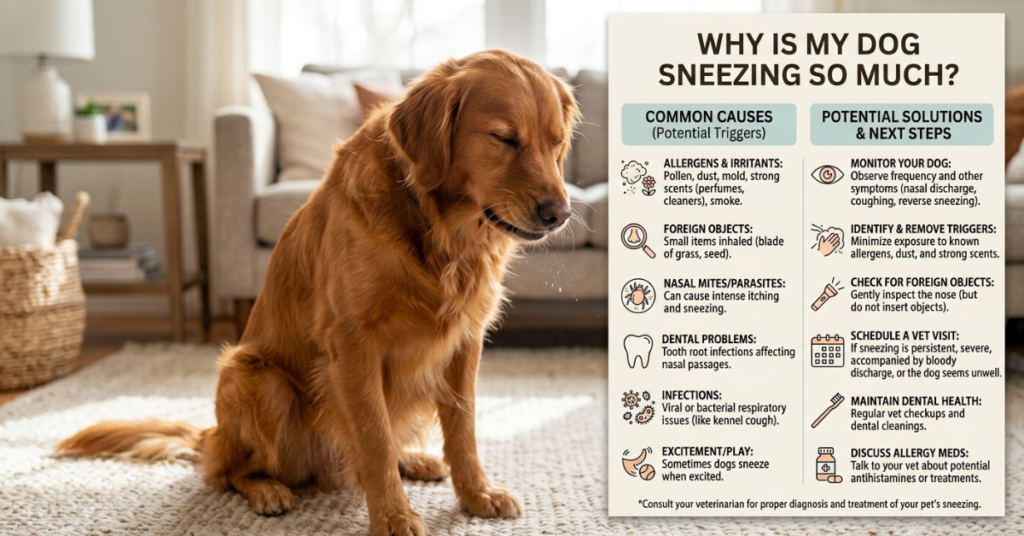
A sneeze or two is usually nothing to worry about, but when your dog starts sneezing repeatedly, it is natural to wonder whether something is wrong. If you have been asking yourself, why is my dog sneezing so much, the answer could be as simple as dust in the air or as serious as a nasal infection or a foreign object stuck inside the nose.
Dogs sneeze for many of the same reasons people do. Their noses are sensitive to airborne particles, strong smells, and environmental irritants. However, frequent sneezing can also signal allergies, dental problems, nasal mites, or other conditions that need veterinary attention.
The key is to look at the bigger picture. When did the sneezing start? Is your dog otherwise behaving normally? Are there additional symptoms, such as nasal discharge, coughing, wheezing, or a loss of appetite?
This guide explains the most common reasons dogs sneeze, how to recognize potential warning signs, what you can safely do at home, and when it is time to contact your veterinarian.
Why Is My Dog Sneezing So Much? 7 Common Causes
Occasional sneezing is a normal reflex that helps dogs clear irritants from their nasal passages. Repeated or persistent sneezing, however, deserves closer attention.
Here are seven possible explanations.
1. Dust, Pollen, and Environmental Irritants
One of the most common reasons for frequent sneezing is irritation from something in your dog’s surroundings. Dust, pollen, mold spores, smoke, and household cleaning products can all trigger a reaction.
Your dog might sneeze more frequently when:
- Walking through freshly cut grass.
- Sniffing dusty carpets, bedding, or furniture.
- Spending time in a garden with flowering plants.
- Being exposed to cigarette smoke, perfume, or air fresheners.
- Staying in a room that has recently been cleaned or sprayed with chemicals.
If the sneezing happens mainly in a particular room or outdoors, an environmental trigger may be responsible.
What you can do: Keep your home well ventilated, wash your dog’s bedding regularly, and avoid spraying fragrances or cleaning products near your pet. If the sneezing continues despite removing possible irritants, arrange a veterinary examination.
2. Allergies
Dogs can develop allergies to environmental substances, including pollen, dust mites, and mold. However, canine allergies often cause itchy skin, paw licking, ear irritation, and recurrent skin infections rather than sneezing alone.
Seasonal patterns can offer a clue. For example, a dog that sneezes more during spring or autumn may be reacting to seasonal pollen or other environmental changes.
Possible allergy symptoms include:
- Repeated sneezing or nasal irritation.
- Itchy paws, ears, or skin.
- Watery eyes.
- Licking or rubbing the face.
- Red or irritated skin.
Food allergies are more commonly associated with skin or digestive symptoms than isolated sneezing.
What you can do: Keep a record of when symptoms occur and what your dog has been exposed to. Your veterinarian can help distinguish allergies from infections and other nasal conditions. Do not give human antihistamines or other allergy medicines without veterinary guidance.
3. Something Stuck in Your Dog’s Nose
A sudden bout of intense sneezing can occur when a foreign object enters your dog’s nasal passage. Dogs explore the world with their noses, so grass seeds, small plant fragments, dirt, and other debris can sometimes become lodged inside.
This possibility is especially important if your dog starts sneezing violently after sniffing through grass or bushes.
Look for signs such as:
- Sudden, repeated sneezing.
- Pawing or rubbing at the nose.
- Discharge from one nostril.
- Blood in the nasal discharge.
- Restlessness or obvious nasal discomfort.
A foreign object may cause persistent symptoms if it remains lodged inside the nose.
What you can do: Contact your veterinarian promptly if you suspect something is stuck in your dog’s nose. Do not insert tweezers, cotton swabs, or other objects into the nostrils, and do not attempt to flush the nose yourself.
4. Respiratory Infections
Dogs can develop respiratory infections caused by viruses, bacteria, and other infectious agents. Some infections affect the upper respiratory tract, including the nose and throat.
Sneezing may occur alongside coughing, nasal discharge, watery eyes, or reduced energy. Dogs that have recently visited boarding facilities, grooming salons, dog parks, shelters, or daycare may have been exposed to contagious respiratory illnesses.
Canine infectious respiratory disease complex, sometimes called kennel cough, is commonly associated with a dry, hacking cough, although other respiratory signs may occur.
What you can do: If you suspect an infection, contact your veterinarian for advice. Keep your dog away from other dogs while contagious illness is a possibility, and call the clinic before arriving so staff can take appropriate precautions.
Do not give leftover antibiotics or human cold medications. The correct treatment depends on the cause and severity of the illness.
5. Dental Problems
Dental disease might not seem like an obvious cause of sneezing, but the roots of some upper teeth lie close to the nasal passages. An infected tooth or an abscess can sometimes affect the area between the mouth and nose.
Signs that dental disease could be involved include:
- Bad breath.
- Red, swollen, or bleeding gums.
- Difficulty chewing.
- Dropping food while eating.
- Facial swelling.
- Nasal discharge, sometimes from one nostril.
A tooth-root abscess or an abnormal connection between the mouth and nasal cavity can lead to persistent nasal symptoms.
What you can do: Schedule a veterinary dental examination if sneezing occurs alongside mouth discomfort, bad breath, or difficulty eating. Dental problems usually require treatment of the underlying cause rather than simply managing the sneezing.
6. Nasal Mites or Other Parasites
Nasal mites are tiny parasites that can live inside a dog’s nasal passages. Although they are not the most common explanation for sneezing, they can cause nasal irritation and discomfort.
Affected dogs may experience:
- Repeated sneezing.
- Nose rubbing or pawing.
- Nasal discharge.
- Noisy breathing.
- Occasional nosebleeds.
Other nasal conditions can produce similar symptoms, so sneezing alone is not enough to identify nasal mites.
What you can do: Ask your veterinarian to investigate persistent symptoms, particularly if your dog has intense nasal irritation or recurring discharge. Never use an over-the-counter parasite treatment inside your dog’s nose unless specifically directed by a veterinarian.
7. Chronic Nasal Disease or Growths
Less commonly, persistent sneezing can be associated with chronic inflammation, fungal infections, nasal polyps, or tumors. The likelihood depends on your dog’s age, medical history, breed, and other symptoms.
Warning signs can include:
- Sneezing that persists or progressively worsens.
- Recurrent nosebleeds.
- Ongoing discharge from one nostril.
- Facial swelling or changes in the shape of the face.
- Noisy breathing or reduced airflow through one nostril.
- Unexplained weight loss.
These signs do not automatically mean your dog has a serious disease, but they should not be ignored.
What you can do: Arrange a veterinary assessment for persistent or worsening symptoms. Depending on the findings, your vet may recommend blood tests, imaging, nasal examination, or other diagnostic procedures.
Why Is My Dog Sneezing So Much All of a Sudden?
If your dog was perfectly fine yesterday and is now sneezing repeatedly, the timing can help narrow down the possible causes.
Sudden sneezing is often associated with a new irritant or an object entering the nose. For example, your dog may have inhaled dust while digging, sniffed a patch of grass, or encountered a strong fragrance.
Other possibilities include:
- A sudden exposure to smoke or cleaning chemicals.
- An insect or plant fragment irritating the nose.
- The early stages of a respiratory infection.
- Acute nasal inflammation.
Pay attention to whether the sneezing stops after a few minutes or continues throughout the day. Brief sneezing after sniffing something unusual may resolve on its own, whereas persistent episodes, bloody discharge, or obvious discomfort warrant veterinary attention.
Important: If your dog is struggling to breathe, has severe facial swelling, collapses, or has blue or gray gums, seek emergency veterinary care immediately.
Why Is My Dog Sneezing So Much Lately?
A gradual increase in sneezing can suggest an ongoing exposure or a developing health problem rather than a single irritant.
Consider whether anything has changed recently:
- Have you started using a new detergent, air freshener, or cleaning spray?
- Has the weather changed or pollen increased?
- Have you moved your dog’s bed or changed its bedding?
- Has your dog recently spent time around other dogs?
- Is there nasal discharge, coughing, itching, or reduced energy?
Keeping a simple symptom diary can help your veterinarian identify patterns. Record when the sneezing occurs, how long it lasts, whether it happens indoors or outdoors, and whether any additional symptoms appear.
If the problem keeps returning or is getting worse, do not assume it is just an allergy. Persistent sneezing deserves a proper examination.
Why Is My Dog Sneezing So Much in the Morning or at Night?
The time of day may provide useful clues, although it cannot establish a diagnosis by itself.
Sneezing in the morning
Morning sneezing may occur because your dog has been exposed to dust mites, bedding fibers, or other airborne irritants overnight. Dry indoor air or accumulated dust may also contribute.
If your dog sneezes briefly after waking up but otherwise behaves normally, monitor the pattern and try washing its bedding and reducing household dust.
Sneezing at night
Dogs that sneeze more at night may be reacting to bedroom dust, scented products, dry air, or irritants in their sleeping area.
Check whether your dog sleeps near air vents, fans, freshly cleaned surfaces, or scented candles. Avoid smoke and strong fragrances, and keep the sleeping area clean.
However, nighttime sneezing that repeatedly interrupts sleep or occurs with coughing, wheezing, or labored breathing should be discussed with a veterinarian.
Why Is My Dog Sneezing So Much Outside or in Winter?
Sneezing outdoors
Outdoor sneezing can be associated with pollen, grass seeds, dust, soil, mold, or other particles your dog encounters while exploring.
If the sneezing begins during walks and improves indoors, try avoiding areas with tall grass or heavy dust temporarily. If your dog develops sudden, persistent sneezing after sniffing vegetation, a foreign object should be considered.
Sneezing in winter
Cold weather can coincide with increased exposure to indoor dust, dry heated air, smoke, and household fragrances. Seasonal allergies may also vary depending on your location and the substances present in the environment.
Cold weather itself does not necessarily mean your dog has caught a respiratory infection. Viral and bacterial infections depend on exposure to infectious organisms, not simply being outdoors in low temperatures.
Keep your dog away from smoke and irritating sprays, provide a comfortable sleeping environment, and seek veterinary advice if sneezing persists or other symptoms develop.
Why Is My Dog Sneezing and Wheezing?
Sneezing and wheezing are not the same thing.
Sneezing is a forceful expulsion of air through the nose. Wheezing is typically a whistling sound associated with airflow through narrowed airways. If both occur, your dog may have nasal irritation alongside a respiratory problem, although the precise cause cannot be determined from these symptoms alone.
Possible explanations include respiratory infections, airway inflammation, environmental irritants, or other conditions affecting breathing.
Seek urgent veterinary care if wheezing is accompanied by increased breathing effort, open-mouth breathing at rest, blue or gray gums, collapse, or severe distress. If the breathing sound is new but your dog appears stable, contact your veterinarian promptly for guidance.
Why Is My Dog Sneezing and Lethargic?
A dog that sneezes frequently and seems unusually tired may be dealing with more than simple nasal irritation.
Lethargy can occur with respiratory infections, fever, pain, dehydration, or other illnesses. The combination is especially concerning if your dog is sleeping much more than usual, refusing normal activities, or showing a clear change in behavior.
Watch for additional signs such as:
- Reduced appetite.
- Nasal or eye discharge.
- Coughing.
- Vomiting or diarrhea.
- Weakness or unusual responsiveness.
Contact your veterinarian promptly if your dog is sneezing and noticeably lethargic. Seek emergency care if your dog is difficult to wake, collapses, or has difficulty breathing.
Why Is My Dog Sneezing and Not Eating?
A loss of appetite alongside repeated sneezing can indicate discomfort, illness, or a problem affecting the mouth or nasal passages.
Dogs with severe nasal congestion may have difficulty smelling food, which can reduce their interest in eating. Dental disease can make chewing painful, while respiratory infections and other illnesses can affect appetite more generally.
If your dog refuses food, consider whether it is also drinking normally and whether you have noticed bad breath, nasal discharge, facial swelling, vomiting, or changes in energy.
Contact your veterinarian if your dog is not eating and is also showing signs of illness. Seek advice sooner for puppies, senior dogs, dogs with existing medical conditions, or pets that appear weak or dehydrated. Do not force-feed your dog or give human medication to stimulate its appetite.
Why Is My Dog Sneezing and Shaking?
Sneezing combined with shaking can have several explanations, ranging from nasal discomfort to pain, fear, fever, or a more significant illness.
A dog may shake its head or body when its nose feels irritated. However, generalized trembling, repeated head shaking, or shaking accompanied by weakness and lethargy requires closer attention.
Possible clues include:
- Head shaking and nose rubbing: Nasal irritation or discomfort may be present.
- Whole-body trembling: Pain, fear, fever, or another illness could be responsible.
- Sneezing with bloody discharge: Nasal injury, a foreign object, or another nasal disorder needs investigation.
- Shaking with weakness or breathing difficulty: Emergency assessment may be necessary.
If your dog is shaking repeatedly and you cannot identify an obvious, harmless explanation, contact your veterinarian. Do not assume that the symptoms are caused by a cold.
Why Is My Dog Sneezing So Much After Being Boarded?
If your dog started sneezing after a stay at a boarding kennel, daycare, or another facility with many dogs, a respiratory infection is one possibility.
Close contact can increase the chance of exposure to contagious respiratory pathogens. However, a new environment may also expose your dog to unfamiliar cleaning products, dust, fragrances, or other irritants.
Watch for coughing, nasal discharge, watery eyes, reduced appetite, and low energy. Symptoms may appear after your dog returns home rather than during the boarding stay.
Call your veterinarian if symptoms persist, worsen, or occur alongside other signs of illness. Mention the recent boarding stay because it may help your vet assess possible infectious exposures.
Until you know what is causing the symptoms, avoid dog parks, daycare, and close contact with other dogs. Tell the veterinary clinic about the sneezing before arriving so it can advise you on precautions.
What Should I Do if My Dog Keeps Sneezing?
If your dog is otherwise comfortable and has only mild, occasional sneezing, you can take a few simple steps while monitoring the situation.
- Remove possible irritants. Avoid smoke, aerosol sprays, perfumes, and strong cleaning products around your dog.
- Clean the environment. Wash bedding, vacuum dusty areas, and keep your dog’s sleeping space clean.
- Observe the symptoms. Note how often your dog sneezes, when it started, and whether the symptoms occur indoors or outdoors.
- Check for other warning signs. Look for nasal discharge, blood, facial swelling, reduced appetite, coughing, or unusual tiredness.
- Contact your veterinarian when needed. Persistent, worsening, or intense sneezing should not be left unchecked.
Never insert tools into your dog’s nostrils or use human nasal sprays, decongestants, antibiotics, or antihistamines without veterinary direction.
When Should You Take Your Dog to the Vet for Sneezing?
Not every sneeze requires a veterinary appointment, but certain symptoms make professional assessment important.
| Symptom | Recommended action |
|---|---|
| Occasional sneezing with normal behavior | Monitor and remove potential irritants |
| Frequent sneezing that persists or keeps returning | Arrange a veterinary appointment |
| Sudden sneezing after sniffing grass or plants | Contact your vet promptly if it continues or a foreign object is suspected |
| Bloody discharge or persistent discharge from one nostril | Seek prompt veterinary assessment |
| Sneezing with lethargy, reduced appetite, or fever | Contact your vet promptly |
| Wheezing or a new abnormal breathing sound | Seek prompt veterinary advice |
| Difficulty breathing, blue or gray gums, or collapse | Seek emergency veterinary care |
There is no single duration that makes every case of sneezing safe or dangerous. The intensity of the symptoms, the presence of other warning signs, and your dog’s age and health all matter.
If you are unsure whether the sneezing is serious, a call to your veterinary clinic is a sensible first step.
Can You Treat a Sneezing Dog at Home?
Home care may help when sneezing is mild and caused by a temporary environmental irritant. It is not a substitute for treatment when an infection, foreign object, dental problem, or another medical condition is involved.
Safe supportive measures include:
- Keeping your dog in a clean, smoke-free environment.
- Washing bedding with a mild, pet-safe detergent.
- Avoiding strong fragrances and aerosol products.
- Providing fresh drinking water.
- Keeping your dog away from other dogs if an infectious illness is suspected.
- Monitoring appetite, energy, breathing, and nasal discharge.
Do not use essential oils around your dog’s nose or attempt home remedies that involve putting liquids or powders into the nostrils. Dogs have sensitive respiratory systems, and some products can be harmful if inhaled or swallowed.
If sneezing does not improve, keeps returning, or is accompanied by other symptoms, arrange a veterinary examination.
Frequently Asked Questions
1. Is it normal for a dog to sneeze a lot?
Occasional sneezing is normal, particularly after sniffing dusty surfaces or encountering a mild irritant. Frequent, persistent, or worsening sneezing is less typical and may indicate allergies, infection, nasal irritation, or another health problem.
2. Why does my dog keep sneezing but seem fine?
Your dog may have mild nasal irritation from dust, pollen, or another environmental trigger. If your pet is eating, drinking, breathing, and behaving normally, you can monitor the symptoms briefly while removing potential irritants. Arrange a veterinary assessment if the sneezing persists or worsens.
3. Can allergies make a dog sneeze repeatedly?
Yes. Environmental allergens can irritate a dog’s nasal passages. However, dogs with allergies more commonly show itchy skin, paw licking, and ear irritation, so repeated sneezing should not automatically be diagnosed as an allergy.
4. Can kennel cough cause sneezing?
Some dogs with infectious respiratory illnesses sneeze, although coughing is a more characteristic sign of kennel cough. If your dog develops respiratory symptoms after boarding or contact with other dogs, consult your veterinarian.
5. Should I worry if my dog sneezes blood?
Yes. Blood in nasal discharge can result from trauma, a foreign object, inflammation, infection, or other nasal conditions. Contact your veterinarian promptly, particularly if bleeding recurs, is heavy, or occurs alongside weakness or breathing problems.
6. Why is my dog sneezing and reverse sneezing?
Reverse sneezing is different from an ordinary sneeze. During a reverse sneeze, a dog rapidly draws air inward through its nose, often making a snorting or honking sound while extending its neck. Brief episodes can be harmless, but frequent episodes, a first episode that is severe, or episodes accompanied by breathing difficulty warrant veterinary assessment.
7. Can I give my dog human allergy medicine?
Do not give human allergy medication without checking with your veterinarian. Some ingredients and combination products can be dangerous to dogs, and the appropriate medication and dose depend on the individual animal and the suspected cause.
8. Why is my puppy sneezing so much?
Puppies may sneeze because of dust, irritants, or respiratory infections. Because young dogs can become unwell more quickly than healthy adults, persistent sneezing or symptoms such as lethargy, poor appetite, nasal discharge, or breathing difficulties should be assessed promptly.
9. Can a dog sneeze because of stress or excitement?
Yes. Some dogs sneeze during play, excitement, or social interactions. These playful sneezes are often brief and occur when the dog otherwise appears relaxed and healthy. Persistent sneezing outside these situations deserves closer attention.
10. Why is my dog sneezing and throwing up yellow fluid with diarrhea?
Yellow vomit often contains bile, which can appear when the stomach is empty or when a dog has a digestive problem. Diarrhea alongside vomiting can result from dietary changes, infections, parasites, toxins, or other illnesses. Sneezing may be a separate issue, although the combination of symptoms can indicate that your dog is unwell.
Contact your veterinarian promptly if vomiting and diarrhea occur together, particularly if they recur or your dog is also lethargic or refusing food. Seek urgent care for repeated vomiting, blood in the stool or vomit, severe weakness, abdominal pain, or suspected toxin ingestion. Puppies and small dogs may become dehydrated quickly.
Conclusion
If you have been wondering why your dog is sneezing so much, start by considering when the symptoms began, what your dog has been exposed to, and whether any other signs of illness are present.
Dust, pollen, and temporary irritation can cause harmless sneezing, but allergies, respiratory infections, foreign objects, dental disease, and chronic nasal conditions are also possible explanations. The pattern of sneezing can provide clues, but it cannot confirm the cause on its own.
Keep your dog’s environment free from obvious irritants, monitor changes in behavior and breathing, and avoid giving medication without veterinary advice. If the sneezing is persistent, sudden and intense, or accompanied by bloody discharge, lethargy, poor appetite, or breathing problems, seek professional guidance.
A little observation can help you recognize a harmless episode, while timely veterinary care can catch a more serious problem before it gets worse. If you found this guide helpful, explore our other dog health articles for practical advice on recognizing symptoms and keeping your pet comfortable.