
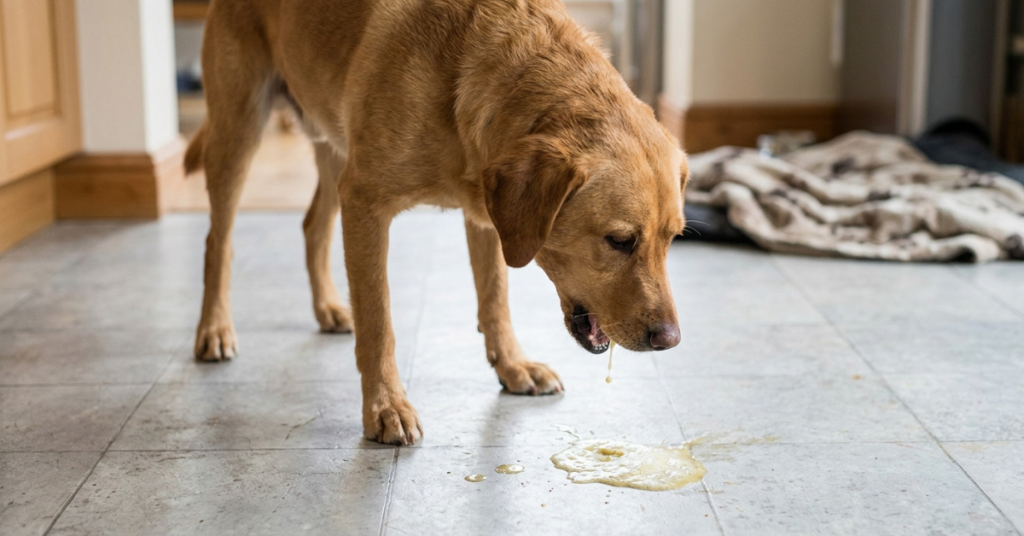
Finding a puddle of yellow vomit on the floor is worrying, especially when your dog seems perfectly fine one minute and sick the next. If you’re wondering, why is my dog throwing up yellow, the most common explanation is bile, a digestive fluid that helps break down fats. Dogs may vomit bile when their stomach is empty, but it can also happen because of digestive irritation, dietary problems, or an underlying illness.
The important thing is to look beyond the color. A single episode in an otherwise healthy, energetic dog may not indicate a serious problem, while repeated vomiting, weakness, abdominal pain, or an inability to keep water down can signal something that needs prompt veterinary attention.
This guide explains what yellow dog vomit means, the most common causes, what you can safely do at home, and when it’s time to call your veterinarian.
What Does Yellow Vomit Mean in Dogs?
Yellow vomit usually contains bile, a yellowish-green digestive fluid produced by the liver and stored in the gallbladder. Bile enters the small intestine to help digest fats and normally moves through the digestive system without being vomited.
However, when a dog’s stomach is empty or the digestive tract becomes irritated, bile can move backward into the stomach and trigger vomiting.
The appearance of the vomit can offer some clues:
- Bright yellow liquid: Often bile mixed with stomach fluid.
- Yellow foam: Usually bile mixed with saliva and air, sometimes appearing when the stomach is empty.
- Yellow mucus or slime: May be bile mixed with mucus from an irritated stomach.
- Yellow and white foam: Can occur when bile mixes with saliva or frothy stomach fluid.
- Yellow-green liquid: May contain bile, but color alone cannot establish the cause.
Yellow vomit doesn’t automatically mean your dog has a serious illness. Equally, it shouldn’t be dismissed if other symptoms are present.
Common Reasons Dogs Throw Up Yellow Bile
1. An Empty Stomach
One of the most common explanations is vomiting on an empty stomach. When a dog goes a long time without eating, bile and stomach secretions can irritate the stomach lining and trigger nausea.
This may explain why your dog vomits yellow liquid early in the morning or after going many hours between meals.
If your dog is otherwise healthy, eats normally, and has only occasional episodes, your veterinarian may consider a condition called bilious vomiting syndrome. It is associated with bile reflux and often occurs after a prolonged period without food.
What may help: Ask your veterinarian whether smaller, more frequent meals or a small bedtime meal would be appropriate. This can help some dogs, but recurrent vomiting should not automatically be attributed to an empty stomach.
2. Eating Something Unusual
Dogs investigate the world with their mouths, and their stomachs don’t always appreciate it. Eating table scraps, spoiled food, garbage, grass, or a sudden change in diet can upset the digestive system.
Possible accompanying symptoms include:
- Reduced appetite
- Lip licking or excessive swallowing
- Soft stools or diarrhea
- Temporary nausea
- Vomiting after meals
If your dog may have eaten a toy, bone, toxic plant, medication, or another dangerous substance, contact a veterinarian immediately. Don’t wait for additional symptoms or attempt to induce vomiting unless a veterinary professional specifically instructs you to do so.
3. Gastroenteritis or Stomach Irritation
Gastroenteritis refers to inflammation of the stomach and intestines. It can develop after dietary indiscretion, infections, parasites, or other irritants.
Dogs with gastroenteritis may vomit yellow fluid, food, or foam. Diarrhea, appetite changes, tiredness, and abdominal discomfort may also occur.
Mild digestive irritation sometimes improves with veterinary-guided care, but persistent vomiting can lead to dehydration and may be a sign of a more serious condition.
4. Food Intolerance or a Sudden Diet Change
Switching foods too quickly, eating rich treats, or reacting poorly to a particular ingredient can upset a dog’s digestive system.
If vomiting happens repeatedly after eating a particular food, keep a record of meals, treats, and symptoms. Your veterinarian can help determine whether a gradual diet transition, a carefully selected diet, or further testing is needed.
Don’t assume a food allergy is the cause based on vomiting alone. Food allergies and intolerances can have overlapping symptoms, and other medical explanations must be considered.
5. Intestinal Parasites
Roundworms, hookworms, and certain other intestinal parasites can cause digestive symptoms, particularly in puppies and dogs without regular parasite prevention.
Possible signs include vomiting, diarrhea, weight loss, a poor coat, or a change in appetite. Some infected dogs show very few obvious symptoms.
A veterinarian may recommend a fecal examination and appropriate parasite treatment based on your dog’s age, history, and symptoms.
6. Pancreatitis
The pancreas produces enzymes that help digest food. When this organ becomes inflamed, a condition known as pancreatitis, dogs may experience significant nausea and vomiting.
Other possible symptoms include abdominal pain, a hunched posture, lethargy, loss of appetite, and diarrhea. Some dogs develop pancreatitis after eating high-fat foods, although it can occur for other reasons as well.
Repeated vomiting accompanied by pain or marked weakness warrants urgent veterinary assessment.
7. Liver, Gallbladder, or Other Systemic Problems
Yellow vomit is not, by itself, proof of liver disease. However, disorders affecting the liver, gallbladder, kidneys, hormones, or other organs can sometimes cause nausea and vomiting.
Additional signs may include increased thirst, changes in urination, weight loss, persistent appetite changes, or yellowing of the whites of the eyes and gums.
Yellow vomit and yellow skin or eyes are not the same thing. If your dog’s eyes or gums appear yellow, seek prompt veterinary care because jaundice can indicate a serious underlying problem.
8. Intestinal Blockage or Another Emergency
A swallowed sock, toy, bone fragment, or other object can obstruct the digestive tract. A blockage may cause repeated vomiting, appetite loss, abdominal discomfort, and reduced stool production.
Some dogs initially vomit yellow bile because little food remains in the stomach. Passing stool does not completely rule out a blockage.
If you suspect your dog swallowed a foreign object, seek veterinary care urgently. An obstruction can become life-threatening, and waiting for it to pass naturally may be dangerous.
Why Is My Dog Throwing Up Yellow Foam?
Yellow foam often appears when a dog vomits bile mixed with saliva and air. It may occur after an overnight fast or when the stomach is relatively empty.
However, foamy vomit can also accompany stomach inflammation, pancreatitis, infections, or an intestinal obstruction.
Pay attention to what happens before and after the episode:
- Did your dog vomit once or several times?
- Was the vomiting early in the morning or after a meal?
- Is your dog eating, drinking, and behaving normally?
- Is there diarrhea, abdominal pain, or unusual tiredness?
A single episode in a dog that quickly returns to normal may be less concerning than repeated vomiting. If the foam is accompanied by unsuccessful retching and a swollen abdomen, seek emergency veterinary care immediately, as these can be signs of bloat.
Why Is My Dog Throwing Up Yellow Liquid or Mucus?
Yellow liquid generally suggests bile mixed with other digestive fluids. Mucus may make the vomit look thick, slippery, or stringy.
These appearances are not specific enough to diagnose the cause. An empty stomach is one possibility, but digestive inflammation, dietary problems, parasites, and more serious illnesses can produce similar symptoms.
If the vomiting continues, take a photograph of the vomit if practical and note its appearance, frequency, and any other symptoms. This information may help your veterinarian assess the situation.
Why Is My Dog Throwing Up Yellow in the Morning?
Morning vomiting may occur when a dog has gone many hours without food overnight. In some dogs, the pattern is consistent with bilious vomiting syndrome.
Clues that may support this possibility include:
- Vomiting yellow fluid before breakfast
- Otherwise normal behavior and energy
- Normal appetite after the episode
- No persistent diarrhea or other concerning symptoms
- Episodes that repeatedly occur after a long gap between meals
These clues are not enough to confirm the diagnosis. If morning vomiting is frequent or new, arrange a veterinary appointment to rule out other causes.
If your veterinarian agrees that prolonged fasting may be contributing, they may recommend adjusting meal timing, splitting the daily food allowance into smaller meals, or offering a small meal before bedtime.
Why Is My Dog Throwing Up Yellow and Not Eating?
Vomiting alongside a loss of appetite deserves more attention than an isolated episode in a dog that continues eating normally.
Possible explanations include nausea, gastroenteritis, pancreatitis, infection, pain, a foreign-body obstruction, or another underlying illness.
Contact your veterinarian promptly if your dog refuses food after vomiting, especially if the symptoms continue or your dog is unusually quiet. Puppies, senior dogs, very small dogs, and dogs with existing medical conditions may need earlier assessment because they can deteriorate more quickly.
Don’t force-feed your dog or give human nausea medicines without veterinary guidance. If your dog also cannot keep water down, seek urgent veterinary care.
Why Is My Dog Throwing Up Yellow and Having Diarrhea?
Vomiting and diarrhea together can occur with dietary indiscretion, intestinal parasites, infections, and gastrointestinal inflammation. They can also accompany more serious problems, including pancreatitis, poisoning, or an intestinal obstruction.
The main concern is dehydration, particularly when fluid is being lost through both vomiting and diarrhea.
Watch for:
- Weakness or unusual lethargy
- Dry or sticky gums
- Reduced urination
- Blood in vomit or stool
- Repeated vomiting
- Abdominal pain or a swollen abdomen
Seek prompt veterinary advice when both symptoms occur together. Blood, severe weakness, collapse, significant pain, or repeated vomiting requires urgent assessment. Puppies that are not fully vaccinated need particular care because parvovirus can cause severe vomiting and diarrhea.
What Should I Do If My Dog Throws Up Yellow?
Your response should depend on how often your dog vomits and how well they feel afterward.
Step 1: Check for Emergency Symptoms
Seek emergency veterinary care if your dog has any of the following:
- A swollen or painful abdomen
- Repeated retching with little or nothing coming up
- Collapse, severe weakness, or difficulty breathing
- Blood in the vomit or vomit that resembles coffee grounds
- Suspected poisoning or swallowed foreign objects
- Repeated vomiting with an inability to keep water down
- Pale gums, severe dehydration, or marked distress
Don’t wait to see whether these signs improve.
Step 2: Offer Water Carefully
If your dog is alert and has vomited only once, allow access to small amounts of water rather than encouraging them to gulp a large quantity at once.
If even small amounts trigger more vomiting, contact a veterinarian urgently. Don’t force water into your dog’s mouth.
Step 3: Review Food and Recent Activities
Consider whether your dog has eaten a new food, rich treats, garbage, grass, or something unusual. Check whether they could have accessed medications, cleaning products, toxic plants, or small objects.
Keep any packaging or product information if poisoning is possible, and share it with the veterinary team.
Step 4: Contact Your Veterinarian About Feeding
For an otherwise healthy adult dog with one isolated episode and no other symptoms, your veterinarian may advise monitoring and offering a small portion of an easily tolerated, appropriate food once vomiting has settled.
Avoid automatically fasting every vomiting dog, especially puppies, toy breeds, diabetic dogs, frail seniors, or dogs with other medical conditions. Prolonged fasting can be inappropriate for these animals.
If vomiting repeats, appetite does not return, or other symptoms develop, seek veterinary advice rather than repeatedly trying home remedies.
Step 5: Keep a Symptom Record
Write down:
- When the vomiting started
- How many times it occurred
- Whether it happened before or after eating
- Whether the vomit contained foam, food, blood, or foreign material
- Any changes in appetite, drinking, urination, or stool
- Any possible exposure to unusual foods, medications, or objects
This record can help your veterinarian identify patterns and determine which tests may be appropriate.
How Do Veterinarians Diagnose Yellow Vomiting?
A veterinarian will consider your dog’s age, medical history, diet, vaccination and parasite-prevention status, physical examination, and the frequency of vomiting.
Depending on the findings, diagnostic tests may include:
- Blood tests: To assess hydration, electrolytes, organ function, and signs of systemic illness.
- Fecal testing: To investigate intestinal parasites or certain infections.
- Abdominal X-rays: To look for some foreign objects, obstruction patterns, or other abdominal abnormalities.
- Ultrasound: To examine abdominal organs and investigate possible inflammation or obstruction.
- Additional targeted tests: For suspected pancreatitis, endocrine disease, or other specific conditions.
Not every dog needs every test. The veterinarian chooses an appropriate diagnostic approach based on the clinical picture.
How Is Yellow Vomiting Treated?
Treatment depends on the underlying cause rather than the color of the vomit.
For relatively mild digestive upset, a veterinarian may recommend a suitable diet, feeding adjustments, and monitoring. If dehydration is present, fluid therapy may be necessary.
Other treatments can include prescribed anti-nausea medication, parasite treatment, or specific therapy for an underlying disease. A foreign-body obstruction may require endoscopy or surgery, depending on its location and severity.
Never give your dog human medications, leftover prescriptions, or home remedies without veterinary approval. Some products that are safe for people can be dangerous to dogs, and suppressing vomiting without investigating its cause may delay essential treatment.
How Can You Help Prevent Future Episodes?
Not every cause of vomiting is preventable, but a few practical steps can reduce some common triggers.
- Keep meals consistent. Ask your veterinarian whether smaller, more frequent meals may help if vomiting regularly occurs after overnight fasting.
- Transition foods gradually. Introduce a new diet over several days or according to your veterinarian’s instructions.
- Limit access to garbage. Secure bins, food scraps, and compost.
- Keep dangerous objects out of reach. Socks, toys, bones, and other swallowed items can cause serious obstructions.
- Avoid sudden rich or fatty treats. These may trigger digestive upset in susceptible dogs.
- Maintain parasite prevention. Follow your veterinarian’s recommendations for deworming and parasite screening.
- Arrange regular checkups. Recurring vomiting deserves investigation even when your dog appears normal between episodes.
Frequently Asked Questions
1. Is yellow vomit normal for dogs?
Yellow vomit can occur when a dog brings up bile on an empty stomach. One isolated episode in an otherwise healthy dog may not be an emergency, but repeated vomiting or additional symptoms should be assessed by a veterinarian.
2. Should I be worried if my dog throws up yellow foam?
Yellow foam often consists of bile mixed with saliva and air. It may be related to an empty stomach, but repeated episodes, weakness, pain, or appetite loss require veterinary attention.
3. Why does my dog vomit yellow bile but act normal afterward?
Some dogs experience occasional bile vomiting after going too long without eating. However, acting normally afterward doesn’t completely rule out a medical problem, especially if the episodes keep happening.
4. Should I feed my dog after yellow vomiting?
It depends on the dog’s age, health, symptoms, and whether the vomiting has stopped. A veterinarian may recommend a small portion of suitable food for a healthy adult dog after an isolated episode, but puppies and dogs with medical conditions may need different advice.
5. Can an empty stomach cause yellow vomiting?
Yes. Bile-related vomiting can occur after a prolonged gap between meals. If it happens regularly, a veterinarian can assess whether bilious vomiting syndrome or another condition may be responsible.
6. When should I take my dog to the vet for yellow vomit?
Seek urgent care for repeated vomiting, inability to retain water, blood, abdominal swelling, severe pain, collapse, or suspected poisoning or obstruction. Contact your veterinarian promptly if vomiting continues, your dog stops eating, or diarrhea and lethargy develop.
7. Can yellow vomit mean my dog has liver disease?
Not necessarily. Bile gives vomit its yellow color, but that color alone does not diagnose liver disease. Yellowing of the eyes, gums, or skin is a separate warning sign that requires prompt veterinary assessment.
8. Why does my puppy throw up yellow liquid?
Puppies may vomit because of parasites, dietary problems, infections, swallowed objects, or other illnesses. They can become dehydrated or develop low blood sugar more quickly than healthy adult dogs, so contact a veterinarian promptly rather than relying on home treatment.
9. What if my dog throws up yellow and has diarrhea?
Both symptoms can result from digestive irritation, parasites, infections, or more serious conditions. Contact a veterinarian promptly, and seek urgent care if your dog is weak, has blood in the stool or vomit, appears painful, or cannot keep water down.
10. Can I give my dog medicine for vomiting?
Don’t give human anti-nausea medicines, painkillers, or other medications unless a veterinarian specifically recommends them. The correct treatment depends on the cause of vomiting, your dog’s size, and their medical history.
Conclusion
If you’re asking why your dog is throwing up yellow, bile from an empty stomach is one possible explanation, particularly when vomiting happens early in the morning. However, dietary indiscretion, gastrointestinal irritation, parasites, pancreatitis, and intestinal obstruction can produce similar symptoms.
Pay attention to how often your dog vomits, whether they are eating and drinking normally, and whether other symptoms appear. A single episode in an otherwise healthy adult dog may be less concerning, but recurring vomiting, appetite loss, diarrhea, abdominal pain, or weakness deserves veterinary attention.
When in doubt, contact your veterinarian instead of relying on the color of the vomit alone. Early assessment can help identify the cause and get your dog the right treatment sooner.