
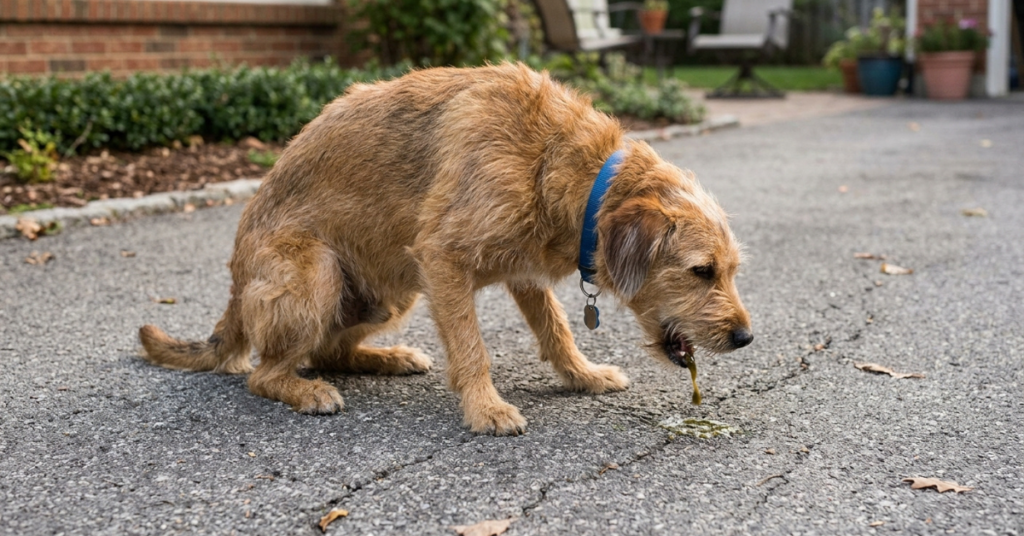
Finding a puddle of vomit on the floor is never a pleasant surprise, especially when your dog looks uncomfortable or refuses to eat afterward. If you’re wondering, why is my dog throwing up?, the answer can range from something relatively minor, such as eating too quickly, to a medical condition that needs immediate veterinary attention.
Dogs vomit for many reasons, including dietary changes, eating something they shouldn’t, stomach irritation, intestinal parasites, infections, and problems affecting their organs. The appearance of the vomit, how frequently it happens, and your dog’s behavior afterward can offer useful clues, but they cannot confirm a diagnosis on their own.
This guide explains the most common causes of vomiting in dogs, what different colors and textures may indicate, how to respond safely at home, and when your dog needs veterinary care.
Why Is My Dog Throwing Up? Common Causes
Occasional vomiting can happen even in otherwise healthy dogs. However, repeated vomiting or vomiting accompanied by other symptoms deserves closer attention.
Here are some of the most common explanations.
1. Eating Too Quickly
Some dogs practically inhale their meals. Eating too fast can cause them to bring up recently swallowed food, sometimes shortly after finishing a meal.
This may be more likely if your dog eats enthusiastically, competes with other pets for food, or becomes excited around mealtimes.
What may help:
- Try a slow-feeder bowl.
- Offer smaller, more frequent meals if your veterinarian recommends them.
- Feed your dog in a quiet area away from other pets.
If the problem happens repeatedly, ask your vet whether the episodes are vomiting or regurgitation, since the two have different causes.
2. Eating Something That Upsets the Stomach
Dogs explore the world with their mouths, and that curiosity can lead to stomach trouble. Table scraps, garbage, spoiled food, sudden diet changes, and unfamiliar treats may trigger vomiting.
Some human foods are also dangerous for dogs. Chocolate, grapes, raisins, onions, garlic, and products containing xylitol can cause serious health problems. Swallowing bones, toys, fabric, or other foreign objects may lead to an intestinal blockage.
If you suspect your dog has eaten a toxic substance or swallowed an object, contact a veterinarian immediately. Don’t wait for symptoms to appear or try to make your dog vomit unless a veterinary professional specifically instructs you to do so.
3. Food Intolerance or Dietary Changes
A new food, rich treats, fatty leftovers, or an ingredient that doesn’t agree with your dog may cause digestive upset. Some dogs also develop adverse reactions to particular food ingredients.
Vomiting that repeatedly follows the same food, especially when accompanied by diarrhea, gas, itching, or skin problems, warrants a veterinary assessment.
Avoid switching foods repeatedly in an attempt to solve the problem. Your veterinarian can help determine whether a gradual diet change, a carefully selected diet, or further testing is appropriate.
4. Stomach Infections and Parasites
Bacterial or viral infections and intestinal parasites can irritate the digestive system. Depending on the cause, your dog may also develop diarrhea, reduced appetite, tiredness, abdominal discomfort, or fever.
Puppies and dogs with incomplete vaccinations can be particularly vulnerable to serious infections such as canine parvovirus. A puppy that is vomiting and has diarrhea, especially bloody diarrhea, needs urgent veterinary evaluation.
5. Stress or Anxiety
Changes in routine, travel, boarding, loud noises, and unfamiliar environments can affect some dogs’ digestion. Stress may contribute to nausea, reduced appetite, or vomiting.
Still, don’t automatically blame anxiety when vomiting occurs. Physical illnesses can produce similar signs, so persistent or recurring episodes should be investigated.
6. Underlying Medical Conditions
Vomiting may also be associated with conditions affecting the pancreas, liver, kidneys, stomach, or intestines. Hormonal disorders and certain medications can cause digestive symptoms, too.
These conditions are more concerning when vomiting is persistent or accompanied by weight loss, increased thirst, changes in urination, weakness, or a noticeable decline in energy.
Only a veterinarian can determine the underlying cause, sometimes using blood tests, stool testing, X-rays, ultrasound, or other examinations.
What Does Your Dog’s Vomit Look Like?
The color and texture of vomit can provide clues about what is happening, but appearance alone is not enough to identify the cause. The following sections explain common patterns and when they deserve attention.
Why Is My Dog Throwing Up Yellow Liquid?
Yellow vomit often contains bile, a digestive fluid produced by the liver. It may appear when a dog’s stomach is empty, including after a long interval between meals.
However, yellow vomit can also occur with stomach irritation, dietary problems, pancreatitis, intestinal obstruction, and other illnesses.
If your dog vomits yellow liquid once but otherwise behaves normally, monitor closely and contact your vet if the problem recurs. Repeated vomiting, abdominal pain, weakness, or an inability to keep water down requires prompt veterinary attention.
Why Is My Dog Throwing Up Yellow Foam?
Yellow foam generally consists of bile mixed with stomach fluid and air. It can occur when the stomach is empty or irritated.
Some dogs experience occasional early-morning vomiting after going many hours without eating. Your veterinarian may recommend adjusting meal timing if this pattern fits your dog’s history and other causes have been ruled out.
Don’t assume recurring yellow foam is harmless, especially if your dog also has diarrhea, reduced appetite, lethargy, or signs of pain.
Why Is My Dog Throwing Up White Foam?
White foam can develop when saliva, stomach fluid, and air mix during vomiting. It may accompany nausea, an empty stomach, acid reflux, or irritation of the digestive tract.
In some cases, white foam is actually associated with coughing or gagging rather than vomiting. Respiratory problems and serious emergencies can sometimes look similar at first.
Seek emergency veterinary care if your dog repeatedly produces foam while retching without bringing anything up, especially if the abdomen looks swollen or the dog seems restless, weak, or distressed. These can be signs of bloat, a life-threatening condition.
Why Is My Dog Throwing Up Blood?
Blood in vomit is never something to ignore. It may appear bright red, as dark streaks, or as material resembling coffee grounds.
Possible causes include stomach ulcers, severe inflammation, swallowed blood, a foreign object, poisoning, clotting disorders, and other serious conditions.
Contact a veterinarian immediately if you see blood in your dog’s vomit. Seek emergency care if the bleeding is substantial, the vomit resembles coffee grounds, or your dog has pale gums, weakness, collapse, or black, tarry stools.
Do not give human painkillers or stomach medicines unless your veterinarian specifically prescribes them.
Why Is My Dog Throwing Up Undigested Food?
When a dog brings up food that looks almost unchanged, the timing and way it happens matter.
If the food comes out passively, without obvious abdominal contractions or retching, it may be regurgitation rather than vomiting. Regurgitation can be associated with eating too quickly or problems involving the esophagus.
True vomiting usually involves nausea, abdominal contractions, and forceful expulsion. Undigested food may appear when a dog vomits shortly after eating, but recurring episodes need investigation.
Why Is My Dog Throwing Up Undigested Food Hours Later?
Food appearing several hours after a meal can sometimes indicate delayed stomach emptying or an obstruction. Other digestive disorders may produce a similar pattern.
Pay attention to how long after eating the episode occurs, whether your dog is losing weight, and whether appetite and bowel movements have changed.
Repeated episodes of vomiting undigested food hours after meals should be assessed by a veterinarian promptly. Seek emergency care if your dog is in pain, has a swollen abdomen, repeatedly retches, or cannot keep water down.
Why Is My Dog Throwing Up His Food?
Bringing up a meal can result from eating too fast, overeating, dietary changes, stomach irritation, or an underlying digestive problem.
If it happens once and your dog remains comfortable and alert, monitor for further symptoms. If it happens after most meals, occurs alongside weight loss, or prevents your dog from keeping food and water down, arrange a veterinary examination.
Why Is My Dog Throwing Up Clear Liquid?
Clear liquid may consist of water, saliva, or stomach secretions. It can appear when a dog has an empty stomach, feels nauseated, or has been drinking and then vomits.
The liquid’s appearance doesn’t reveal whether the underlying cause is mild or serious. Repeated clear-liquid vomiting can occur with gastrointestinal illness, poisoning, or an intestinal blockage.
Why Is My Dog Throwing Up Clear Foamy Liquid?
Clear, foamy vomit often contains saliva and stomach fluid mixed with air. Nausea, an empty stomach, or digestive irritation may be responsible.
However, repeated foamy vomiting, excessive drooling, difficulty breathing, weakness, or unsuccessful attempts to vomit need urgent assessment. If you aren’t sure whether your dog is vomiting or coughing up foam, describe the episode to your vet or record a short video if doing so is safe.
Why Is My Dog Throwing Up Water?
Dogs sometimes vomit shortly after drinking, particularly if they gulp down a large amount of water. Nausea or digestive irritation can also make it difficult to keep liquids down.
If your dog repeatedly vomits after drinking, don’t simply keep offering large bowls of water or force fluids into its mouth. Contact a veterinarian promptly because dehydration can develop, and the underlying cause may require treatment.
Why Is My Dog Throwing Up Bile?
Bile is a yellowish digestive fluid that may enter the stomach and be expelled during vomiting. It is often seen when the stomach is empty, but bile can also appear with several digestive and systemic conditions.
A veterinarian may consider meal timing, dietary history, medications, and other symptoms when evaluating the cause. Recurring bile vomiting should not be treated as normal without investigating why it happens.
Why Is My Dog Throwing Up and Having Diarrhea?
Vomiting and diarrhea together suggest that more than one part of the digestive system may be affected. Possible causes include dietary indiscretion, infections, parasites, food-related reactions, toxins, and inflammatory conditions.
The combination can lead to dehydration, particularly in puppies, older dogs, and dogs with existing medical problems.
Seek veterinary advice promptly if both symptoms occur together, and seek emergency care for blood in the vomit or stool, severe weakness, abdominal pain, repeated vomiting, or an inability to retain water.
Why Is My Dog Throwing Up So Much?
Frequent vomiting is more concerning than a single isolated episode. It may occur with poisoning, obstruction, severe gastrointestinal disease, pancreatitis, infections, or other medical conditions.
Repeated vomiting can quickly cause dehydration and electrolyte imbalances. If your dog vomits multiple times over a short period, contact your veterinarian urgently rather than waiting to see whether it settles.
When Is Dog Vomiting an Emergency?
Not every episode requires an emergency visit, but certain symptoms should never be ignored. The most important factors are how often your dog vomits, whether other symptoms are present, and whether a toxin or foreign object may have been swallowed.
Seek emergency veterinary care immediately if your dog has:
-
Repeated retching without producing vomit, especially with a swollen abdomen.
-
Blood in the vomit or vomit resembling coffee grounds.
-
Difficulty breathing, collapse, seizures, or extreme weakness.
-
Severe abdominal pain or a visibly swollen belly.
-
Suspected poisoning or swallowing of a potentially dangerous object.
-
Repeated vomiting with an inability to retain water.
Contact your veterinarian promptly if:
-
Vomiting happens repeatedly or continues over several hours.
-
Your dog also has diarrhea, fever, reduced appetite, or unusual tiredness.
-
Vomiting keeps returning over several days or is associated with weight loss.
-
Your dog is a young puppy, an elderly dog, or has an existing medical condition.
Bloat, also called gastric dilatation-volvulus (GDV), is particularly dangerous because the stomach can expand and twist. Repeated unproductive retching, restlessness, drooling, and abdominal swelling are major warning signs. Do not wait for all these symptoms to appear before seeking help.
What to Do at Home When Your Dog Vomits
If your dog vomits once, is alert, behaves normally, and has no warning signs, careful observation may be reasonable. However, home care is appropriate only when a serious cause is not suspected.
Follow these steps.
1. Check Your Dog’s Overall Condition
Look beyond the vomit itself. Is your dog alert and responsive? Are the gums their usual pink color? Is your dog walking normally, breathing comfortably, and showing interest in its surroundings?
Note any abdominal swelling, unusual drooling, diarrhea, weakness, or repeated attempts to vomit. These observations help you decide how urgently veterinary attention is needed.
2. Remove Access to Potential Hazards
Keep your dog away from garbage, leftovers, chemicals, medications, plants, and small objects. If you suspect poisoning, save the packaging or take a photograph of the substance if you can do so safely.
Contact a veterinarian or emergency veterinary service immediately. Do not induce vomiting or administer home remedies unless instructed by a veterinary professional.
3. Offer Water Carefully
Vomiting can cause fluid loss, so hydration matters. If your dog is alert and vomiting has stopped, offer small amounts of water frequently rather than allowing it to gulp down a large quantity at once.
If even small amounts trigger more vomiting, seek veterinary advice promptly. Do not force water into your dog’s mouth, and do not withhold water for an extended period without veterinary direction.
4. Be Careful About Feeding
There is no single feeding plan suitable for every vomiting dog. The right approach depends on the dog’s age, medical history, symptoms, and suspected cause.
For a healthy adult dog with one mild episode, a veterinarian may recommend a short period of digestive rest followed by small portions of an easily digested diet. Puppies, very small dogs, diabetic dogs, and dogs with other medical conditions may need a different approach.
Avoid prolonged fasting without veterinary advice, particularly for vulnerable animals.
5. Record What Happened
A few simple details can help your veterinarian identify the cause:
-
The time vomiting started and how many times it occurred.
-
Whether it happened before or after eating or drinking.
-
The vomit’s color, texture, and contents.
-
Any recent diet changes, new treats, medications, or possible toxin exposure.
-
Other symptoms, including diarrhea, coughing, pain, or unusual behavior.
A photograph or short video can also be useful if it is safe to capture one.
How Do Veterinarians Diagnose Vomiting in Dogs?
A veterinarian will usually start by asking about your dog’s symptoms, diet, medications, vaccination status, and possible exposure to toxins or foreign objects. A physical examination helps assess hydration, abdominal discomfort, and overall condition.
Depending on the findings, diagnostic tests may include:
-
Blood tests: Check organ function, blood cell counts, and signs of certain systemic illnesses.
-
Urine tests: Help assess hydration and investigate kidney or metabolic problems.
-
Fecal tests: Look for intestinal parasites and, where appropriate, infectious causes.
-
X-rays: Help identify some swallowed objects, intestinal obstructions, and other abdominal abnormalities.
-
Ultrasound: Provides a closer look at abdominal organs and the digestive tract.
Not every dog needs every test. The veterinarian chooses an appropriate diagnostic plan based on the symptoms and examination findings.
How Is Vomiting in Dogs Treated?
Treatment depends on the underlying cause rather than the color of the vomit alone.
For mild digestive upset, a veterinarian may recommend an appropriate diet and monitoring. More serious cases may require fluids to correct dehydration, prescription anti-nausea medication, treatment for parasites or infection, or additional procedures.
If an obstruction, poisoning, or another emergency is responsible, prompt and sometimes intensive treatment may be necessary. Dogs with severe dehydration or certain underlying conditions may need hospital care.
Never give your dog human anti-nausea medicines, painkillers, antacids, or other medications without veterinary guidance. Some medications can be harmful to dogs, and suppressing vomiting without identifying the cause may delay necessary treatment.
Frequently Asked Questions About Dog Vomiting
1. Should I be worried if my dog throws up once?
Not necessarily. A single episode in an otherwise healthy adult dog that remains alert and comfortable may be caused by a temporary stomach upset. Monitor your dog closely, but contact a veterinarian if vomiting returns or any concerning symptoms develop.
2. Why does my dog vomit yellow liquid in the morning?
Yellow liquid often contains bile, which may accumulate in the stomach when it has been empty for several hours. However, recurring morning vomiting can also have other causes. Discuss the pattern with your veterinarian before assuming that changing meal times will solve it.
3. Why is my dog vomiting white foam but acting normally?
White foam may contain saliva and stomach secretions produced during nausea or retching. An isolated episode may not indicate a serious illness, but repeated foamy vomiting needs assessment. Unproductive retching accompanied by abdominal swelling is an emergency.
4. Can stress cause a dog to vomit?
Yes, stress and anxiety may contribute to digestive upset in some dogs. Nevertheless, vomiting should not automatically be attributed to stress, particularly when it is frequent, persistent, or accompanied by other symptoms.
5. Why does my dog throw up immediately after eating?
Eating too quickly, overeating, or digestive irritation can cause food to come back up soon after a meal. If the food returns effortlessly without abdominal contractions, it may be regurgitation rather than vomiting. Repeated episodes warrant veterinary evaluation.
6. Is it normal for dogs to vomit undigested food hours after eating?
No recurring pattern of vomiting should be considered normal without investigation. Undigested food appearing hours after a meal can be associated with delayed stomach emptying or an obstruction, among other conditions. Arrange a veterinary examination, especially if other symptoms are present.
7. What should I feed my dog after vomiting?
That depends on your dog’s age, medical history, and the reason for vomiting. A veterinarian may recommend small portions of an easily digested diet once vomiting has stopped. Avoid rich foods, table scraps, sudden diet changes, and prolonged fasting without professional guidance.
8. Can dehydration occur when a dog vomits?
Yes. Vomiting causes fluid and electrolyte loss, and a nauseated dog may struggle to drink enough to compensate. Signs of dehydration can include tacky or dry gums, weakness, and reduced urination, although these signs are not always easy to identify at home. Repeated vomiting or an inability to retain water needs prompt veterinary attention.
9. Should I make my dog vomit if it eats something dangerous?
No, not unless a veterinarian specifically instructs you to do so. Inducing vomiting can cause additional harm depending on what was swallowed and your dog’s condition. Contact a veterinary professional immediately and provide details about the substance or object.
10. When should I take my dog to the vet for vomiting?
Seek emergency care for blood in the vomit, suspected poisoning, a swollen abdomen with repeated retching, collapse, severe pain, or difficulty breathing. Contact your veterinarian promptly for repeated vomiting, an inability to keep water down, vomiting with diarrhea or lethargy, or symptoms affecting a puppy or medically vulnerable dog.
Conclusion: Understanding Why Your Dog Is Throwing Up
If you’re trying to understand why your dog is throwing up, remember that the cause can range from eating too quickly to a potentially serious digestive or systemic illness. The color and texture of the vomit may offer useful clues, but your dog’s behavior, the frequency of episodes, and any accompanying symptoms are equally important.
A single episode in a healthy, otherwise normal adult dog may be suitable for careful monitoring. Repeated vomiting, blood, abdominal swelling, weakness, suspected poisoning, or an inability to keep water down calls for prompt veterinary attention.
Pay attention to changes in your dog’s eating habits, keep potentially dangerous foods and objects out of reach, and seek professional advice when something doesn’t seem right. If your dog is vomiting now and you’re uncertain about the severity, contacting a veterinarian is the safest next step.
For more practical pet-care guidance, explore related articles on dog digestive health, safe foods for dogs, dehydration warning signs, and common canine illnesses.