
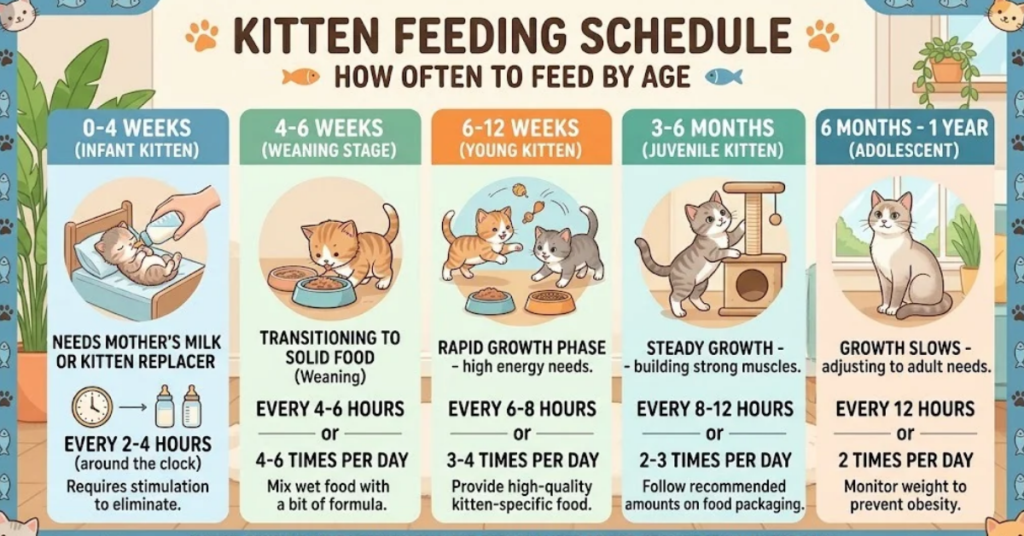
A good kitten feeding schedule is essential for healthy growth, strong immunity, proper digestion, and steady weight gain. Unlike adult cats, kittens need frequent meals because their little bodies are developing quickly and require plenty of energy throughout the day.
The ideal Kitten Feeding Schedule depends on your kitten’s age, weight, health, and whether they are drinking their mother’s milk, kitten milk replacer, or eating solid food. A newborn kitten may need feeding every two to three hours, while a six-month-old kitten can usually manage three meals daily.
The guide below explains how often to feed kittens at different ages, how much food they need, when to introduce wet and dry food, and how to build a practical daily feeding routine.
A kitten’s nutritional needs change significantly during its first year. Newborns depend entirely on milk, while older kittens gradually transition to wet and dry kitten food.
Here is a practical age-based feeding guide.
1. Newborn Kittens (0–1 Week)
Newborn kittens have very small stomachs and cannot go long without food. During the first week, they generally need feeding every two hours, including overnight, if they are not nursing from their mother.
Feeding recommendations:
- Feed mother’s milk whenever available.
- Use commercial kitten milk replacer if the mother is unavailable or cannot nurse.
- Follow the formula manufacturer’s mixing and feeding instructions.
- Keep kittens warm before feeding.
- Monitor their weight and overall condition daily.
Newborn kittens should never be given ordinary cow’s milk as a replacement for mother’s milk. It does not provide the appropriate nutritional balance and may cause digestive problems.
2. Kittens (1–2 Weeks)
During the second week, kittens continue growing rapidly and still depend entirely on milk.
Feeding schedule: Approximately every 2–3 hours, including overnight.
At this stage:
- Continue mother’s milk or kitten milk replacer.
- Feed according to the kitten’s weight and the formula instructions.
- Check for steady weight gain.
- Keep feeding equipment clean and properly sterilized.
Kittens should become more active as their eyes and ears continue developing.
3. Kittens (2–3 Weeks)
At two to three weeks, kittens become more alert and start exploring their surroundings. Their nutritional requirements remain high, so milk should still be their primary food.
Feeding schedule: Approximately every 3–4 hours.
Continue feeding kitten milk replacer when necessary. Do not rush the introduction of solid food simply because the kitten is becoming more active.
4. Kittens (3–4 Weeks)
Around three to four weeks, many kittens begin showing interest in their mother’s food. This is generally when the gradual weaning process can begin.
Feeding schedule: Milk feeds approximately every 4–5 hours, depending on the kitten’s needs.
You can start offering a small amount of soft kitten food mixed with kitten milk replacer to create a smooth, easy-to-eat consistency.
Helpful tips:
- Use a shallow dish.
- Choose food specifically formulated for kittens.
- Keep fresh drinking water available as the kitten begins eating solids.
- Allow the kitten to explore the food at its own pace.
Some kittens take longer to become comfortable with solid food, so patience is important.
5. Kittens (4–5 Weeks)
At four to five weeks, kittens gradually become more comfortable eating from a dish.
Feeding schedule: Approximately 4–5 small meals throughout the day, alongside continued nursing or formula as needed.
Offer a soft mixture of wet kitten food and kitten milk replacer. Gradually reduce the amount of added formula as the kitten learns to eat independently.
Watch for:
- Improved interest in solid food.
- Consistent weight gain.
- Normal stool consistency.
- Increased activity and playfulness.
6. Kittens (6–8 Weeks)
By six to eight weeks, most kittens are eating solid food regularly. They are usually close to completing the weaning process, although some may need additional time.
Feeding schedule: 3–4 small meals per day.
At this stage, you can offer:
- Complete and balanced wet kitten food.
- Dry kitten food softened with warm water if necessary.
- Fresh, clean drinking water.
Choose food labeled as complete and balanced for kitten growth. Avoid adult cat food as the primary diet because growing kittens have different nutritional requirements.
7. Kittens (2–3 Months)
Kittens between two and three months are energetic and growing quickly. They need regular meals containing sufficient protein, fat, vitamins, and minerals.
Feeding schedule: 3–4 meals per day.
You can feed a combination of wet and dry kitten food, provided both are nutritionally complete and suitable for their age.
For example:
- Morning: Wet kitten food.
- Midday: Dry kitten food.
- Afternoon: Wet kitten food.
- Evening: Dry or wet kitten food.
Adjust the portion sizes according to the food’s calorie content and your kitten’s weight.
8. Kittens (3–6 Months)
Between three and six months, kittens become increasingly active and continue developing their muscles, bones, and coordination.
Feeding schedule: Around 3 meals per day.
A consistent routine helps prevent excessive hunger and makes it easier to monitor how much your kitten eats.
You can offer wet food, dry food, or a combination of both. Make sure the total daily amount meets your kitten’s nutritional needs rather than simply adding separate full portions of each type.
9. Kittens (6–12 Months)
From six months onward, kittens are approaching adulthood, although they still need food designed for growth.
Feeding schedule: Usually 2–3 meals per day.
Some kittens prefer three smaller meals, while others do well with two larger meals. The best approach depends on appetite, activity level, body condition, and veterinary recommendations.
Continue feeding a complete kitten diet until the appropriate transition to adult food, generally around 12 months. Some large breeds mature more slowly and may need a growth diet for longer.
Kitten Feeding Schedule Chart
For a quick reference, here’s an overview of how frequently kittens generally need to eat at different ages.
| Kitten Age | Recommended Feeding Frequency | Food Type |
| 0–1 week | Every 2 hours | Mother’s milk or kitten formula |
| 1–2 weeks | Every 2–3 hours | Mother’s milk or kitten formula |
| 2–3 weeks | Every 3–4 hours | Mother’s milk or kitten formula |
| 3–4 weeks | Every 4–5 hours | Milk, beginning weaning |
| 4–5 weeks | 4–5 meals daily | Milk and soft kitten food |
| 6–8 weeks | 3–4 meals daily | Wet or softened dry kitten food |
| 2–3 months | 3–4 meals daily | Complete kitten food |
| 3–6 months | 3 meals daily | Wet and/or dry kitten food |
| 6–12 months | 2–3 meals daily | Complete kitten food |
These are general guidelines, not rigid feeding rules. Nursing frequency, formula amounts, and meal portions should be adjusted according to individual needs and veterinary advice.
How Much Should You Feed a Kitten?
Knowing how often to feed a kitten is only part of the process. You also need to understand how much food your kitten requires.
The correct portion depends on several factors, including:
- Age and current body weight.
- Activity level.
- Growth rate.
- Food type and calorie content.
- Overall health and body condition.
A growing kitten generally needs more calories per pound of body weight than an adult cat. However, the exact amount can vary considerably between individual kittens.
Feeding Amounts for Newborn Kittens
Newborn kittens require carefully measured milk replacer when they cannot nurse from their mother.
The amount depends on body weight, age, and the calorie concentration of the formula. Always follow the feeding chart supplied with the specific product and consult a veterinarian if the kitten is underweight, weak, or struggling to feed.
Avoid estimating formula amounts using ordinary kitchen spoons or guessing based on appetite.
Feeding Amounts for Older Kittens
Once kittens start eating solid food, use the feeding guide on the food packaging as a starting point.
For accurate portions:
- Check your kitten’s current weight.
- Find the recommended daily amount on the food label.
- Divide the daily quantity into the appropriate number of meals.
- Monitor weight and body condition regularly.
- Adjust portions with veterinary guidance if necessary.
Remember that wet and dry foods have different calorie densities. A small amount of dry food can contain considerably more calories than the same weight of wet food.
Wet Food vs. Dry Food: Which Is Better for Kittens?
Both wet and dry kitten food can provide essential nutrients when they are complete and balanced for growth.
The best choice depends on your kitten’s preferences, hydration needs, health, and feeding routine.
Benefits of Wet Kitten Food
Wet food contains more moisture than dry food, which can help support hydration.
Other benefits include:
- Soft texture that is easier for young kittens to eat.
- Strong aroma that may encourage picky eaters.
- Convenient portioning in cans or pouches.
- Generally lower calorie density per gram than dry food.
Benefits of Dry Kitten Food
Dry kitten food is convenient and easy to store.
Its advantages include:
- Longer shelf life after opening.
- Easy portion measurement.
- Convenient use in puzzle feeders.
- Higher calorie concentration in a smaller quantity.
However, dry food should not replace access to fresh drinking water.
Can You Mix Wet and Dry Kitten Food?
Yes. You can feed both wet and dry food as part of a balanced kitten diet.
Just remember to calculate their combined calories. Feeding the full recommended amount of wet food and the full recommended amount of dry food can result in overfeeding.
How to Create a Daily Kitten Feeding Routine
A consistent routine makes feeding easier for both you and your kitten. It also helps you recognize changes in appetite and eating behavior.
Here is an example schedule for a kitten around three to six months old.
| Time | Feeding Activity |
| 7:00 AM | First meal |
| 12:00 PM | Second meal |
| 6:00 PM | Third meal |
| Throughout the day | Access to fresh water |
For a kitten between six and twelve months, you may gradually move toward two or three meals daily.
Newborn kittens require a very different routine, with frequent overnight feeds. Their schedule should not be replaced with the morning, afternoon, and evening routine used for older kittens.
Important Kitten Feeding Tips for Healthy Growth
A good feeding routine involves more than choosing the right food. Small daily habits can make a significant difference to your kitten’s health.
1. Choose Food Specifically Made for Kittens
Look for food labeled complete and balanced for kitten growth or all life stages. Kittens need appropriate levels of protein, fat, essential fatty acids, vitamins, and minerals.
2. Avoid Cow’s Milk
Cow’s milk is not an appropriate replacement for a mother cat’s milk. If a kitten needs supplementary feeding, use a commercial kitten milk replacer recommended by a veterinarian.
3. Keep Fresh Water Available
Once kittens begin eating solid food, provide clean drinking water in a shallow, accessible bowl.
Change the water regularly and keep the bowl away from dirty litter areas.
4. Monitor Your Kitten’s Weight
Regular weighing helps you identify whether your kitten is growing properly.
Young kittens should generally gain weight consistently. A common early growth benchmark is approximately 10–15 grams per day, although individual growth rates vary.
Contact a veterinarian if a newborn kitten is not gaining weight or starts losing weight.
5. Avoid Sudden Food Changes
Changing food too quickly can cause digestive upset.
When transitioning between foods, gradually introduce the new food over approximately 7–10 days, unless a veterinarian recommends a different approach.
6. Keep Feeding Bowls Clean
Wash food bowls regularly to prevent the buildup of bacteria and old food residue.
Remove uneaten wet food promptly, particularly in warm environments.
7. Don’t Overfeed Treats
Treats should make up no more than about 10% of a kitten’s daily calorie intake. Most of the diet should come from complete and balanced kitten food.
Special Feeding Considerations for Orphaned Kittens
Orphaned kittens require additional attention because they cannot receive milk and care from their mother.
If you find a kitten without its mother, first determine whether it is genuinely abandoned. A mother cat may be away temporarily looking for food.
If the kitten is cold, weak, injured, or clearly in distress, seek veterinary assistance immediately.
For kittens that genuinely need hand-rearing:
- Use a commercial kitten milk replacer.
- Follow the manufacturer’s feeding instructions.
- Warm the kitten gently before feeding.
- Feed with the kitten positioned belly-down, never on its back like a human baby.
- Use an appropriate kitten nursing bottle.
- Never force formula into the mouth.
- Seek veterinary advice about stimulating urination and bowel movements in kittens younger than approximately three to four weeks.
Newborn kittens cannot regulate their body temperature effectively. Feeding a cold kitten can be dangerous, so warming and veterinary guidance are important.
Signs Your Kitten Is Not Eating Enough
Kittens have high nutritional requirements, and inadequate feeding can quickly affect their health.
Watch for these warning signs:
- Little or no weight gain.
- Persistent crying or restlessness.
- Weakness or unusual sleepiness.
- Poor interest in feeding.
- Vomiting or diarrhea.
- Signs of dehydration.
- A visibly thin or deteriorating body condition.
A newborn kitten that refuses multiple feeds needs urgent veterinary attention. Young kittens can become dangerously weak or develop low blood sugar quickly.
Do not wait several days to see whether the problem resolves on its own.
Common Kitten Feeding Mistakes to Avoid
Even caring pet owners can make feeding mistakes, especially when raising a kitten for the first time.
Here are some common problems to avoid:
- Feeding adult cat food too early: Adult food may not provide the right nutrient balance for growing kittens.
- Giving cow’s milk: It is not a substitute for kitten milk replacer.
- Feeding too infrequently: Young kittens need frequent meals to support growth.
- Overfeeding: Excessive calories can contribute to unhealthy weight gain.
- Ignoring weight changes: Regular monitoring helps identify nutritional problems early.
- Making sudden diet changes: Gradual transitions are generally easier on the digestive system.
- Leaving wet food out too long: Spoiled food can cause digestive illness.
A little preparation and a consistent routine can prevent many of these problems.
Frequently Asked Questions About Kitten Feeding Schedules
1. How many times a day should I feed my kitten?
It depends on age. Newborn kittens may need feeding every two to three hours, while kittens aged six to twelve weeks generally need three to four meals daily. Older kittens can usually transition to two or three meals.
2. What time should I feed my kitten?
For older kittens, consistent morning, midday, and evening meals work well. For example, you can feed at 7 AM, 12 PM, and 6 PM. Newborn kittens need much more frequent feeding, including overnight.
3. Can I leave dry food out for my kitten all day?
Some older kittens can manage measured portions of dry food left out for grazing, but free-feeding is not suitable for every kitten. It can make calorie monitoring difficult, and younger kittens need a more structured feeding routine.
4. When should kittens start eating solid food?
Most kittens begin showing interest in solid food at around three to four weeks. You can introduce a soft mixture of kitten food and kitten milk replacer, gradually increasing solid food as they develop.
5. When can kittens stop drinking milk?
Most kittens are gradually weaned between four and eight weeks and are generally fully weaned by around eight weeks. However, some may need more time. Kittens should not be given ordinary cow’s milk after weaning.
6. Should I feed my kitten wet or dry food?
Both can be appropriate if they are complete and balanced for kitten growth. Wet food provides additional moisture, while dry food is convenient to portion and store. A combination can work well when daily calories are controlled.
7. How much should a two-month-old kitten eat?
The amount depends on the kitten’s weight, activity level, and the calorie content of its food. Check the manufacturer’s feeding guide and divide the recommended daily quantity into approximately three or four meals.
8. Do kittens need food at night?
Newborn kittens need frequent overnight feeding, particularly if they are orphaned or cannot nurse properly. Older kittens generally do not need overnight meals if they are healthy, eating enough during the day, and following an appropriate feeding routine.
9. Can I feed my kitten only dry food?
Yes, provided the dry food is complete and balanced for kitten growth and your kitten drinks enough water. Wet food can also be included to provide additional moisture and dietary variety.
10. When should I switch my kitten to adult cat food?
Most cats transition to adult food at around 12 months. Larger breeds may take longer to mature, so consult your veterinarian about the appropriate timing.
Conclusion
Following the right Kitten Feeding Schedule is one of the most important responsibilities of raising a healthy, happy cat. Newborn kittens need frequent milk feeds, while older kittens gradually transition to solid food and fewer daily meals.
Remember these key points:
- Feed newborn kittens every few hours.
- Introduce solid food gradually at around three to four weeks.
- Offer three to four meals daily during early kittenhood.
- Adjust portions according to age, weight, and food calories.
- Provide fresh water and monitor healthy growth.
- Choose complete and balanced food specifically formulated for kittens.
Every kitten develops at a slightly different pace, so treat feeding schedules as general guidelines rather than strict rules. If you’re unsure about portion sizes, formula feeding, or your kitten’s growth, consult a veterinarian for an individualized feeding plan.
A little consistency, appropriate nutrition, and regular monitoring can help your kitten grow into a healthy and energetic adult cat.