
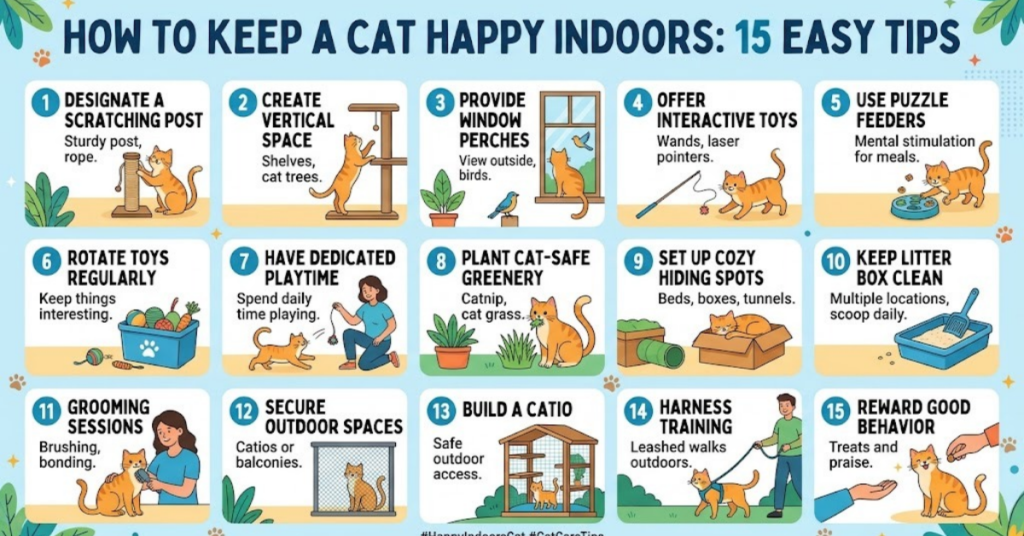
An indoor cat may never explore the neighborhood, climb real trees, or chase birds outside, but that doesn’t mean it has to miss out on an exciting life. With the right environment, daily activities, and plenty of attention, a cat can enjoy a healthy, comfortable, and fulfilling life entirely indoors.
Learning how to keep a cat happy indoors involves more than providing food, fresh water, and a cozy sleeping spot. Cats are natural hunters, climbers, explorers, and problem-solvers. They need opportunities to express these instincts, stay physically active, and feel safe in their surroundings.
Whether you’ve recently adopted a kitten, brought home an adult cat, or have an indoor companion who seems bored, there are plenty of simple ways to improve its everyday life. Here are 15 practical strategies to help your cat stay happy, stimulated, and healthy.
1. Create an Interesting Indoor Environment
Cats enjoy exploring their surroundings, observing what’s happening, and discovering new places to investigate. An environment with limited stimulation can become boring, especially when a cat spends most of its time alone.
Try creating different activity areas throughout your home rather than relying on a single sleeping or playing spot.
Consider adding:
-
Cat trees and climbing towers.
-
Comfortable beds in quiet locations.
-
Cardboard boxes and paper bags without handles.
-
Tunnels and covered hiding places.
-
Window perches for watching outdoor activity.
-
Shelves or safe elevated platforms.
You don’t need an expensive collection of cat furniture. Even a few thoughtfully arranged household items can make an indoor environment more interesting.
2. Provide Plenty of Interactive Playtime
Play is one of the most important parts of keeping an indoor cat happy. It provides exercise, reduces boredom, and allows cats to practice their natural hunting behaviors.
Interactive toys are particularly useful because they encourage your cat to chase, stalk, pounce, and catch something.
Some excellent options include:
-
Feather wands.
-
Fishing-rod-style cat toys.
-
Soft toy mice.
-
Crinkle balls.
-
Lightweight rolling toys.
-
Battery-operated toys designed for cats.
Try scheduling two or three short play sessions throughout the day. Many cats enjoy sessions lasting around 10–15 minutes, although their preferences and energy levels vary.
Helpful tip: Move wand toys like real prey. Let them hide behind furniture, move across the floor, and occasionally pause. Allow your cat to catch the toy at the end so the activity feels rewarding.
Always supervise toys with strings, feathers, or small detachable parts, and put them away after play.
3. Give Your Cat a Window With a View
A window can provide hours of entertainment for an indoor cat. Watching birds, insects, people, and moving objects gives cats visual stimulation without exposing them to outdoor dangers.
Set up a comfortable window perch or place a sturdy cat tree near a window.
To make the viewing area more interesting:
-
Install a secure window perch.
-
Keep curtains or blinds open when appropriate.
-
Place bird feeders outside at a safe distance from the window.
-
Provide a comfortable cushion.
-
Rotate the viewing area occasionally if possible.
Safety matters. Make sure windows have secure screens designed to prevent falls and escapes. Ordinary insect screens may not withstand a determined cat pushing against them.
4. Install Cat Trees and Vertical Spaces
Cats naturally enjoy climbing and observing their surroundings from elevated positions. High places provide entertainment, exercise, and a sense of security.
A cat tree is an excellent investment, especially if you live in an apartment or have limited floor space.
You can also create vertical spaces using:
-
Wall-mounted cat shelves.
-
Secure climbing platforms.
-
Multi-level scratching posts.
-
Window hammocks.
-
Sturdy furniture that allows safe climbing.
Make sure elevated surfaces are stable and easy for your cat to access. Older cats and cats with mobility problems may benefit from ramps or lower platforms rather than tall climbing structures.
5. Provide Scratching Posts and Surfaces
If you don’t provide suitable scratching surfaces, your cat may choose furniture, carpets, or curtains instead.
Offer different scratching options, including:
-
Vertical sisal scratching posts.
-
Horizontal cardboard scratchers.
-
Corrugated cardboard boards.
-
Carpet-covered scratching surfaces designed for cats.
Place scratching posts near sleeping areas and locations where your cat already scratches. Some cats prefer vertical surfaces, while others enjoy scratching horizontally.
Reward your cat when it uses the appropriate scratching area. Avoid shouting or physically punishing it for scratching furniture, as this can create fear without addressing the underlying behavior.
6. Use Puzzle Feeders to Encourage Mental Stimulation
Cats don’t just need physical exercise. They also need mental challenges to stay engaged and prevent boredom.
Puzzle feeders make mealtimes more interesting by encouraging cats to work for some of their food. Instead of eating everything from an ordinary bowl, they must move, push, or manipulate an object to access their meal.
Popular puzzle-feeding options include:
-
Treat-dispensing balls.
-
Food puzzles with sliding compartments.
-
Snuffle mats designed for cats.
-
Simple homemade puzzles using safe cardboard containers.
-
Slow-feeding bowls.
Start with easy puzzles so your cat doesn’t become frustrated. Gradually introduce more challenging activities as it learns how they work.
Remember to count puzzle treats and food toward your cat’s daily calorie allowance to prevent unwanted weight gain.
7. Maintain a Clean and Comfortable Litter Box
A clean litter box is essential for your cat’s physical comfort and emotional well-being. Cats are generally particular about where they eliminate, and an unpleasant or poorly positioned litter box may cause them to avoid it.
Follow these basic litter box guidelines:
-
Provide at least one litter box per cat, plus one extra.
-
Scoop waste at least once daily.
-
Wash the box regularly using mild, unscented soap.
-
Place litter boxes in quiet, accessible locations.
-
Avoid putting them beside food and water bowls.
-
Choose a box large enough for your cat to turn around comfortably.
Most cats prefer unscented, fine-textured litter, although individual preferences vary.
If your cat suddenly stops using its litter box, don’t automatically assume it’s misbehaving. Urinary problems, constipation, pain, stress, and other medical conditions can cause changes in bathroom habits.
Straining to urinate, particularly in a male cat, can indicate a life-threatening urinary blockage and requires immediate veterinary attention.
8. Give Your Cat Safe Toys and Rotate Them Regularly
Cats can lose interest in toys when they see the same objects every day. Rotating toys helps make familiar items feel interesting again.
You don’t need to purchase new toys every week. Instead, keep a small selection available and store the rest somewhere your cat cannot access.
For example:
-
Monday: Feather wand and toy mouse.
-
Tuesday: Crinkle ball and cardboard tunnel.
-
Wednesday: Puzzle feeder and rolling toy.
-
Thursday: Interactive play with a fishing-rod toy.
-
Friday: New arrangement of familiar toys.
Avoid leaving toys with loose strings, ribbons, elastic, or small detachable pieces unattended. These can create choking or intestinal obstruction risks if swallowed.
Some electronic toys can also be useful, but they should not completely replace interactive play with you.
9. Create Comfortable Sleeping and Hiding Areas
Cats spend a significant portion of their day sleeping or resting. Adult cats commonly sleep around 12–16 hours daily, although kittens and older cats may sleep even more.
Providing comfortable resting areas helps your cat feel secure.
Consider setting up:
-
A soft bed in a quiet corner.
-
A warm blanket near a sunny window.
-
A covered cat cave.
-
A cardboard box with a comfortable lining.
-
A quiet elevated sleeping platform.
Cats also appreciate having places where they can hide when they feel nervous or want privacy.
Don’t force your cat out of its hiding place unless there’s an immediate safety concern. Having somewhere to retreat can help it feel more confident.
10. Spend Quality Time With Your Cat Every Day
Cats may have a reputation for being independent, but many form strong social bonds with their owners.
Regular interaction helps build trust and provides emotional stimulation. Even cats that prefer their own space can benefit from predictable, positive attention.
You can strengthen your relationship through:
-
Gentle petting, when your cat welcomes it.
-
Interactive play sessions.
-
Talking to your cat.
-
Brushing, if it enjoys grooming.
-
Reward-based training.
-
Quiet companionship.
Pay attention to body language. A relaxed posture, slow blinking, and voluntary approaches may indicate comfort, while flattened ears, a swishing tail, or attempts to move away suggest that your cat needs space.
Let your cat decide when it wants affection. Respecting its boundaries is an important part of building trust.
11. Provide a Balanced and Nutritious Diet
Good nutrition plays a major role in keeping indoor cats healthy and comfortable. Indoor cats may have fewer opportunities for spontaneous physical activity, so managing food portions is particularly important.
Choose a complete and balanced cat food appropriate for your pet’s life stage and health needs.
Important dietary considerations include:
-
Protein: Cats are obligate carnivores and require nutrients found in animal-based foods.
-
Taurine: This essential amino acid supports normal heart and eye function.
-
Fats: Provide energy and essential fatty acids.
-
Vitamins and minerals: Support normal body functions.
-
Water: Helps maintain hydration and supports urinary and kidney health.
Follow the feeding recommendations on the food packaging as a starting point, then adjust portions according to your cat’s weight, body condition, activity level, and veterinary advice.
Avoid feeding excessive treats or table scraps. Treats should generally account for no more than 10% of a cat’s daily calorie intake.
12. Make Fresh Water Easily Accessible
Hydration is another important part of indoor cat care. Some cats drink relatively little water, especially when their diet consists mainly of dry food.
You can encourage drinking by making fresh water available in several locations.
Try these simple ideas:
-
Wash water bowls daily.
-
Refill bowls with fresh water regularly.
-
Use wide, shallow ceramic or stainless-steel bowls.
-
Keep water away from the litter box.
-
Experiment with a cat water fountain.
-
Include appropriate wet food in the diet.
Some cats prefer drinking from moving water, while others are perfectly happy with an ordinary bowl. Observe your cat’s preferences rather than assuming one solution works for every animal.
If your cat suddenly starts drinking significantly more or less than usual, contact your veterinarian. Changes in thirst can sometimes indicate an underlying health problem.
13. Introduce Safe Outdoor Experiences
Keeping a cat indoors doesn’t necessarily mean it can never experience the outdoors. Supervised outdoor activities can provide additional stimulation when introduced carefully.
There are several ways to offer safe outdoor enrichment.
Try Harness Training
Some cats can learn to wear a properly fitted harness and walk on a leash. Introduce the harness gradually indoors, using treats and positive reinforcement.
Never force a frightened cat to go outside. Some cats simply don’t enjoy leash walks, and that’s perfectly fine.
Build a Catio
A suitable catio should have:
-
Strong, escape-resistant mesh.
-
A secure roof.
-
Protection from extreme weather.
-
Shaded resting areas.
-
Safe climbing platforms.
-
Fresh drinking water.
Use a Secure Balcony Enclosure
If you live in an apartment, a properly enclosed balcony can provide a safe outdoor viewing area. Make sure the enclosure is securely installed and cannot be climbed over or escaped through.
Before introducing outdoor activities, ensure your cat has appropriate vaccinations, parasite prevention, and identification based on veterinary advice.
14. Keep Your Cat’s Environment Safe
A happy indoor cat also needs a home where it can explore without encountering unnecessary hazards.
Cats are naturally curious, so everyday household items can sometimes become dangerous.
Check your home for potential risks, including:
-
Toxic plants such as lilies.
-
Human medications.
-
Cleaning products and chemicals.
-
Essential oils that may be harmful to cats.
-
Open windows and unsecured balconies.
-
Electrical cords.
-
Small objects that can be swallowed.
-
Hot cooking surfaces.
-
Unattended washing machines and dryers.
Lilies deserve particular attention because even small exposures to certain lilies can cause severe kidney injury in cats. Keep them completely out of homes with cats.
Also, store food items such as chocolate, onions, garlic, and products containing xylitol safely away from pets.
If you suspect your cat has swallowed something toxic, contact a veterinarian or animal poison service immediately rather than waiting for symptoms.
15. Maintain a Consistent Daily Routine
Cats often feel more comfortable when their days follow a predictable pattern. Regular feeding, playtime, grooming, and rest periods can reduce uncertainty and help them settle into their environment.
A simple daily schedule might look like this:
| Time | Activity | Benefit |
|---|---|---|
| Morning | Feeding and interactive play | Encourages activity |
| Late morning | Window watching and resting | Provides visual stimulation |
| Afternoon | Puzzle feeder or independent play | Prevents boredom |
| Evening | Interactive hunting-style play | Supports exercise |
| Night | Feeding and quiet companionship | Creates a relaxing routine |
You don’t have to follow a strict timetable. The goal is to establish consistent opportunities for activity, food, rest, and social interaction.
Remember that cats are often most active around dawn and dusk, so scheduling play sessions around these periods may work particularly well.
16. Groom Your Cat Regularly
Grooming is another way to keep your indoor cat comfortable and healthy. Although cats clean themselves, they still benefit from occasional brushing, nail care, and routine checks.
The amount of grooming required depends on your cat’s coat type.
-
Short-haired cats: Brushing once or twice a week is often sufficient.
-
Long-haired cats: Daily brushing may help prevent tangles and painful mats.
-
Older cats: May need additional grooming assistance because flexibility can decrease with age.
Regular grooming also gives you an opportunity to check for unusual lumps, skin irritation, fleas, or changes in your cat’s coat.
If your cat strongly dislikes brushing, introduce it gradually. Start with a few gentle strokes and reward calm behavior with treats.
Never attempt to remove tight mats with scissors close to the skin. A veterinarian or professional groomer can handle difficult mats safely.
17. Teach Your Cat Simple Tricks and Commands
Training isn’t just for dogs. Cats can learn simple behaviors, and training sessions provide valuable mental stimulation.
Using positive reinforcement, you can teach your cat to:
-
Respond to its name.
-
Sit on command.
-
Touch your hand with its nose.
-
Come when called.
-
Enter its carrier willingly.
-
Use a scratching post.
-
Perform simple tricks.
Clicker training is particularly useful. A click marks the exact moment your cat performs the desired behavior, followed by a small reward.
Keep training sessions short, usually just a few minutes at a time. Be patient, avoid punishment, and reward progress rather than expecting immediate results.
Training your cat to enter its carrier voluntarily can also make future veterinary visits less stressful.
18. Understand Your Cat’s Emotional and Social Needs
Every cat has a different personality. Some enjoy constant companionship, while others prefer spending time alone and interacting on their own terms.
Understanding your cat’s preferences is essential for creating a comfortable indoor lifestyle.
Watch for signs of a happy and relaxed cat:
-
Regular eating and drinking habits.
-
Normal grooming behavior.
-
Interest in toys and surroundings.
-
Relaxed sleeping positions.
-
Regular litter box use.
-
Curiosity and exploration.
-
Comfortable interactions with familiar people.
On the other hand, persistent hiding, excessive vocalization, aggression, overgrooming, loss of appetite, or unusual changes in behavior may indicate stress or illness.
Don’t automatically assume these behaviors are caused by boredom. Arrange a veterinary examination if changes are persistent, sudden, or concerning.
Should You Get Another Cat for Companionship?
Getting a second cat may help some indoor cats, but it isn’t a guaranteed solution for loneliness.
Some cats enjoy living with other cats, while others prefer being the only pet. Their personalities, previous experiences, available space, and introductions all influence whether they will get along.
If you decide to adopt another cat:
-
Introduce them gradually.
-
Provide separate food and water stations.
-
Give each cat its own resting and hiding places.
-
Provide enough litter boxes.
-
Allow them to interact at their own pace.
Never force two cats to share space before they are comfortable with each other.
How to Tell If Your Indoor Cat Is Bored
Even when cats have everything they need physically, they can become bored if their surroundings lack stimulation.
Recognizing boredom early allows you to make changes before unwanted behaviors become established.
Common signs include:
| Behavior | Possible Explanation |
|---|---|
| Excessive sleeping | Could indicate boredom, but may also be normal |
| Frequent meowing | Attention-seeking, stress, or another need |
| Scratching furniture | Normal scratching behavior or insufficient alternatives |
| Chasing feet or hands | Under-stimulation or inappropriate play habits |
| Knocking objects over | Exploration or attention-seeking |
| Overeating | Food-seeking behavior or inadequate feeding enrichment |
| Excessive grooming | Stress, skin irritation, or medical problems |
These behaviors don’t automatically mean your cat is unhappy. Look for changes from its normal behavior and consider whether its physical, social, and environmental needs are being met.
If you notice sudden behavioral changes, consult a veterinarian to rule out medical causes.
Common Mistakes to Avoid When Keeping a Cat Indoors
Even caring owners can unintentionally overlook certain aspects of indoor cat care.
Here are some common mistakes worth avoiding:
-
Ignoring playtime: Providing toys isn’t enough if your cat never gets opportunities for interactive play.
-
Keeping the same toys available all the time: Rotate toys to maintain interest.
-
Not providing scratching surfaces: Scratching is a natural behavior, not simply a bad habit.
-
Overfeeding: Indoor cats can gain excess weight when calorie intake exceeds their energy needs.
-
Neglecting litter box cleanliness: Dirty litter boxes can cause stress and inappropriate elimination.
-
Forcing affection: Allow your cat to choose when and how it wants to interact.
-
Ignoring veterinary care: Indoor cats still need routine examinations, vaccinations, dental care, and parasite prevention appropriate to their circumstances.
-
Leaving dangerous objects accessible: Secure toxic substances, medications, cords, and small objects.
Avoiding these mistakes can make your home more comfortable and help protect your cat’s long-term health.
Frequently Asked Questions (FAQs)
1. How can I keep my indoor cat happy all day?
Provide a combination of interactive play, comfortable resting areas, scratching posts, climbing spaces, puzzle feeders, and window views. Spend quality time with your cat and rotate toys to keep its environment interesting.
2. Do indoor cats get bored?
Yes, indoor cats can become bored when they lack physical activity and mental stimulation. Interactive toys, climbing structures, puzzle feeders, and regular play sessions can help prevent boredom.
3. How many hours a day should I play with my indoor cat?
Many cats benefit from two or three interactive play sessions of approximately 10–15 minutes each. However, the ideal amount depends on age, health, personality, and energy level.
4. Are indoor cats happier than outdoor cats?
Indoor cats can live happy, fulfilling lives when their environmental, physical, and social needs are met. Indoor living also reduces exposure to traffic, predators, infectious diseases, and other outdoor hazards. However, simply keeping a cat indoors doesn’t guarantee happiness; enrichment and proper care are essential.
5. What do indoor cats enjoy doing the most?
Many cats enjoy chasing toys, climbing, scratching, watching birds, exploring boxes, hiding, sleeping in comfortable places, and spending time with their favorite people. Individual preferences vary, so observe what your cat enjoys.
6. How can I entertain my cat while I’m at work?
Leave out safe independent-play toys, provide access to a secure window perch, use puzzle feeders, and create comfortable resting and hiding areas. You can also schedule interactive play before leaving and after returning home.
Avoid leaving string toys or small objects that could be swallowed unattended.
7. Do indoor cats need another cat to be happy?
No. Many cats are perfectly happy as the only pet, provided they receive appropriate attention and enrichment. Some enjoy feline companionship, but others find sharing their territory stressful.
8. How do I know if my indoor cat is happy?
A happy cat generally displays normal eating, grooming, sleeping, and litter box habits. It may also explore, play, show curiosity, and voluntarily interact with people. Changes in these behaviors can sometimes indicate stress or illness.
9. What is the best toy for an indoor cat?
Interactive wand toys are excellent for encouraging chasing and hunting behaviors. Puzzle feeders, toy mice, tunnels, and rolling balls are also useful. The best choice depends on your cat’s individual preferences.
10. Can an indoor cat live a long and healthy life?
Yes. Indoor cats can enjoy long, healthy lives when they receive appropriate nutrition, exercise, mental stimulation, preventive veterinary care, and a safe living environment. Genetics and individual health conditions also influence lifespan.
Conclusion
Learning how to keep a cat happy indoors is about creating a home that supports its natural instincts and everyday needs. Cats need more than food, water, and a comfortable bed. They also need opportunities to climb, scratch, hunt through play, explore, rest, and interact with their surroundings.
Start with a few simple improvements, such as introducing interactive toys, installing a window perch, providing scratching posts, and establishing a consistent playtime routine. Gradually add more enrichment activities based on your cat’s personality, age, and energy level.
Most importantly, pay attention to your cat’s behavior. Every cat has unique preferences, and understanding them is one of the best ways to build a happy, healthy relationship.
A little creativity, patience, and daily attention can turn even a small apartment into an exciting and comfortable home for your feline companion. Explore more indoor cat care and pet wellness guides to keep improving your pet’s quality of life.