
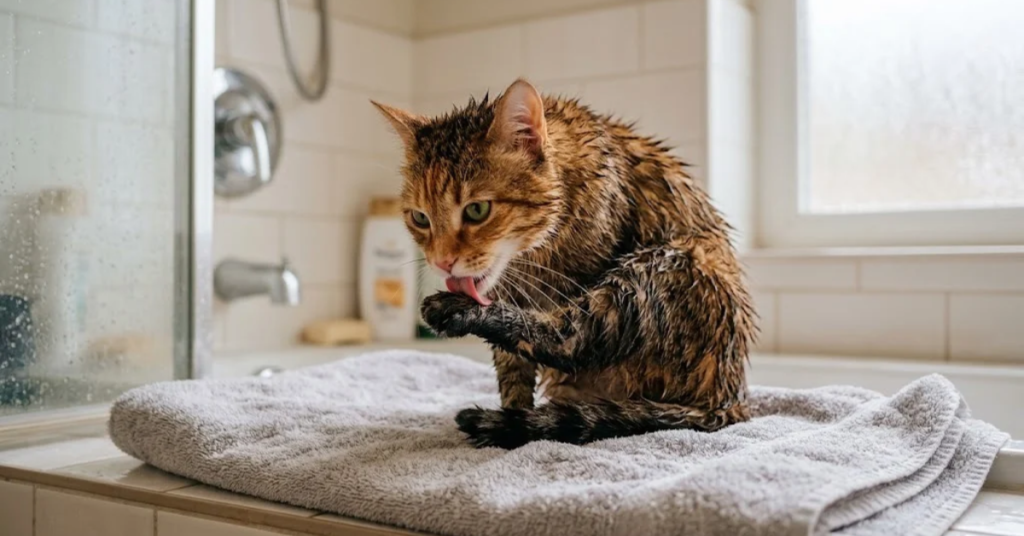
You step out of the shower, grab a towel, and sit down to dry your hair. Before you know it, your cat is beside you, licking your wet hair as if it’s part of their daily grooming routine. It’s an unusual habit, but if you’ve ever wondered, “Why does my cat lick my hair after a shower?” you’re certainly not alone.
Cats lick human hair for several reasons, including social bonding, grooming instincts, curiosity, and attraction to unfamiliar scents or salty residue. Wet hair can be particularly interesting because its texture and smell change after washing. In most cases, this behavior is harmless, although certain products and excessive licking deserve attention.
Let’s explore what your cat might be trying to communicate, why freshly washed hair attracts their attention, and how to respond safely.
Why Does My Cat Lick My Hair After a Shower?
The most common explanations involve natural feline behavior. Cats use licking to groom themselves, maintain social relationships, explore their surroundings, and interact with familiar people.
When you emerge from the shower, your hair smells and feels different. Your cat may investigate these changes by sniffing, rubbing against, or licking your head.
Here are the main reasons behind this behavior.
1. Your Cat Is Grooming You as a Sign of Affection
One possible reason your cat licks your hair is that they consider you part of their social group.
Cats that share a close relationship sometimes groom one another, a behavior known as allogrooming. They often lick areas that are difficult for another cat to reach, such as the head and neck. When your cat licks your hair, they may be extending this familiar social behavior to you.
This can be a sign of comfort and familiarity, especially if your cat also:
- Purrs while licking your hair.
- Rubs their face against your head.
- Lies beside you or sits comfortably on your lap.
- Grooms you briefly and then settles down.
Although grooming can indicate affection, licking alone doesn’t prove what your cat is feeling. Look at their overall body language and the context of the interaction.
2. Your Wet Hair Smells Interesting
A shower changes the natural scent of your hair. Shampoo, conditioner, soap, and other hair products leave behind fragrances that may attract your cat’s attention.
Cats have a highly developed sense of smell, so even a scent that seems faint to you can be noticeable to them. Your cat may lick your hair because they’re investigating a new or unfamiliar smell.
Your hair may be especially interesting if you’ve recently switched products or started using a strongly scented shampoo.
However, curiosity doesn’t mean a product is safe for your cat to taste. Some hair and skin products contain ingredients that can irritate a cat’s mouth or cause illness if swallowed.
3. Your Cat Likes the Salty Taste
Human sweat contains salt, and cats may be attracted to salty residue on your skin or hairline. If you shower after exercising or sweating, your cat might investigate the areas around your scalp, forehead, or neck.
Still, the salty-taste explanation should be treated as a possibility rather than a proven reason for every cat’s behavior. Freshly washed hair may have very little sweat or salt on it, and some cats lick hair even when no obvious salty residue is present.
If your cat consistently targets your hairline or scalp, taste could be one factor among several.
4. Your Cat Is Curious About Your Wet Hair
Wet hair feels different from dry hair. It may be clumped together, easier to move around, or more interesting to investigate than your usual hairstyle.
Cats naturally explore changes in their environment through their senses. Your post-shower routine also gives them a new opportunity to investigate something familiar in an unfamiliar state.
Your cat might sniff your wet hair first, give it a few licks, and then lose interest. If the behavior is brief and your cat otherwise acts normally, curiosity is a reasonable explanation.
5. Your Cat Is Reinforcing Your Bond
Cats communicate with people through a combination of body language, vocalizations, scent marking, and physical contact. Grooming may be one part of that interaction.
If your cat regularly approaches you after a shower, the routine itself may have become a familiar social ritual. They might enjoy being close to you when you’re sitting still, relaxing, or getting ready for bed.
Your cat may also have learned that licking your hair gets your attention. If you talk to them, pet them, or laugh whenever they do it, they may repeat the behavior because it reliably produces a response.
This doesn’t necessarily mean your cat is deliberately manipulating you. Animals can learn which actions lead to attention and repeat those actions over time.
6. Your Cat Is Responding to a Change in Your Scent
Cats use scent as an important part of recognizing familiar people and understanding their surroundings. Bathing can temporarily change your usual scent by washing away some natural skin oils and adding the fragrance of personal-care products.
Your cat may lick, sniff, or rub against you while investigating that change.
It’s also possible that your cat is responding to a combination of smells rather than trying to restore your natural scent. Although grooming and scent-related behavior are well-established in cats, we can’t know the exact motivation behind an individual cat’s licking without considering the broader context.
Why Does My Cat Lick My Wet Hair but Not My Dry Hair?
If your cat ignores your hair throughout the day but becomes interested immediately after a shower, the difference may come down to scent, texture, and routine.
Wet hair can smell different, feel different, and be easier to investigate. You may also be sitting quietly or spending more time in one place after bathing, making it easier for your cat to approach you.
Consider these possibilities:
- Different texture: Wet strands may feel more interesting to your cat’s tongue.
- Fresh product scents: Shampoo and conditioner leave new fragrances behind.
- Changes in routine: Your cat may associate your shower with attention or relaxation.
- Scalp and skin residue: Small amounts of sweat or natural oils may remain, depending on your washing routine.
There isn’t one explanation that applies to every cat. If the licking happens only occasionally and stops easily, it generally isn’t a cause for concern.
Is It Normal for Cats to Lick Human Hair?
Yes, occasional hair licking is generally normal feline behavior. Cats groom themselves and other familiar cats, and some extend this behavior to the humans they live with.
A cat that briefly licks your hair after a shower and then walks away usually doesn’t need intervention, provided the behavior isn’t causing problems.
However, pay attention if your cat:
- Licks your hair obsessively or seems unable to stop.
- Chews and swallows hair.
- Starts licking other nonfood objects excessively.
- Becomes distressed when prevented from licking.
- Develops a sudden, significant change in grooming or social behavior.
Persistent licking or chewing can sometimes be associated with stress, compulsive behavior, or an underlying medical issue. These signs don’t automatically indicate a disorder, but they are worth discussing with a veterinarian.
Is It Safe to Let Your Cat Lick Your Hair After a Shower?
A few licks of clean, product-free hair are unlikely to cause a problem for most healthy cats. However, it’s best not to let your cat lick freshly washed hair until you know the products you’re using are safe around them.
Shampoo, conditioner, leave-in treatments, styling products, and medicated scalp treatments can contain ingredients that aren’t intended to be ingested.
Hair Products That Deserve Extra Caution
Be particularly careful with:
- Essential oils: Some concentrated essential oils can be toxic to cats, depending on the oil, concentration, and exposure.
- Medicated hair treatments: Certain scalp medications can be dangerous if a cat ingests even a small amount.
- Minoxidil products: Topical hair-growth products containing minoxidil are highly toxic to cats and can cause severe illness or death.
- Strongly scented or leave-in products: Safety depends on the specific ingredients, and fragrances can irritate some animals.
If you use minoxidil, keep your cat away from treated hair and skin, prevent contact with contaminated pillows and bedding, and follow your veterinarian’s or healthcare professional’s advice about safe handling. If you suspect your cat has contacted or ingested minoxidil, contact a veterinarian or animal poison-control service immediately rather than waiting for symptoms.
If your cat licks hair containing an unknown or potentially harmful product, check the product label and seek veterinary guidance when appropriate. Do not induce vomiting unless a veterinary professional instructs you to do so.
How to Stop Your Cat From Licking Your Hair
If you enjoy the affection but don’t want your cat licking your wet hair, you can gently redirect the behavior without frightening or punishing them.
1. Move Your Hair Out of Reach
After showering, wrap your hair in a clean towel or use a shower cap while your hair is drying. This is especially important if you use leave-in products or medicated treatments.
2. Redirect Your Cat to a Toy
Offer a wand toy, a soft toy, or another activity your cat enjoys. Redirecting their attention gives them something appropriate to do instead of licking your hair.
3. Reward Calm Alternatives
When your cat sits beside you without licking your hair, reward them with gentle petting, attention, or a small treat if appropriate. Consistent positive reinforcement can help establish a new routine.
4. Keep Your Hair Products Secure
Store hair products where your cat can’t access them, and clean up spills promptly. Allow products to dry as directed before letting your cat near treated hair or bedding, while remembering that drying doesn’t necessarily make every product safe.
5. Avoid Punishment
Shouting, spraying water, or physically pushing your cat away can create stress and may damage trust. Instead, calmly move away, cover your hair, or redirect your cat each time the behavior starts.
If the licking becomes frequent, difficult to interrupt, or accompanied by other unusual behavior, consult your veterinarian.
What Does It Mean if Your Cat Licks Your Hair and Then Bites It?
Some cats switch from licking to gentle nibbling or chewing. This may happen during social grooming, when a cat is investigating the texture of your hair, or when their grooming behavior becomes overly enthusiastic.
A gentle nibble followed by relaxed body language is different from persistent chewing or swallowing hair.
Hair ingestion is a concern because strands can sometimes contribute to digestive problems, and long strands may pose a risk if swallowed. If your cat repeatedly chews your hair, prevent access and discuss the behavior with your veterinarian, especially if you notice vomiting, reduced appetite, constipation, or other signs of illness.
Don’t pull a strand forcefully if it appears caught in your cat’s mouth. If you suspect a strand has been swallowed and your cat develops symptoms, seek veterinary advice.
Why Does My Cat Lick My Hair While I’m Sleeping?
If your cat licks your hair at night, they may be seeking attention, engaging in social grooming, or repeating a routine they’ve learned.
Your head is also an accessible place for a cat sleeping beside you. The familiar scent of your hair and the quiet environment may encourage the behavior.
If it disrupts your sleep, gently move your cat away and provide a comfortable sleeping spot nearby. A play session before bedtime, followed by a meal appropriate to your cat’s feeding schedule, may also help establish a calmer nighttime routine.
Frequently Asked Questions
1. Does my cat lick my hair because it loves me?
Possibly. Social grooming is a common behavior among cats that share close relationships, and licking your hair may be one way your cat interacts with you. However, curiosity, taste, and learned habits can also explain the behavior.
2. Why does my cat lick my hair after I wash it?
Freshly washed hair has a different scent and texture, and your cat may be investigating the change. Shampoo and conditioner fragrances can attract attention, but you should prevent licking when products contain ingredients that could harm your cat.
3. Is my cat trying to clean me when it licks my hair?
Your cat may be displaying social grooming behavior similar to the grooming cats perform on familiar companions. Whether your cat is specifically trying to clean you is difficult to establish from licking alone.
4. Should I let my cat lick my wet hair?
It’s better to discourage licking until your hair is free of potentially harmful products. Occasional licking of clean hair is usually not a concern, but certain medications and hair-care ingredients can be dangerous to cats.
5. Why does my cat lick my hair and purr?
Purring and licking together may indicate comfort, social interaction, or a pleasant routine. However, cats can purr for different reasons, so consider their overall posture, facial expression, and behavior.
6. Why does my cat lick my hair and then fall asleep?
Your cat may feel comfortable being close to you and settle down after interacting with you. The sequence can become part of a familiar routine, although the exact motivation varies between cats.
7. Can shampoo make my cat sick if it licks my hair?
Yes, depending on the ingredients and amount ingested. Some products can cause irritation or toxicity, and minoxidil-containing hair treatments are particularly dangerous. Contact a veterinarian promptly if you suspect exposure to a harmful product.
8. When should I worry about my cat licking my hair?
Seek veterinary advice if the behavior becomes compulsive, involves repeated chewing or swallowing, or appears alongside other unusual symptoms. If your cat may have ingested a toxic hair product, seek immediate veterinary guidance.
Conclusion
If you’ve been wondering, “Why does my cat lick my hair after a shower?”, the answer may involve social grooming, curiosity, changing scents, or an interest in the texture and taste of your hair. For many cats, it’s simply a familiar way to interact with someone they know well.
Occasional licking is generally harmless, but your hair-care routine matters. Keep your cat away from potentially toxic products, especially minoxidil, and gently redirect the behavior if it becomes uncomfortable or excessive.
Pay attention to your cat’s body language and any changes in their habits. Understanding the context can help you distinguish ordinary feline affection and curiosity from behavior that deserves a closer look.