
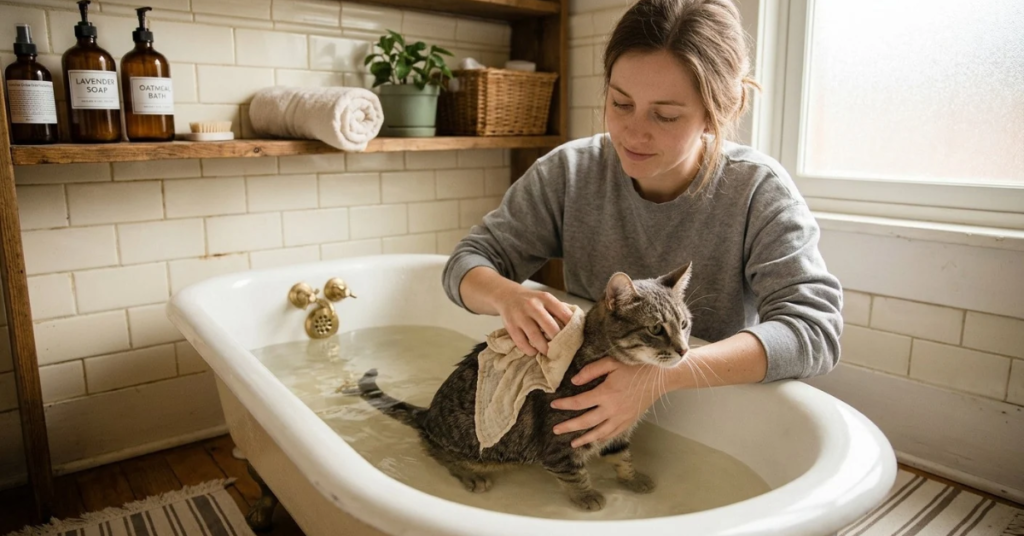
Giving your cat its first bath can feel like preparing for a small adventure. You might be worried about scratches, a panicked cat, or water ending up everywhere except where you intended. The good news is that bathing a cat doesn’t have to be a stressful experience when you prepare properly and take things slowly.
If you’re wondering how to give a cat a bath for the first time, start by understanding that most healthy cats rarely need a full bath. Cats are naturally good at grooming themselves, but they sometimes need extra help when they get into something messy, have a dirty coat, or cannot clean themselves effectively.
The goal isn’t to get your cat into the water as quickly as possible. It’s to keep your pet safe, comfortable, and clean while making the experience as gentle as possible.
Do Cats Need Baths?
Before running the water, consider whether your cat actually needs a bath. Most healthy cats maintain their coats through regular grooming, using their tongues and paws to remove loose hair and everyday dirt.
However, bathing may be helpful in certain situations, including:
- A dirty coat: Your cat has mud, grease, or another substance on its fur.
- A messy accident: Your pet has feces, urine, or another unpleasant material stuck to its coat.
- Mobility problems: Older, overweight, or arthritic cats may struggle to groom themselves.
- Specific skin conditions: A veterinarian has recommended a medicated shampoo or bathing routine.
- Hairless breeds: Some cats, such as Sphynx cats, may need more frequent skin care because oils can accumulate on their skin.
If your cat has fleas, a skin condition, or a substance on its fur that could be toxic, ask a veterinarian for appropriate advice. A regular bath is not always the safest or most effective solution.
What You Need Before Bathing Your Cat
Preparation makes a big difference, especially when your cat has never experienced a bath. Gather everything before bringing your pet into the bathroom so you won’t have to leave a wet cat unattended.
Here’s what to have ready:
- Cat-safe shampoo: Choose a shampoo specifically formulated for cats. If your veterinarian has prescribed a medicated product, follow its instructions.
- Several soft towels: Use one to help dry your cat and another to absorb water from the surrounding area.
- A nonslip mat: Place it in the sink or basin so your cat has secure footing.
- A small cup or gentle sprayer: This helps you wet and rinse the coat without splashing water everywhere.
- A brush or comb: Remove loose hair and tangles before bathing.
- A few favorite treats: Reward calm behavior before, during, and after the bath.
- Comfortably warm water: Avoid water that feels hot or cold to your wrist.
A small sink or shallow plastic basin may be easier to manage than a large bathtub. Cats often feel more secure when they have a stable surface beneath their paws and less open space around them.
How to Give a Cat a Bath for the First Time: Step-by-Step
<AsyncImage query=”person gently bathing domestic cat in shallow bathroom sink with warm water” aspectRatio=”16:9″ width=”100%”/>
Once you’ve gathered your supplies, follow these steps. Move at your cat’s pace rather than trying to complete the bath as quickly as possible.
Step 1: Choose a Calm Time
Pick a quiet moment when your cat is relaxed. Avoid bathing your pet immediately after a stressful event, during a noisy household gathering, or when it’s already frightened or agitated.
You can help your cat become familiar with the bathroom before bath day. Let it explore the room, sniff the basin, and receive treats near the bathing area. This helps reduce the novelty of the environment.
If your cat becomes uncomfortable before the water is even running, stop and try again another time.
Step 2: Brush Your Cat’s Coat
Brush your cat before adding water. This removes loose fur, helps identify dirt or debris, and makes it easier to notice mats that could become tighter when wet.
Pay particular attention to long-haired cats, whose coats can develop tangles around the belly, legs, and behind the ears. Never try to pull out tight mats with force, as this can hurt your cat’s skin. Severe matting is best handled by a veterinarian or an experienced professional groomer.
Step 3: Prepare a Shallow Bath
Place a nonslip mat in the sink or basin and add a small amount of lukewarm water. The water should be shallow enough for your cat to stand comfortably without feeling submerged.
Test the temperature with your hand before bringing your cat over. Keep the bathroom warm and have your towels within reach.
It’s usually better to prepare the water beforehand rather than turning on a noisy tap while your cat is standing in the basin.
Step 4: Introduce Your Cat Gently
Support your cat securely and guide it into the basin without forcing it. Speak softly and allow it a moment to adjust to the surface beneath its paws.
Keep one hand available to support the body while avoiding pressure on the chest or abdomen. Never lift a cat by its scruff or restrain it so tightly that it cannot breathe or move comfortably.
If your cat starts struggling intensely, growling, panting, or trying desperately to escape, don’t insist on finishing the bath. Stop, allow it to settle in a safe place, and consider a different cleaning method.
Step 5: Wet the Fur Slowly
Use a cup to pour small amounts of lukewarm water over the body, beginning around the shoulders and back. Work gradually toward the sides, legs, and belly as tolerated.
Avoid pouring water directly over the face, ears, eyes, or nose. Many cats find water around their heads particularly frightening.
A gentle flow is usually less alarming than a strong shower spray. If your cat becomes distressed by the sound of running water, keep the tap off while bathing.
Step 6: Apply Cat-Safe Shampoo
Follow the shampoo label for the correct amount and application method. Gently work the product through the coat without scrubbing aggressively or pulling the fur.
Keep shampoo away from the eyes, nose, mouth, and inside of the ears. Never use human shampoo, dishwashing liquid, essential oils, or dog flea products unless a veterinarian specifically confirms that a product is safe for your cat.
Some ingredients found in dog treatments, including certain concentrated insecticides, can be highly toxic to cats.
If your cat only has a small dirty patch, you may be able to clean that area instead of shampooing its entire body.
Step 7: Rinse Thoroughly
Rinsing is one of the most important parts of the process. Leftover shampoo can irritate your cat’s skin, and your cat may ingest residue when it starts grooming after the bath.
Use clean, lukewarm water and gently rinse the coat until no shampoo remains. Pay attention to the belly, legs, and areas where the fur is thick.
Avoid directing water toward the face or ears. If you are using a medicated shampoo, follow the veterinarian’s instructions regarding contact time and rinsing.
Step 8: Wrap Your Cat in a Towel
Once the coat is clean, lift your cat out carefully and wrap it in a soft, absorbent towel. Gently press the towel against the fur to absorb moisture rather than rubbing vigorously.
Replace the towel with a dry one if the first becomes soaked. Keep your cat in a warm, draft-free room while it dries.
Many cats dislike the noise of hair dryers. If you consider using one, use only a setting that is safe for your cat, keep it at a distance, and stop immediately if your pet becomes frightened or overheated. Air-drying in a warm room with towels is often the more comfortable choice.
Step 9: Reward Your Cat
After the bath, offer a favorite treat, a gentle petting session, or another reward your cat enjoys. Give it space to groom itself and settle down.
Don’t force cuddles if your cat wants to be alone. Ending the experience calmly can help make future grooming sessions less intimidating.
Tips for Making Your Cat’s First Bath Easier
A successful bath isn’t just about clean fur. It’s also about helping your cat feel as safe as possible throughout the process.
<AsyncImageGroup query={[“relaxed domestic cat being gently towel dried after bath”,”soft towel and cat shampoo grooming supplies for cat bath”]} aspectRatio=”5:4″ layout=”bento” size=”lg”/>
Here are some practical tips to keep in mind:
- Keep the bath short. Have everything ready beforehand so your cat spends as little time as possible in the water.
- Stay calm. Cats can react to your movements and handling. Speak softly and avoid sudden gestures.
- Never punish your cat. Hissing, hiding, or trying to escape usually indicates fear or discomfort, not bad behavior.
- Use positive reinforcement. Offer treats when your cat calmly approaches the basin, tolerates gentle handling, or allows its paws to get wet.
- Consider a partial bath. Cleaning a dirty paw, tail, or patch of fur may be all that’s necessary.
- Ask someone to help if needed. A calm helper can assist with gentle support, but avoid having several people surround or restrain a frightened cat.
Remember that not every cat will tolerate a traditional bath. If yours becomes highly distressed, a damp cloth, pet-safe grooming wipes, or professional assistance may be a better option.
Common Mistakes to Avoid When Bathing a Cat
Even with good intentions, certain bathing habits can make the experience more stressful or potentially unsafe.
Using the Wrong Shampoo
Human shampoos are formulated for human skin and may irritate a cat’s skin. Some products also contain fragrances or other ingredients that aren’t appropriate for cats.
Choose a product made for cats and check with your veterinarian if your pet has sensitive skin or needs medicated treatment.
Getting Water Inside the Ears
Water entering the ears can cause discomfort and may contribute to ear problems. Keep your cat’s head dry and clean the face separately with a soft, damp cloth if necessary.
Don’t insert cotton swabs or other objects into the ear canal.
Using Hot Water
Cats can be sensitive to uncomfortable temperatures. Use lukewarm water and check it before starting the bath.
Very hot water can burn the skin, while cold water can make the experience unpleasant and increase the risk of chilling, especially in kittens or unwell cats.
Forcing a Frightened Cat to Continue
A frightened cat may scratch or bite when it feels trapped. Forcing the bath can worsen its fear of handling and future grooming.
If your cat becomes intensely distressed, stop rather than trying to overpower it. For a cat that needs regular bathing for medical reasons, ask your veterinarian about safer handling methods.
Leaving Your Cat Wet in a Cold Room
A wet coat can make a cat uncomfortable, particularly if the room is cold. Dry your pet gently and keep it in a warm environment until its coat is reasonably dry.
Avoid excessive heat from hair dryers, heating pads, or hot water bottles, which can cause burns.
How to Bathe a Kitten for the First Time
Kittens need extra care because they can lose body heat more easily than adult cats. A full bath should be avoided unless it’s genuinely necessary.
If a kitten has a small amount of dirt on its fur, try cleaning the affected area with a warm, damp cloth first. This is often sufficient and less stressful than immersing the kitten in water.
If bathing is necessary, follow these precautions:
- Make sure the room is warm and free from drafts.
- Use a small amount of lukewarm water and avoid submerging the kitten.
- Use only a kitten-appropriate cleaning product if shampoo is needed.
- Keep water away from the face, ears, and nose.
- Dry the kitten promptly and thoroughly with a soft towel.
- Monitor the kitten for signs of chilling, weakness, or unusual behavior.
Very young kittens, sick kittens, and kittens that are weak or struggling to maintain their body temperature should not be bathed casually. Contact a veterinarian if cleaning is necessary and you’re unsure how to proceed.
If a kitten has fleas, don’t automatically use an over-the-counter flea shampoo. Many flea treatments have age and weight restrictions, and some products can be dangerous to young cats.
How Often Should You Bathe a Cat?
There isn’t one bathing schedule that works for every cat. Most healthy cats do not need routine baths because their grooming habits keep their coats relatively clean.
Bathing frequency depends on your cat’s coat, lifestyle, health, and ability to groom itself.
| Cat type or situation | General bathing guidance |
|---|---|
| Healthy, short-haired indoor cat | Usually no routine bath needed |
| Long-haired cat | Brush regularly; bathe only when necessary |
| Hairless cat | May need regular skin cleaning or bathing based on veterinary guidance |
| Senior or overweight cat | Clean as needed if self-grooming becomes difficult |
| Cat with a skin condition | Follow the veterinarian’s prescribed schedule |
| Cat with a dirty or contaminated coat | Clean promptly using an appropriate method |
Bathing too often can dry or irritate the skin, particularly if the wrong shampoo is used. If your cat regularly becomes dirty, smells unusual, or develops a greasy coat, speak with a veterinarian to identify the underlying cause rather than simply increasing bath frequency.
When Should You Avoid Bathing Your Cat?
Sometimes, delaying a bath or choosing another cleaning method is the safer option.
Avoid attempting a routine bath if your cat is severely frightened, unwell, injured, or having difficulty breathing. Seek veterinary advice if cleaning is necessary but your cat cannot be handled safely.
Certain substances require urgent attention. If your cat gets paint, oil, cleaning chemicals, pesticides, or another potentially toxic substance on its coat, prevent it from licking the affected area and contact a veterinarian or animal poison service immediately. Don’t induce vomiting or apply random cleaning products. The safest removal method depends on the substance involved.
Similarly, if your cat has sticky material or something tightly matted into its fur, don’t cut close to the skin with scissors. Cat skin can be surprisingly easy to injure, so professional help is safer.
Frequently Asked Questions
1. Should I bathe my cat on its first day at home?
It’s generally better to let a newly adopted cat settle into its environment before introducing a bath, unless cleaning is medically necessary. Moving to a new home is already stressful, and adding unfamiliar water and handling may make the adjustment harder.
If your new cat is dirty, try gently cleaning the affected area with a damp cloth.
2. Can I bathe my cat with just water?
Yes, plain lukewarm water may be enough to remove light dirt from your cat’s coat. For small messes, a damp cloth can be even easier to manage.
For greasy substances, persistent dirt, or a medical skin condition, ask your veterinarian which cleaning method is appropriate.
3. What shampoo should I use for my cat’s first bath?
Use a shampoo specifically formulated for cats. Choose a suitable product for your cat’s age and skin needs, and follow the label instructions.
Avoid human shampoo, essential oils, and dog flea treatments unless a veterinarian specifically confirms that a product is safe for your cat.
4. How do I stop my cat from scratching me during a bath?
Reduce the chances of scratching by preparing your supplies, using a nonslip surface, keeping the bath brief, and handling your cat gently. You can also introduce the basin and water gradually before attempting a full bath.
Never punish your cat or force it to remain in the water if it becomes highly distressed. If bathing repeatedly leads to aggressive or panicked behavior, seek help from a veterinarian or qualified cat groomer.
5. Can I use a hair dryer to dry my cat?
Some cats tolerate a hair dryer, but many find its noise and airflow frightening. A soft towel and a warm, draft-free room are usually preferable.
If you use a dryer, keep it at a safe distance, use a low-heat setting, avoid directing airflow at the face, and stop if your cat becomes distressed. Never leave a cat unattended with a running dryer.
6. Is it okay to bathe a cat every week?
Most healthy cats don’t need weekly baths. Frequent washing can irritate the skin and remove natural oils from the coat.
Weekly bathing may be appropriate in certain situations, such as when a veterinarian recommends a specific treatment for a skin condition. Follow professional guidance rather than adopting a routine schedule without a clear reason.
7. What should I do if my cat hates water?
You don’t necessarily need to give your cat a full bath. For minor dirt, try a damp cloth or cat-safe grooming wipes.
If a bath is necessary, gradually introduce your cat to the bathroom and basin, reward calm behavior, and keep sessions short. For severe fear or medically necessary bathing, ask your veterinarian about safer alternatives.
8. Should I trim my cat’s nails before a bath?
If your cat already tolerates nail trimming, shortening sharp nail tips beforehand may reduce the chance of accidental scratches. However, don’t attempt to trim the nails immediately before a bath if handling both activities together will increase your cat’s stress.
Nail trimming won’t make it safe to restrain a panicked cat, and it doesn’t eliminate the risk of bites or scratches.
9. How long does it take for a cat to dry after a bath?
Drying time depends on coat length, thickness, room temperature, and how thoroughly you’ve removed excess water. A short-haired cat may dry relatively quickly, while a long-haired cat can take considerably longer.
Use towels to absorb moisture and keep your cat in a warm, draft-free area until its coat is dry enough to prevent chilling. Check thick fur for dampness close to the skin.
10. Can I bathe my cat if it has fleas?
Fleas require an appropriate treatment plan, not simply a bath. Some flea shampoos are unsuitable for cats, particularly young kittens, and bathing alone may not resolve an infestation.
Ask your veterinarian to recommend a cat-safe flea treatment based on your pet’s age, weight, and health.
Conclusion
Learning how to give a cat a bath for the first time is mostly about preparation, patience, and knowing when to stop. Gather your supplies beforehand, use lukewarm water and cat-safe shampoo, rinse thoroughly, and dry your cat gently in a warm room.
Most importantly, remember that a full bath isn’t always necessary. For many cats, a damp cloth or regular brushing will do the job without the stress of getting completely wet.
If your cat needs frequent bathing, has a skin problem, or becomes extremely frightened around water, consult your veterinarian for a safer approach. With gentle handling and the right technique, you can keep your cat clean while protecting its comfort and trust.