
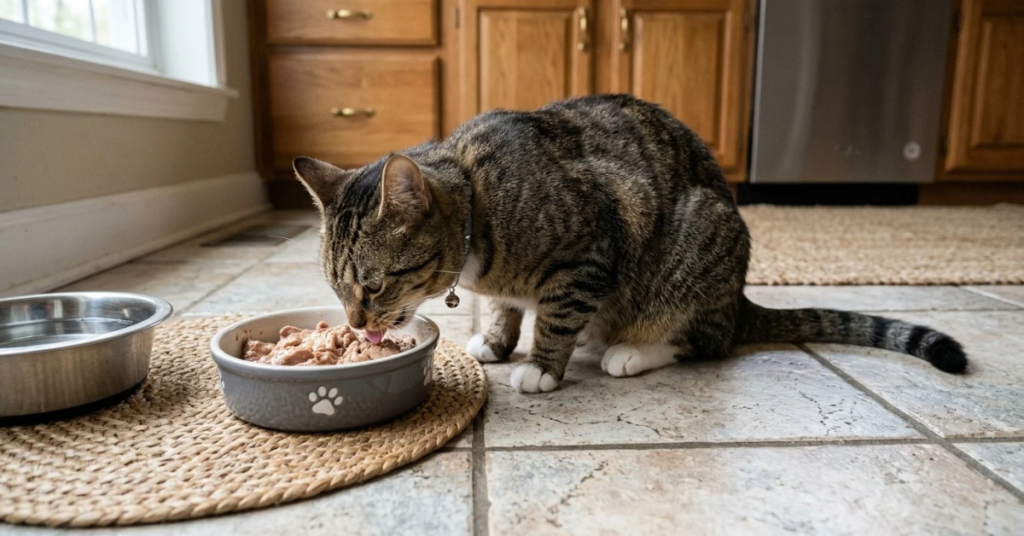
If your cat comes running the moment you open a can of food, you’re certainly not alone. Wet food is a favorite for many cats, but knowing how often to serve it can be confusing, especially when you’re trying to balance nutrition, portion sizes, and your cat’s individual needs.
So, how often should cats eat wet food? Most healthy adult cats do well with two meals a day, although some prefer three or four smaller meals. Wet food can be served at every meal or combined with dry food, provided your cat receives the right amount of calories and essential nutrients throughout the day.
The ideal feeding routine depends on your cat’s age, weight, activity level, health, and the nutritional content of its food. Let’s look at how to build a practical feeding schedule that keeps your feline friend satisfied and healthy.
How Often Should You Feed a Cat Wet Food?
For most healthy adult cats, feeding wet food twice daily is a sensible starting point. You might offer breakfast in the morning and dinner in the evening, adjusting the portions to meet your cat’s daily calorie needs.
However, twice-daily feeding isn’t a strict rule. Cats naturally tend to eat several small meals throughout the day, so dividing their daily food allowance into three or four servings can also work well.
Here’s a simple guide:
- Adult cats: Usually two meals daily, with smaller, more frequent meals as an alternative.
- Kittens: Several small meals throughout the day, depending on their age and development.
- Senior cats: Often two or more meals, depending on appetite, dental health, and medical needs.
- Cats with medical conditions: A feeding schedule tailored to their condition and veterinary advice.
The most important thing is consistency. A regular routine helps you monitor appetite, manage portions, and notice changes in eating habits before they become bigger concerns.
How Much Wet Food Should a Cat Eat Per Day?
How much wet food your cat needs depends on its weight, body condition, age, activity level, and the calories in the food. A small, less active indoor cat may need considerably less than a large, energetic cat.
Wet food packages often suggest daily feeding amounts based on body weight. These recommendations are useful starting points, but they may need adjustment for your cat’s individual circumstances.
For example, a typical 3-ounce (85-gram) can may contain approximately 70–100 calories, although the actual amount varies by recipe. A cat that needs 200 calories daily could require roughly two to three such cans if wet food is its only source of calories.
Example of daily wet food portions
| Daily calorie target | Approximate amount at 85 calories per 3-ounce can |
|---|---|
| 150 calories | 1.8 cans |
| 200 calories | 2.4 cans |
| 250 calories | 2.9 cans |
| 300 calories | 3.5 cans |
These figures are examples, not universal feeding recommendations. Your cat may need a different calorie allowance, and the calories per can can vary substantially.
To estimate the right amount:
- Check the feeding guide on the food packaging.
- Look for the calorie content, usually listed as kcal per can, pouch, or kilogram.
- Determine your cat’s daily calorie needs with your veterinarian or a reputable veterinary nutrition resource.
- Divide the daily allowance into the number of meals you plan to serve.
- Adjust portions gradually based on weight, body condition, and veterinary guidance.
Remember to count treats and dry food toward the daily calorie total. Even a nutritious wet-food diet can contribute to weight gain when portions are too large.
Wet Food Feeding Schedule by Age
Cats have different nutritional requirements at different life stages. A feeding schedule that works for an adult cat may not provide enough frequent meals for a growing kitten.
Kittens: More frequent meals
Kittens grow quickly and need plenty of energy to support their developing bodies. They generally benefit from several small meals rather than one or two large servings.
A practical starting schedule is:
- Around 4–8 weeks: Kittens beginning the weaning process may need several small meals of suitable kitten food, alongside access to their mother’s milk when available.
- Around 8 weeks to 6 months: Four or more small meals may be appropriate, depending on appetite and the food’s calorie density.
- Around 6–12 months: Many kittens can gradually transition to three meals daily, although individual needs vary.
Use food specifically formulated for kittens or for all life stages, as appropriate. Growing cats need a different balance of nutrients than adult cats, and their portions should support steady growth.
Very young kittens, particularly those under eight weeks old, have specialized feeding needs. Orphaned kittens may require kitten milk replacer and a veterinarian-directed schedule rather than ordinary wet food alone.
Adult cats: Two meals or smaller servings
Most healthy adult cats can follow a simple morning-and-evening routine. If your cat begs between meals or seems more comfortable eating smaller portions, try splitting the same daily allowance into three or four servings.
For example:
- 7:00 a.m. — Breakfast
- 12:30 p.m. — Small meal
- 6:00 p.m. — Dinner
- 10:00 p.m. — Optional small serving, taken from the daily allowance
This schedule is particularly useful if you spend long hours away from home. You can use an appropriate timed feeder designed for wet food, provided it keeps the food at a safe temperature.
Senior cats: Feed according to their needs
Older cats may experience dental problems, reduced appetite, digestive changes, or chronic conditions that affect how they eat. Soft wet food can be easier to manage for cats with some dental difficulties, although it doesn’t replace dental care.
Many senior cats do well with two to four smaller meals daily. Cats with kidney disease, diabetes, hyperthyroidism, or other medical issues may need a more specific diet or feeding routine.
If an older cat suddenly becomes fussy, loses weight, drinks more water, or eats less than usual, don’t assume it’s simply part of aging. Arrange a veterinary checkup to investigate the cause.
Is It Okay to Feed Cats Wet Food Every Day?
Yes. Wet food can be a cat’s main food every day if it is nutritionally complete and balanced for the appropriate life stage.
Look for a statement on the packaging indicating that the food is complete and balanced for adult maintenance, growth, or all life stages, as appropriate. In the United States, this is commonly expressed through an AAFCO nutritional adequacy statement. Other countries may use different labeling standards.
Wet food offers several benefits:
- Higher moisture content: Many wet foods contain approximately 70–80% water, which can help increase overall water intake.
- Palatability: The aroma and texture appeal to many cats, including some picky eaters.
- Portion control: Individual cans and pouches can make it easier to measure meals.
- Texture options: Soft food may be easier for certain cats to eat, particularly those with dental discomfort.
There are a few considerations, too. Wet food can cost more than dry food, opened containers need proper refrigeration, and leftovers shouldn’t sit out for extended periods.
Wet food isn’t automatically healthier than every dry food, either. The overall nutritional quality, calorie intake, life-stage suitability, and your cat’s individual health matter more than the format alone.
Can Cats Eat Wet Food and Dry Food Together?
Absolutely. Many cats thrive on a combination of wet and dry food, and you don’t have to choose one exclusively.
A mixed-feeding routine can provide moisture from wet food while allowing the convenience of dry food. It may also make portion management easier for households with different schedules.
For example, you might serve wet food in the morning and evening, with a measured portion of dry food offered at another meal. The precise amounts depend on the calorie content of both products.
Keep these guidelines in mind:
- Choose nutritionally complete foods suitable for your cat’s life stage.
- Calculate the combined calories from wet food, dry food, and treats.
- Measure dry food rather than leaving an unlimited supply available if your cat tends to overeat.
- Monitor body weight and adjust portions when necessary.
- Introduce dietary changes gradually to reduce the risk of digestive upset.
A common mistake is giving the recommended full daily serving of wet food and the full daily serving of dry food. Both labels may assume that the product is the cat’s main food, so combining the full amounts can lead to overfeeding.
Should You Feed Wet Food in the Morning or at Night?
There isn’t one universally best time to feed wet food. What matters most is choosing a schedule you can maintain consistently and that suits your cat’s appetite and medical needs.
Morning and evening meals are convenient for many households. They also provide natural opportunities to check that your cat is eating normally.
If your cat seems hungry overnight, a small meal before bedtime may help. Just take those calories from the daily allowance rather than adding extra food.
Cats with diabetes or other conditions that require coordinated meals and medication may need a different schedule. Follow your veterinarian’s instructions instead of applying a general feeding routine.
How Long Can Wet Cat Food Sit Out?
Wet cat food spoils more quickly than dry kibble when left at room temperature. Bacteria can multiply in moist food, particularly in a warm room.
As a general precaution, remove uneaten wet food after about one to two hours at room temperature. In hot conditions, it’s safer to remove it sooner rather than leave it sitting out.
To store wet food safely:
- Refrigerate unused portions promptly in a covered container.
- Follow the manufacturer’s instructions for refrigerated leftovers; many products are best used within a few days.
- Serve refrigerated food slightly warmed toward room temperature if your cat prefers it, without overheating it.
- Wash food bowls regularly.
- Discard food that smells unusual, looks spoiled, or has been left out too long.
If your cat eats slowly, consider serving smaller portions more frequently instead of placing a large amount in the bowl at once. A feeder designed to keep wet food cool can also help when you’re away from home.
Signs You’re Feeding Your Cat the Right Amount
The right feeding routine should support a healthy body condition, normal energy, and a consistent appetite.
Look for these positive signs:
- Your cat maintains a healthy weight.
- You can feel the ribs with light pressure without seeing them prominently.
- Your cat has a visible waist when viewed from above.
- Your cat eats regularly and behaves normally between meals.
- Your cat’s stools remain reasonably consistent.
On the other hand, persistent begging, rapid weight gain, unexplained weight loss, vomiting, or a sudden change in appetite may mean the feeding plan needs attention—or that a medical issue is developing.
Avoid changing portions dramatically based on a single hungry-looking moment. Instead, track your cat’s weight and food intake over time and consult a veterinarian if you’re unsure about its calorie needs.
Common Wet Food Feeding Mistakes to Avoid
Even caring cat owners can make small feeding mistakes. A few simple adjustments can make a meaningful difference.
1. Feeding too much: Wet food still contains calories, and overfeeding can lead to obesity. Measure portions rather than estimating them by eye.
2. Ignoring the label: Different recipes and brands have different calorie densities. Two cans of the same size may provide very different amounts of energy.
3. Changing food suddenly: Switching brands or formulas overnight can upset some cats’ stomachs. When possible, transition gradually over several days, unless your veterinarian recommends otherwise.
4. Leaving food out all day: Wet food should not be treated like dry kibble that can sit in a bowl indefinitely.
5. Overlooking appetite changes: A cat that suddenly refuses food may be ill or in pain. Cats that stop eating need prompt attention; contact your veterinarian if your cat refuses food for around 24 hours, or sooner if it is a kitten, has an existing condition, or appears unwell.
6. Forgetting fresh water: Even cats that eat moisture-rich food should have access to clean drinking water at all times.
Frequently Asked Questions
1. How often should cats eat wet food each day?
Most healthy adult cats can eat wet food twice daily. Some do better with three or four smaller meals, provided the total daily food allowance remains appropriate for their needs. Kittens generally require more frequent meals than adults.
2. Can I feed my cat wet food twice a day?
Yes. Two measured meals, usually morning and evening, work well for many adult cats. Divide the recommended daily amount between the two meals rather than serving the full daily allowance at each feeding.
3. Is wet food enough for cats without dry food?
Yes. A nutritionally complete wet food formulated for your cat’s life stage can provide all the necessary nutrients without dry food. Check the nutritional adequacy statement on the packaging, and ask your veterinarian if your cat needs a therapeutic diet.
4. Should cats eat wet food every day?
Yes, cats can eat complete and balanced wet food daily. Its high moisture content can contribute to hydration, and many cats find it highly palatable. The key is choosing appropriate food and serving the right portions.
5. Can I leave wet cat food out all day?
It’s best not to leave wet food sitting out all day. Remove leftovers after about one to two hours at room temperature, sooner in hot conditions, and refrigerate unused portions according to the manufacturer’s instructions.
6. How many cans of wet food should a cat eat daily?
There is no single number that suits every cat. The answer depends on the cat’s calorie requirements and the calories in each can. Check the label, calculate the daily allowance, and divide it between meals. A veterinarian can help determine the appropriate amount if your cat needs to lose or gain weight.
7. Is wet food better for cats than dry food?
Neither type is automatically best for every cat. Wet food provides more moisture, while dry food is often convenient and calorie-dense. Both can support good health when nutritionally complete and fed in appropriate amounts. A mixed diet is also an option.
8. Should I feed my cat wet food before bed?
You can offer a small wet-food meal before bedtime if it fits your cat’s routine. Count it toward the daily food allowance to avoid excess calories. If your cat has a medical condition requiring specific meal timing, follow your veterinarian’s advice.
9. What happens if I feed my cat too much wet food?
Overfeeding can lead to weight gain and obesity, even when the food is nutritious. Measure portions, account for treats and dry food, and monitor your cat’s weight and body condition regularly.
10. What should I do if my cat suddenly stops eating wet food?
A sudden loss of appetite can indicate dental pain, nausea, stress, or another medical problem. Contact your veterinarian promptly, particularly if your cat is also vomiting, lethargic, or losing weight. Don’t wait if your cat has eaten nothing for around 24 hours; kittens and cats with existing health conditions may need attention sooner.
Conclusion
So, how often should cats eat wet food? For most healthy adult cats, twice a day is a practical starting point, while smaller, more frequent meals may suit some cats better. Kittens need a feeding routine that supports their rapid growth, and senior cats may require adjustments based on their health and appetite.
The frequency matters, but it’s only part of the picture. Choose nutritionally complete food, measure portions according to calorie needs, provide fresh drinking water, and keep wet food stored and served safely.
Most importantly, pay attention to your cat rather than following a rigid schedule without considering its needs. If you’re unsure how much food your cat requires, ask your veterinarian to help establish a feeding plan based on age, weight, activity, and overall health.
For more practical advice, explore related guides on cat nutrition, healthy weight management, and choosing the right food for your feline companion.