
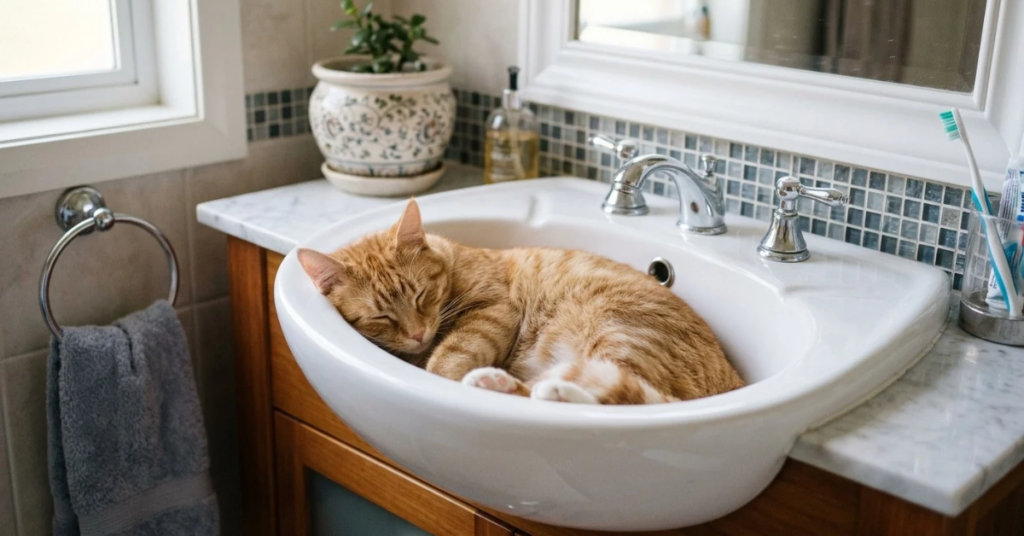
You walk into the bathroom, turn on the light, and find your cat curled up comfortably in the sink. It might look strange, especially when there is a perfectly good cat bed waiting in another room. So, why is your cat sleeping in the sink?
Cats often choose unusual places to nap, and a bathroom sink can offer several things they naturally enjoy: a cool surface, a snug shape, a quiet environment, and an interesting spot to observe their surroundings. In most cases, this behavior is completely normal and nothing to worry about.
However, your cat’s sleeping habits can sometimes provide clues about its comfort, environment, and health. Understanding what attracts your feline friend to the sink can help you decide whether to simply enjoy the funny sight or look a little closer at its behavior.
1. Your Cat Likes the Cool Surface
One of the most common reasons cats sleep in sinks is temperature. Ceramic, porcelain, and other sink materials can feel cool against a cat’s body, particularly during warm weather.
Cats have a higher normal body temperature than humans, but that does not mean they always want to be warm. Like us, they seek out comfortable places when the room gets hot.
A bathroom sink may provide a welcome break from a warm blanket, carpet, or padded cat bed.
Signs your cat is looking for a cooler spot include:
- Sleeping on bathroom tiles or other hard surfaces.
- Stretching out on the floor during warm afternoons.
- Moving away from sunny windows when the weather is hot.
- Choosing cool surfaces instead of soft bedding.
Should you be concerned?
Usually, no. If your cat is eating, drinking, playing, and behaving normally, it may simply prefer the cooler surface.
However, if your cat is panting, drooling, breathing rapidly, vomiting, or showing signs of weakness in hot weather, seek urgent veterinary care. These can be signs of overheating rather than ordinary temperature-seeking behavior.
2. The Sink Feels Like a Cozy Nest
Cats often prefer sleeping places that feel enclosed or snug. A sink’s rounded basin can create a small, sheltered space that allows a cat to curl up with its paws tucked beneath its body.
This preference is linked to a cat’s natural desire for secure resting spots. In the wild, cats benefit from choosing locations where they can rest while remaining aware of their surroundings.
A sink can imitate that feeling of being tucked into a protected little nest, especially when it fits your cat’s body just right.
You may notice your cat settling into the basin with its tail wrapped around its body or resting its chin on the curved edge.
Why does my cat prefer the sink to its bed?
Your cat’s bed may be soft, but softness is not the only factor cats consider when choosing where to sleep. Location, temperature, shape, familiar smells, and visibility can all influence their preferences.
Try offering a few different resting options, such as a shallow-sided bed, a covered cat cave, or a padded basket in a quiet area. Your cat may simply prefer a different sleeping environment.
3. Your Cat Wants Your Attention
Has your cat started sleeping in the sink because you spend time in the bathroom every morning? It may have discovered that this is a reliable way to be near you.
Cats can develop routines around their owners. If you regularly brush your teeth, wash your face, or get ready for work in the bathroom, your cat may begin joining you there.
Some cats also learn that sitting somewhere unusual gets an immediate reaction. If you laugh, talk to your cat, take pictures, or gently pick it up every time it enters the sink, the behavior may become more appealing.
This does not necessarily mean your cat is deliberately trying to annoy you. It may simply enjoy your company or the attention that follows.
How can you tell if your cat wants company?
Look for other signs, such as:
- Following you from room to room.
- Waiting outside the bathroom door.
- Rubbing against your legs or hands.
- Purring, meowing, or nudging you for attention.
- Settling nearby when you sit down.
If your cat seems particularly attached to you, provide regular playtime and affection throughout the day. You can also place a comfortable cat bed near your usual bathroom routine, giving your pet a nearby resting place without needing to occupy the sink.
4. Your Cat Enjoys Being Up High
Although a bathroom sink is not particularly tall, it may offer a slightly elevated position compared with the floor. Some cats enjoy resting in places that give them a better view of their surroundings.
Cats are natural observers. They often choose shelves, windowsills, furniture, and other raised surfaces because these locations allow them to watch people, other pets, and activity around the home.
If your cat can easily jump onto the bathroom counter, the sink may become an appealing lookout point as well as a sleeping spot.
This behavior is especially understandable in a busy household where your cat wants a little space away from foot traffic.
How to make your cat’s resting area safer
Consider providing a sturdy cat tree, a window perch, or a stable elevated bed. These alternatives can give your cat a similar vantage point without the risk of slipping on a wet counter.
Make sure any alternative resting spot is secure, particularly if your cat is a kitten, an older adult, or has difficulty jumping.
5. Your Cat Is Curious About Water and Bathroom Sounds
Cats have individual relationships with water. Some avoid it, while others enjoy watching a dripping tap, pawing at moving water, or drinking directly from a faucet.
The bathroom offers plenty of interesting sights, sounds, and smells. Your cat might enjoy the sound of running water, the occasional dripping tap, or the familiar scent of the sink and surrounding surfaces.
A cat that repeatedly returns to the basin may simply find it an interesting place to explore before settling down.
However, sleeping in the sink does not automatically mean your cat loves water. It may prefer the basin itself and have little interest in the faucet.
Does your cat keep asking for running water?
If your cat frequently approaches the tap to drink, a pet water fountain might be worth trying. Keep fresh water available at all times, and wash the fountain regularly according to its instructions.
Pay attention if your cat suddenly starts drinking substantially more water than usual. Increased thirst, particularly alongside increased urination, weight loss, or changes in appetite, warrants a veterinary appointment because it can accompany certain medical conditions.
6. The Bathroom Is Quiet and Peaceful
Your cat might choose the sink because the bathroom is one of the calmest places in your home.
Cats can be sensitive to household activity, unfamiliar visitors, loud noises, and interactions with other animals. When they need uninterrupted rest, they may gravitate toward a quiet room where they are less likely to be disturbed.
This is particularly relevant in homes with children, multiple pets, or frequent visitors.
Veterinary behavior guidance emphasizes providing cats with safe resting areas and opportunities to retreat when they need privacy.
How can you help your cat feel more comfortable?
Try these simple changes:
-
Create a quiet sleeping area away from busy walkways.
-
Provide a covered bed or cardboard box with a soft blanket.
-
Make sure other pets cannot block access to food, water, or resting places.
-
Keep your cat’s daily routine as consistent as possible.
-
Allow your cat to choose when it wants attention.
If your cat has recently started hiding or spending much more time alone, do not assume it simply wants privacy. A sudden change in behavior can sometimes signal stress, discomfort, or illness.
7. Your Cat Simply Likes the Habit
Sometimes, the explanation is much simpler than it seems: your cat has discovered a comfortable place and decided it likes it.
Cats can develop strong preferences for particular sleeping locations. If a sink offers the right combination of shape, temperature, familiarity, and peace, your cat may keep returning to it.
You might notice that your cat visits the same sink at a particular time each day or chooses it only when the house gets warm.
Once a location becomes part of a cat’s routine, the behavior can continue even when other comfortable options are available.
There is no need to discourage this habit if your cat is healthy and the area is safe. Just make sure the sink is dry, cleaning products are inaccessible, and nobody accidentally turns on the tap while your cat is resting inside it.
Is It Normal for a Cat to Sleep in the Sink?
Yes, sleeping in a sink is generally a normal feline behavior when your cat otherwise appears healthy and comfortable.
Cats naturally choose resting places based on their individual preferences and surroundings. A sink may happen to meet several of those preferences at once.
What matters most is whether this behavior is consistent with your cat’s usual habits.
Usually nothing to worry about
Your cat occasionally naps in the sink, wakes easily, eats normally, plays, drinks its usual amount, and behaves as it normally does.
Worth discussing with a vet
Your cat suddenly changes its sleeping habits, becomes unusually withdrawn, seems uncomfortable, loses interest in food, or starts drinking or urinating more than usual.
Seek urgent veterinary care
Your cat has difficulty breathing, collapses, becomes severely weak, or shows signs of heatstroke such as panting and excessive drooling. Do not wait to see whether these symptoms resolve on their own.
A single unusual nap is rarely enough to indicate a problem. Changes in your cat’s overall behavior, appetite, thirst, mobility, and energy level are much more useful clues.
How to Stop Your Cat From Sleeping in the Sink
If you would rather keep your sink available for washing your hands and face, there are gentle ways to encourage your cat to choose another resting spot.
The trick is to make the alternative more appealing instead of repeatedly picking your cat up or punishing it for settling in the basin.
1. Provide a comfortable alternative
Place a cat bed, soft blanket, or shallow basket near the bathroom. If your cat seems to prefer hard surfaces, try a sturdy, washable mat on a stable surface rather than a heavily padded bed.
Observe which option your cat chooses. Its preferences can help you find a suitable replacement.
2. Keep the sink dry and inaccessible when necessary
Close the bathroom door when you are not using the room if your cat continues to climb into the sink and you cannot keep the area safe.
Remove razors, medicines, cleaning products, and other potentially dangerous items from accessible surfaces. Never leave a cat unattended around an open drain, standing water, or a running tap.
3. Make other resting places more interesting
Cats appreciate having choices. A window perch, cat tree, cardboard box, or quiet corner may become a favorite spot if it offers the right combination of comfort and security.
Rotate toys occasionally and provide interactive play to keep your cat mentally stimulated.
4. Reward the behavior you want
When your cat settles in its new bed, offer gentle praise, attention, or an occasional appropriate treat. Avoid yelling or startling your cat when it enters the sink, as this can create unnecessary stress.
If your cat continues to prefer the sink despite your efforts, that is not necessarily a problem. Focus on preventing hazards rather than eliminating a harmless habit.
Frequently Asked Questions
Why does my cat sleep in the bathroom sink instead of its bed?
Your cat may prefer the sink’s cool surface, curved shape, quiet location, or position near you. Its regular bed may be too warm, too exposed, or simply less appealing. Try offering different bedding materials and locations to discover what your cat likes.
Why does my cat sleep in the sink when it is hot?
A sink can provide a cooler place to rest than a warm blanket or carpet. Cats may seek out cool tiles and other hard surfaces when temperatures rise. Make sure your cat has fresh water, shade, and access to a comfortable indoor environment.
If you notice panting, drooling, vomiting, or weakness, seek immediate veterinary attention because these symptoms can indicate dangerous overheating.
Why does my cat sleep in the sink and stare at me?
Your cat may be watching you out of curiosity, seeking companionship, or anticipating attention. Cats often observe familiar people as part of their normal social behavior. Relaxed body language generally suggests your cat is comfortable, although staring alone cannot tell you exactly what it wants.
Why does my cat sleep in the sink but not drink water?
Resting in a sink and drinking from a tap are separate behaviors. Your cat may enjoy the basin’s shape or temperature without having any interest in the water.
Keep a clean water bowl available in an accessible location. If your cat appears to be drinking less than usual or stops drinking, contact your veterinarian for advice.
Why does my kitten sleep in the bathroom sink?
Kittens are naturally curious and may explore unusual sleeping places as they learn about their surroundings. The sink might feel sheltered or offer an interesting view.
Because kittens can slip or fall, keep them away from wet counters and deep basins. Provide a secure, low-sided resting place that they can enter and leave easily.
Should I let my cat sleep in the sink?
Generally, yes, provided the sink is dry, stable, and free from hazards. Keep cleaning chemicals and sharp objects out of reach, and check that nobody will turn on the tap while your cat is inside.
If your cat is elderly, has mobility problems, or struggles to climb down safely, offer a lower and more accessible alternative.
Does sleeping in the sink mean my cat is sick?
Not by itself. Many healthy cats choose unusual places to nap, and sink sleeping alone is not a reliable sign of illness.
However, a sudden change in sleeping habits accompanied by reduced appetite, unusual thirst, hiding, lethargy, or signs of pain deserves attention. Consult a veterinarian if you notice these changes.
Why does my cat sleep in the sink only at night?
Your cat may find the bathroom quieter at night, enjoy the cooler surface, or have developed a nighttime routine. Cats can also be active at different times from their owners, so the timing may reflect their individual schedule.
If nighttime sink sleeping comes with unusual vocalization, confusion, restlessness, or other changes, particularly in an older cat, discuss it with your veterinarian.
Conclusion
If you have been wondering why your cat chooses the bathroom sink over its perfectly good bed, the answer is usually a combination of comfort, temperature, curiosity, and personal preference.
The sink may feel like a cool little nest, provide a peaceful place to rest, or simply have become part of your cat’s daily routine. In most cases, there is no reason to worry as long as your pet is otherwise behaving normally.
Keep the area safe, offer attractive alternatives, and pay attention to any sudden changes in your cat’s behavior. If unusual sleeping habits appear alongside other symptoms, a veterinary checkup is the best way to rule out an underlying problem.
And if your cat is perfectly healthy and still insists on claiming the sink as its personal bed, you may just have to accept that your feline friend has some very particular ideas about comfort!