
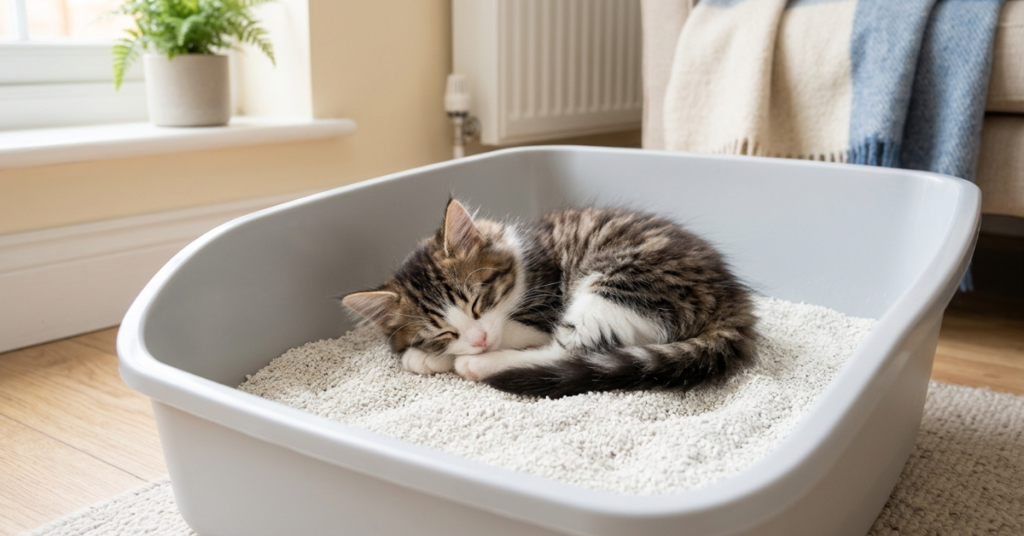
Finding your cat curled up in the litter box instead of their favorite bed can be confusing, unpleasant, and a little worrying. Cats are usually particular about where they sleep, so when they suddenly start resting in a place meant for bathroom visits, it is worth paying attention.
If you’re wondering, why is my cat sleeping in the litter box, the answer can range from stress and a need for security to pain or an underlying medical condition. Kittens may behave this way because they are still adjusting to their surroundings, while adult and senior cats might do it because they feel unwell or uncomfortable.
The important thing is to look at the bigger picture. Your cat’s age, recent behavior, appetite, bathroom habits, and living environment can all offer clues about what is happening.
Is It Normal for Cats to Sleep in the Litter Box?
Occasionally sitting or resting in a litter box does not automatically mean something is wrong. However, regularly sleeping there, particularly when the behavior is new, is unusual and should not be ignored.
Cats naturally prefer clean, quiet, and secure sleeping spots. A litter box may seem appealing if your cat feels frightened, has nowhere else to hide, or is experiencing discomfort that makes them reluctant to move.
Pay attention to whether your cat is simply resting in the box or repeatedly entering it, straining, digging, or producing very little urine. These details can help distinguish a behavioral issue from a possible health problem.
7 Reasons Your Cat May Be Sleeping in the Litter Box
1. Stress, Anxiety, or Fear
Cats are creatures of habit. Moving to a new home, introducing another pet, changing their daily routine, or having unfamiliar people around can make them feel insecure.
When a cat feels anxious, they may seek out small, enclosed spaces where they can hide and feel protected. A litter box tucked into a quiet corner might become an unexpected refuge.
Common triggers include:
- Moving to a new house or apartment.
- Bringing home a new cat, dog, or baby.
- Loud construction, visitors, or other unfamiliar noises.
- Changes in feeding schedules or household routines.
- Conflict with another pet that blocks access to safe resting areas.
What you can do: Provide a quiet hiding place, a covered cat bed, or a cardboard box with a soft blanket. Keep food, water, and litter in separate areas, and give your cat time to adjust without forcing interaction.
If the behavior continues after the stressful event has passed, arrange a veterinary check to rule out other causes.
2. Your Cat Is Sick or Experiencing Pain
One of the most important reasons to investigate is that cats often hide signs of illness. Because they are naturally good at concealing discomfort, a noticeable change in their usual behavior can be an early warning sign.
A cat experiencing abdominal pain, constipation, urinary discomfort, or another illness may remain close to the litter box because they feel the need to eliminate frequently or have difficulty doing so.
Watch for additional symptoms, such as:
- Repeated trips to the litter box.
- Straining or crying while trying to urinate or defecate.
- Passing unusually small amounts of urine.
- Blood in the urine or stool.
- Vomiting, reduced appetite, or unusual tiredness.
- Hiding more than usual or reacting negatively to being touched.
These signs do not establish a diagnosis, but they can indicate that your cat needs medical attention.
Important: If your cat repeatedly strains to urinate but produces little or no urine, seek emergency veterinary care immediately. A urinary blockage, particularly in male cats, can become life-threatening quickly. Do not wait to see whether the behavior resolves on its own.
3. Your Cat Is Looking for a Safe, Enclosed Space
Some cats prefer sleeping in sheltered areas rather than open beds. They may choose a laundry basket, cupboard, cardboard box, or the corner of a litter tray because these places feel protected.
This behavior can be more noticeable in recently adopted cats, kittens adjusting to a new environment, or cats living with energetic children or other animals.
Consider whether your cat has a comfortable place to retreat without being disturbed. If the litter box is the only quiet, enclosed spot available, your cat may be choosing it simply because it feels safe.
What you can do: Set up a few alternative resting places in quiet parts of the home. Covered cat beds, low-sided boxes, and soft blankets can provide a similar sense of security.
Make sure your cat can reach these spaces easily and that other pets cannot corner them there.
4. Your Cat Is Adjusting to a New Home
Newly adopted cats and kittens sometimes spend a surprising amount of time near or inside their litter boxes. Everything around them may smell unfamiliar, and they may not yet understand which areas of the home are safe.
The litter box carries a familiar scent, which can make it feel like a recognizable place in an otherwise strange environment.
Some cats gradually stop this behavior as they become more comfortable. Others may need additional hiding spots, predictable routines, and a little extra patience.
What you can do:
- Start your cat in a quiet, secure room with food, water, a litter box, and a separate resting area.
- Keep their daily routine consistent.
- Avoid pulling them out of hiding unless necessary for their safety.
- Introduce other pets and larger parts of the home gradually.
- Reward calm exploration with treats, play, or gentle attention.
If your cat seems unwell, is not eating, or has trouble urinating or defecating, do not assume the behavior is simply part of settling in.
5. The Litter Box Is in a Comfortable or Convenient Spot
Sometimes the explanation is surprisingly simple: the litter box may be located in a quiet, warm, or secluded area that your cat finds comfortable.
This is especially possible if the box is large, covered, or placed in a rarely used room. A cat might also choose it temporarily if their usual sleeping area is noisy or uncomfortable.
However, even when the location seems to explain the behavior, it is best not to encourage your cat to sleep in a soiled litter tray.
What you can do: Clean the box regularly and provide a comfortable alternative nearby, then gradually encourage your cat to use the new resting spot. Keep the litter box accessible and avoid moving it abruptly if your cat relies on its current location.
6. Your Cat Is Cold or Seeking Warmth
Cats often seek warm places to sleep, particularly during colder weather or when their usual resting areas are exposed to drafts.
A litter box in a sheltered corner might offer protection from cold air. However, sleeping in the box is not a reliable sign that your cat is simply cold, and it should not be assumed to be the cause without considering other symptoms.
Provide a warm, dry bed away from drafts. A washable blanket in a quiet corner may be enough to make an alternative resting place more appealing.
If your cat is unusually lethargic, weak, shivering, or reluctant to move, contact a veterinarian rather than treating the behavior as a simple temperature preference.
7. Your Cat Is Older or Has Mobility Problems
Senior cats may develop arthritis, reduced mobility, vision changes, or other age-related conditions that make everyday activities more difficult.
An older cat may rest near the litter box because climbing into a favorite bed has become uncomfortable or because the box is easier to access than other resting places. Some senior cats also experience cognitive changes that affect their routines and awareness of familiar spaces.
Look for signs such as:
- Difficulty jumping onto furniture.
- Stiffness after resting.
- Slower walking or hesitation on stairs.
- Changes in grooming habits.
- Increased confusion or nighttime vocalization.
- Changes in appetite or litter box use.
What you can do: Provide low-entry litter trays, easy-to-reach sleeping areas, and non-slip surfaces. A veterinarian can assess whether pain relief, mobility support, or treatment for an underlying condition is needed.
Do not dismiss a sudden change as normal aging. Older cats can develop treatable health problems, and early assessment may improve their comfort.
How to Tell Whether Your Cat’s Behavior Is Serious
The most useful clue is whether your cat is otherwise behaving normally. A cat that briefly naps in the litter box but eats, drinks, plays, and urinates normally may be experiencing a temporary behavioral issue. A cat that suddenly starts sleeping there and also appears uncomfortable needs closer attention.
Use this guide to decide what to do next.
| What you notice | What to do |
|---|---|
| Briefly resting in the box, otherwise acting normally | Monitor behavior and provide alternative resting spots |
| Hiding, reduced appetite, or unusual tiredness | Contact your veterinarian promptly |
| Frequent trips to the box or painful urination | Arrange urgent veterinary assessment |
| Straining with little or no urine | Seek emergency veterinary care immediately |
| Older cat struggling to enter the box or jump | Schedule a veterinary assessment for possible pain or mobility problems |
Urinary problems can resemble constipation, so avoid assuming your cat is simply having difficulty passing stool. The Cornell Feline Health Center explains that urinary obstruction requires immediate treatment.
What Should You Do If Your Cat Is Sleeping in the Litter Box?
If your cat seems comfortable and has no warning signs, there are several practical steps you can take. However, if the behavior began suddenly, keeps recurring, or comes with changes in eating or bathroom habits, arrange a veterinary examination rather than relying only on environmental changes.
Step 1: Check Your Cat’s Bathroom Habits
Look for fresh urine clumps and normal bowel movements. If your cat repeatedly enters the tray but produces little or nothing, do not wait for the next day to seek help.
Never press on your cat’s abdomen or try to treat a suspected urinary blockage at home.
Step 2: Make the Sleeping Area More Appealing
Provide a soft bed in a quiet, sheltered location. Some cats prefer enclosed spaces, so a covered bed or cardboard box with a washable blanket may be more inviting than an open cushion.
Keep the resting area separate from the litter tray, food bowls, and water bowls.
Step 3: Keep the Litter Box Clean
Scoop waste at least once daily and clean the tray regularly. Cats can be particular about cleanliness, and a poorly maintained box may contribute to changes in their normal behavior.
Choose a suitable box size and a quiet location where your cat can enter and leave without being startled or blocked by other pets.
Step 4: Reduce Household Stress
Maintain consistent feeding and play schedules. If you’ve recently introduced a new pet or moved house, give your cat safe hiding places and gradually introduce changes.
In multi-cat households, provide enough litter boxes and separate resources to reduce competition. A commonly recommended guideline is one litter box per cat, plus one extra, although individual household needs can vary.
Step 5: Arrange a Veterinary Check When Needed
A veterinarian can examine your cat for pain, urinary disease, constipation, and age-related mobility issues. Depending on the symptoms, testing may include a urinalysis, blood tests, or diagnostic imaging.
Do not punish your cat or force them to sleep elsewhere without first considering why they are choosing the litter box. The behavior may be a sign that they need help.
Why Is My Kitten Sleeping in the Litter Box?
Kittens may sleep in their litter boxes while adjusting to a new home. They may also find the tray familiar because it is one of the first places they learn to use independently.
To help a kitten settle in:
-
Provide a separate, comfortable sleeping area close enough for easy access.
-
Keep the litter tray easy to enter, with an appropriate litter depth.
-
Use gentle play and positive reinforcement to encourage exploration.
-
Ensure food, water, and bedding are available.
-
Watch for diarrhea, vomiting, reduced appetite, or difficulty urinating.
Young kittens can become unwell quickly, so contact a veterinarian promptly if a kitten appears weak, stops eating, or develops concerning symptoms. Repeated straining or an inability to pass urine requires emergency care at any age.
Frequently Asked Questions
1. Should I be worried if my cat sleeps in the litter box?
Yes, particularly if this is new behavior. Stress or a preference for enclosed spaces may explain it, but pain and illness are also possible. If the behavior persists or comes with changes in appetite, energy, or bathroom habits, contact a veterinarian.
2. Why is my cat sleeping in the litter box all of a sudden?
A sudden change may follow a move, a new pet, or another stressful event. It can also indicate urinary discomfort, constipation, or another medical issue. Check your cat’s overall behavior and seek veterinary advice if the change is unexplained.
3. Why is my cat sleeping in the litter box but not using it?
Your cat may be treating the box as a hiding place rather than a bathroom. Fear, insecurity, or a lack of comfortable resting areas could contribute. However, discomfort or illness should be considered, especially if your cat repeatedly visits the box or strains.
4. Why is my male cat sleeping in the litter box?
Male cats may sleep in the box for the same behavioral reasons as female cats. However, male cats have a higher risk of urethral obstruction, which can prevent urine from passing. If your male cat repeatedly strains, cries, or produces little or no urine, seek emergency veterinary care immediately.
5. Why is my older cat sleeping in the litter box?
Older cats may experience arthritis, reduced mobility, cognitive changes, or other health problems. The litter box might be an accessible place to rest, or the behavior may be linked to discomfort. A veterinary examination can help identify the cause and make daily life more comfortable.
6. Should I take my cat out of the litter box when it sleeps there?
You can gently encourage your cat to move to a comfortable bed if it is safe to do so. Avoid repeatedly forcing your cat out or punishing it. Focus on offering an appealing alternative and investigating any sudden or persistent behavioral changes.
7. Can stress make a cat sleep in the litter box?
Stress can change a cat’s hiding and resting habits. Moving house, unfamiliar animals, and competition for resources may make a litter box seem like a secure retreat. However, stress can also contribute to urinary problems, so physical symptoms should never be dismissed as anxiety alone.
8. How long should I let my cat sleep in the litter box?
There is no universal safe time limit. If your cat briefly rests there but otherwise behaves normally, provide a comfortable alternative and monitor its behavior. If the habit continues, starts suddenly, or is accompanied by illness or bathroom changes, contact a veterinarian. Do not wait if your cat is struggling to urinate.
Final Thoughts
If you’re asking, why is my cat sleeping in the litter box, remember that the behavior can have several explanations. Your cat may be seeking security, adjusting to a new environment, feeling cold, or experiencing pain or an underlying health problem.
Start by checking your cat’s bathroom habits, appetite, energy, and recent environmental changes. Offer a clean litter tray and a quiet, comfortable sleeping space, but don’t assume that a sudden change is harmless.
Most importantly, straining to urinate or producing little to no urine is an emergency. Seek immediate veterinary care if you notice these signs.
Understanding your cat’s behavior is an important part of keeping them healthy. For more practical advice, explore related articles about cat behavior, litter box care, feline stress, and common cat health problems.