
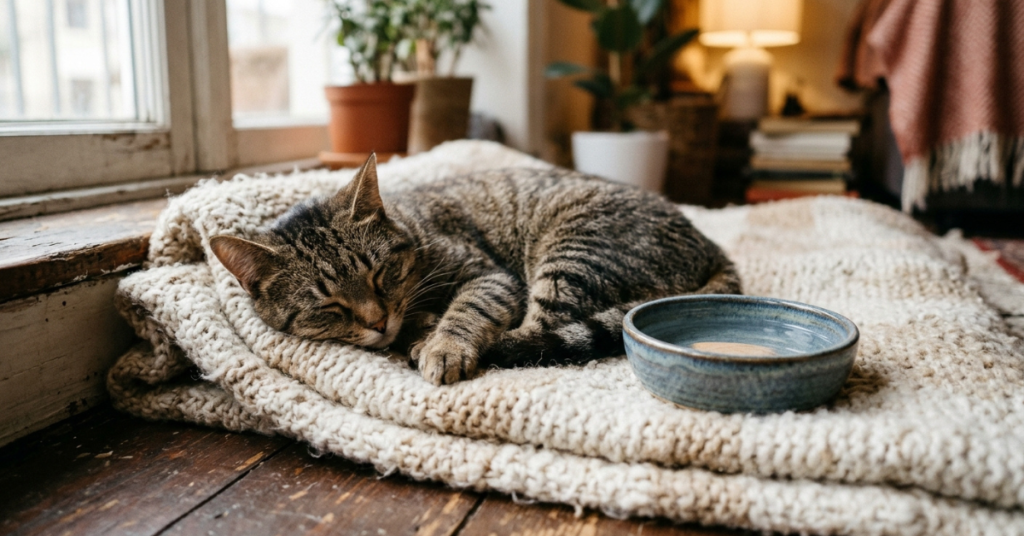
Cats are known for their love of naps, but when your usually hungry companion suddenly stops eating, drinks water, and spends most of the day sleeping, it is natural to worry. These changes can be signs of something minor, such as stress or a change in routine, but they can also point to an underlying health problem that needs veterinary attention.
If your cat is not eating but is still drinking water and sleeping a lot, the most important thing is to look at the whole picture. How long has your cat refused food? Is it using the litter box normally? Has it lost weight, vomited, or become less responsive than usual?
Understanding the possible reasons can help you decide what to do next. However, because cats can become seriously ill when they go without food, it is important not to assume that drinking water means everything is fine.
Why Is My Cat Not Eating but Drinking Water and Sleeping a Lot?
Several conditions can cause a cat to lose its appetite while continuing to drink. Excessive sleeping may simply reflect reduced activity, but it can also indicate lethargy, pain, fever, dehydration, or another medical problem.
Here are some of the most common explanations.
1. Stress or Anxiety
Cats are sensitive to changes in their surroundings. A new pet, unfamiliar visitors, moving house, construction noise, or a change in feeding arrangements can make a cat anxious.
Stress may cause a cat to:
- Ignore its usual food.
- Hide more frequently.
- Sleep in secluded places.
- Drink normally but show less interest in play.
- Eat only when the environment is quiet.
What you can do: Give your cat a calm, familiar space with easy access to food, fresh water, and a clean litter box. Offer its usual food in a quiet location and avoid forcing interaction.
Stress should not automatically be assumed to be the cause, particularly if your cat has not eaten for an extended period or appears physically unwell.
2. Dental Problems or Mouth Pain
Dental disease is a common reason cats stop eating. Inflamed gums, broken teeth, mouth ulcers, and other oral problems can make chewing painful even when a cat feels thirsty enough to keep drinking.
Watch for these signs:
- Dropping food while trying to eat.
- Chewing on one side of the mouth.
- Drooling or pawing at the face.
- Bad breath.
- Approaching food but walking away after sniffing it.
Some cats may be more willing to eat soft food than dry kibble, although a sudden loss of appetite still warrants veterinary attention. A veterinarian can examine the mouth and identify problems that may not be visible at home.
3. Kidney Disease
Kidney disease is particularly important to consider in older cats. When kidney function declines, waste products can build up in the blood, causing nausea, weakness, reduced appetite, and changes in thirst and urination.
Possible warning signs include:
- Drinking more water than usual.
- Urinating more frequently or producing larger amounts of urine.
- Weight loss.
- Vomiting or nausea.
- Poor coat condition.
- Increased tiredness.
Chronic kidney disease often develops gradually, but an acute kidney problem can develop much more suddenly. Both require veterinary assessment, and blood and urine tests may be needed to determine what is happening.
Drinking water does not rule out kidney disease. In fact, increased thirst can be one of its important early signs.
4. Fever or Infection
When a cat develops an infection or another illness that causes fever, its appetite may decrease while its need for rest increases. It may continue drinking water even though it has little interest in food.
Other symptoms may include sneezing, nasal discharge, watery eyes, vomiting, diarrhea, or unusual behavior. Some cats become withdrawn rather than showing obvious signs of illness.
If your cat seems unusually warm, do not rely on touching its ears or nose to determine whether it has a fever. These are not reliable indicators of body temperature. A veterinarian can assess the temperature and look for the underlying cause.
5. Digestive Problems and Nausea
Nausea, constipation, gastritis, intestinal inflammation, and other digestive problems can make food unappealing. Cats may still drink because they are thirsty, even when eating makes them feel uncomfortable.
You might notice:
- Lip licking or repeated swallowing.
- Gagging or vomiting.
- Diarrhea or difficulty passing stool.
- A hunched posture.
- Restlessness or discomfort around the abdomen.
A more serious possibility is an intestinal blockage caused by a swallowed object, string, or other material. A blockage can cause appetite loss, vomiting, and lethargy and may become life-threatening.
If you suspect your cat has swallowed string or another foreign object, seek veterinary care promptly. Never pull string protruding from the mouth or anus, as doing so can cause serious internal injury.
6. Diabetes
Diabetes mellitus can cause increased thirst and urination, weight loss, and changes in appetite. Some cats initially continue eating more than usual, while others develop poor appetite when their condition worsens.
A diabetic cat that suddenly stops eating and becomes weak or unusually sleepy needs urgent veterinary attention. Serious complications, including diabetic ketoacidosis, can cause vomiting, dehydration, profound lethargy, and dangerous metabolic changes.
A veterinarian can use blood and urine tests to assess blood glucose and check for complications.
7. Pain or Injury
Cats often hide pain rather than crying out. Arthritis, an injury, abdominal discomfort, or another painful condition may cause a cat to move less, sleep more, and lose interest in food.
Look for subtle changes, such as:
- Reluctance to jump or climb stairs.
- Limping or stiffness.
- Hiding more than usual.
- Irritability when touched.
- A hunched posture or reduced grooming.
Do not give human painkillers to your cat. Medicines such as acetaminophen (paracetamol) and ibuprofen can be extremely toxic to cats.
8. Changes in Food or Feeding Routine
Sometimes the explanation is relatively simple. Your cat may dislike a new food, find food that has gone stale less appealing, or be reluctant to eat from a dirty bowl or a feeding area that feels unsafe.
Check whether:
- The food brand, flavor, or texture has changed.
- The food has expired or been stored improperly.
- The bowl is clean and easy to reach.
- Another pet is preventing access to the food.
- Your cat has been receiving too many treats.
Try offering a small portion of its familiar food in a clean bowl. Slightly warming wet cat food can make it smell more appealing.
However, a food preference problem should not be used to explain away significant lethargy, vomiting, pain, or persistent refusal to eat.
How Long Can a Cat Go Without Eating?
Cats should not go long periods without adequate nutrition. Even when they continue drinking water, prolonged food deprivation can lead to serious complications.
A cat that stops eating may develop hepatic lipidosis, also known as fatty liver disease. This condition occurs when fat accumulates in the liver during periods of inadequate food intake. Overweight cats are particularly vulnerable, although cats of any body type can be affected.
A practical guide is:
- One or two missed meals: Check for other symptoms, offer familiar food, and monitor closely. Contact a veterinarian sooner if your cat is unwell or has an existing medical condition.
- Approaching 24 hours without eating: Contact a veterinarian for advice and arrange an assessment, particularly if the appetite loss is complete.
- Around 24 hours or longer without food: Do not delay veterinary assessment. Kittens, elderly cats, overweight cats, and cats with chronic illnesses may need help sooner.
- Any duration with serious warning signs: Seek urgent care rather than waiting for a time threshold.
These are general guidelines, not guarantees that waiting is safe. A cat that is also unusually sleepy, weak, vomiting, or showing signs of pain should be assessed promptly.
When Is a Cat Sleeping Too Much?
Cats naturally sleep for many hours each day. Depending on age, health, and activity, an adult cat may sleep roughly 12–16 hours daily, while some kittens and older cats sleep even longer.
The important distinction is between normal sleep and lethargy.
A cat that is simply sleepy will generally wake up, respond to familiar sounds, move around, and show some interest in its surroundings. A lethargic cat may appear weak, be difficult to engage, move very little, or seem uninterested in things it normally enjoys.
Pay attention to changes from your cat’s usual routine rather than counting sleep hours alone. A sudden combination of reduced appetite and unusual tiredness is more concerning than a cat that has always been a heavy sleeper.
What to Do If Your Cat Won’t Eat but Is Drinking Water
If your cat is refusing food, take a calm, practical approach while arranging appropriate veterinary care.
Step 1: Check for Emergency Symptoms
Look for difficulty breathing, collapse, severe weakness, repeated vomiting, a painful or swollen abdomen, pale or yellow gums, or difficulty urinating.
These signs require urgent veterinary assessment. In particular, a cat that repeatedly strains in the litter box but produces little or no urine may have a urinary blockage, which is an emergency. Male cats are especially at risk.
Step 2: Offer Familiar Food
Place a small amount of your cat’s usual wet food in a clean bowl. If your cat normally eats dry food, you can also offer its familiar kibble.
You may gently warm wet food to make its aroma stronger, but ensure it is only lukewarm, not hot. Avoid making multiple abrupt dietary changes, which may cause additional digestive upset.
Step 3: Keep Fresh Water Available
Continue providing clean, fresh water in an accessible location. If possible, keep water away from the litter box and offer more than one water station.
Do not force water into your cat’s mouth or use a syringe unless a veterinarian has specifically instructed you to do so. An uncooperative or weak cat can inhale liquid into its lungs.
Step 4: Observe Litter Box Habits
Check whether your cat is urinating and passing stool normally. Note any changes in urine volume, frequent trips to the litter box, straining, diarrhea, or constipation.
These details can help your veterinarian narrow down possible causes.
Step 5: Record Other Symptoms
Before contacting the veterinarian, note:
- When your cat last ate a normal meal.
- Whether it is drinking more or less than usual.
- Any vomiting, diarrhea, or changes in urination.
- Recent changes in weight or behavior.
- Any new medications, foods, plants, or possible toxins it could have encountered.
Do not wait to collect every detail if your cat appears seriously ill.
Step 6: Arrange a Veterinary Examination
Because appetite loss and increased sleeping can occur with many different conditions, a physical examination is often the safest next step. Depending on the findings, the veterinarian may recommend blood tests, urinalysis, dental examination, X-rays, or ultrasound.
Early assessment can make a meaningful difference, particularly when the underlying cause is treatable.
What Not to Do When Your Cat Stops Eating
Some well-intentioned actions can make the situation worse.
Avoid the following:
- Do not force-feed your cat. Food or liquid may enter the airways, and force-feeding can worsen food aversion.
- Do not give human medicines. Many common painkillers and other medications are dangerous for cats.
- Do not wait several days to see what happens. Cats can deteriorate quickly when they are not eating.
- Do not rely on water intake alone. Drinking does not mean your cat is receiving enough calories or that its organs are functioning normally.
- Do not make sudden, repeated diet changes. Offer familiar food while seeking veterinary advice.
- Do not assume stress is the only explanation. Medical conditions can produce similar behavior.
Special Considerations for Kittens and Older Cats
Kittens
Kittens have smaller energy reserves than adult cats and can become weak or dehydrated more quickly. A kitten that refuses food, sleeps unusually much, or seems weak should receive prompt veterinary attention rather than being monitored for a full day.
Very young kittens are particularly vulnerable to low blood sugar and dehydration.
Senior Cats
Older cats are more likely to develop chronic kidney disease, hyperthyroidism, diabetes, dental disease, arthritis, and other conditions that can affect appetite and energy.
If a senior cat suddenly changes its eating or sleeping habits, arrange a veterinary assessment promptly. Do not dismiss the change as simply a consequence of aging.
Overweight Cats
Overweight cats face an increased risk of hepatic lipidosis when they stop eating. If an overweight cat has a significant loss of appetite, early veterinary guidance is especially important.
How a Veterinarian Diagnoses the Problem regarding Cat Not Eating but Drinking Water and Sleeping a Lot
There is no single test that explains every case of appetite loss. Diagnosis depends on your cat’s age, medical history, symptoms, physical examination, and the duration of the problem.
A veterinarian may:
- Examine the mouth, teeth, abdomen, hydration, and overall physical condition.
- Check the temperature and other vital signs.
- Perform blood tests to assess organ function, blood sugar, and signs of inflammation.
- Analyze urine to investigate kidney problems, diabetes, or urinary disease.
- Recommend imaging or additional tests if a blockage or another internal problem is suspected.
Treatment varies according to the cause. It may involve pain relief prescribed for cats, fluids, treatment for nausea, dental care, or specific therapy for an underlying illness. Some cats need nutritional support if they have not eaten enough for a prolonged period.
The goal is not just to encourage eating, but to identify and treat the reason the cat stopped eating in the first place.
Frequently Asked Questions About Cat Not Eating but Drinking Water and Sleeping a Lot
Why is my cat drinking water but not eating?
Your cat may be experiencing stress, dental pain, nausea, infection, kidney disease, diabetes, or another medical problem. Drinking water does not rule out a serious illness. If your cat continues to refuse food or appears lethargic, contact a veterinarian promptly.
Should I worry if my cat skips one meal?
Skipping a single meal does not always indicate a serious problem, especially if your cat otherwise behaves normally. Offer familiar food and observe its behavior. However, if the cat is also unusually sleepy, weak, vomiting, or showing other symptoms, seek veterinary advice without waiting.
Can stress make a cat stop eating and sleep more?
Yes. Stress can reduce appetite and cause a cat to hide or withdraw from normal activities. Nevertheless, similar symptoms occur with medical conditions, so persistent appetite loss or marked lethargy should not automatically be attributed to stress.
Why is my cat sleeping all day and barely moving?
Cats naturally sleep for much of the day, but barely moving or showing little response to their surroundings may indicate lethargy. Pain, fever, dehydration, metabolic disease, and other illnesses can cause these changes. Seek veterinary care promptly if this behavior is new or pronounced.
Is it normal for a cat to drink a lot of water and lose its appetite?
No, a noticeable increase in thirst combined with appetite loss deserves attention. Kidney disease and diabetes are two possible explanations, although other conditions can produce similar signs. A veterinarian can determine whether testing is necessary.
How can I encourage my cat to eat?
Try offering a small portion of familiar wet food in a quiet place. Gently warming the food may improve its smell. Make sure the bowl is clean and fresh water is available, but do not force-feed your cat or delay veterinary care while trying different foods.
Can a cat recover from not eating for a day?
Recovery depends on the underlying cause, the cat’s age and health, and how quickly treatment begins. Some cats recover quickly once a minor problem resolves, while others need medical treatment and nutritional support. A cat that has gone approximately 24 hours without food should receive veterinary assessment rather than simply being left to wait longer.
When should I take my cat to an emergency vet?
Seek emergency care if your cat has difficulty breathing, collapses, becomes severely weak, has repeated vomiting with worsening lethargy, appears jaundiced, has a painful or swollen abdomen, or cannot urinate. Suspected poisoning or swallowing a dangerous object also warrants urgent assessment.
Conclusion
When a cat stops eating but continues drinking water and sleeping more than usual, it is important to look beyond the drinking bowl. Stress or a change in food may explain some cases, but dental pain, digestive illness, kidney disease, diabetes, and other medical problems can cause similar symptoms.
Offer familiar food, keep fresh water available, and monitor your cat’s behavior and litter box habits. Most importantly, do not assume that drinking water means your cat is healthy or wait several days for its appetite to return. Contact a veterinarian if the loss of appetite persists, seek advice as it approaches 24 hours without food, and get urgent help for severe or rapidly worsening symptoms.
A timely examination can help identify the cause, protect your cat’s health, and get your companion back to its normal eating and sleeping routine. This was all about Cat Not Eating but Drinking Water and Sleeping a Lot.